Published On: December 20, 2021 Interviews can be nerve-wracking for many of us, especially if you are a fresh graduate. With not much experience, the very thought of attending a job interview with a major company can be pretty intimidating. An excellent solution to overcome this challenge is to keep the mind calm, composed and alert. It is natural to be a little stressed and tense. However, it is essential to have self-belief and possess a positive frame of mind, and the answers to the questions will go smoothly if one keeps a calm mind.
With the Covid pandemic, most interviews are conducted online as organisations have moved digital. This interview mode has its advantages; namely, the ambience is not new and not much body language can be visible. However, there can be no compromise on preparation for the interview.
Research about the organisation: Before you sit for an interview, it is of utmost importance to do basic research on the organisation you have applied for. Apart from practising to articulate resume and experience, it is essential to know about your employer and the organisation. Research to determine whether your values match or align well with the organisation. Lookup for the vision, mission and strategies stated in public documents like Annual Report, Investors’ presentation, filings with regulators. Get to know the details about the company’s performance against its set objectives and the people policies, training & development and key personnel. Role of departments as narrated in the above documents. This primary research will help answer why you want to apply for this organisation and likely prospects. In addition, one can answer queries like “What do you know about our organisation?”.
Prepare yourself for standard interview questions: Being a fresher, the interviewers usually put the interviewee at ease to get the honest and best response. Whilst brushing up the academics and projects accomplished is a must, one must also be clear and forthright in answering any tough questions. It will be helpful to prepare and practice mock interviews at home. Brushing up your fundamentals is indispensable. Preparing well to answer questions such as1)Tell us about yourself?2)What is your best at (skills/talents)? 3) Why do you want to work for the organisation? 4) What is a life goal? 5) where do you see yourself ten years from now? It is crucial to prepare oneself thoroughly to answer them confidently.
Reach early to the location: Being present early for the interview is of utmost importance. Being late or providing reasons for being late (even if genuine) provides a wrong impression in the interviewer’s eyes; therefore, keeping in mind all reasons for getting late (traffic, non-availability of transport, rain etc.), it is always advisable to start early and reach before time.
Clear speech and Body language: Communication skills and answering questions are essential in an interview. One must be attentive, answer honestly, avoid distractions, be precise in speech and expression. Where required, support with data or quote the sources of information (which will also bring forth how much you are keeping abreast of matters specific to the industry and general knowledge.) In addition, it is crucial to maintain eye contact, dress correctly and have proper body language during an interview.
Interest in the organisation: There are plenty of methods to show a candidate is interested in working for a company. One vital way to exhibit is by asking questions about the company, its work culture and vision, at the end of the interview when you are allowed to ask questions about the company. This helps in gaining an understanding of the company and its culture.You can start by finding out information from their website, listing questions that interest you, and asking during the interview.Begin by going through its website to find the maximum relevant information about the organisation.Once you know the information mentioned publicly, start making a list of questions you want to ask the interviewer. Again, be specific about each question and try including the things that can bring more clarification to you.For instance, if you see that the company invests heavily in the learning and development of its people, you can ask more about the programs they offer.
Share your experience: One of the common questions asked by the interviewer relates to understanding the attitudes, work ethics, psychological outlook and response to challenging situationsto help them figure out the fit of the candidate with the company’s culture. From your end, tell the interviewer you will be an excellent fit for the organisation and would be willing to world hard and give in your 100%. Share your strength and other qualities. As a result, it becomes easier to advance in an interview.
Maintain Positivity:Whatever be the outcome, always start and end the interview on a positive note. Thank the interviewer for their time. It should begin once you enter the organisation, be polite with the receptionist and whoever you meet as word spreads, and it could affect the final decision.
It is essential for the candidate to be positive and exude to interviewers through polite and composed, self-confident articulation. For example, being courteous and interacting with people is vital. It is also important to be effective in communication. For instance, it is better to confirm the message wherever not understood by rephrasing in your own words and seeking confirmation before answering based on incorrect assumptions.
Whatever may be the outcome, thoroughly prepare for the interview and be confident. Stay calm and confident while answering the questions. Try to keep in touch with your interviewer by sending them a thanking message or telling them how valuable the interview round was. Especially stay driven when you know you have been shortlisted for the next round.
Published On: November 26, 2021 Every year, many students pass out from schools with hopes and aspirations of becoming an engineer. Hence, these students look for colleges that offer graduation in engineering. However, engineering is such a vast field that it comes with numerous specialisations. Civil engineering is one of the most sought after course because this field of engineering has continuously improved to adapt to ever-evolving technological advancements. Therefore, students of B.Tech in civil engineering acquire all the necessary knowledge and skills to have a fruitful career as a civil engineer. Moreover, the increasing demand for civil engineers in the industry has improved the scope of civil engineering and the development of our civic society.
The Hindu quotes a Bengaluru- based civil engineer Aswath MU who is President of ACCE(I) “From the supply of potable water to creating water reservoirs, contributions from civil engineers are immense. The forums reveal that the civil engineering industry contributes to nearly 70% of the Indian economy, either directly or indirectly, and is the second-largest employment generating industry.”
Why pursue civil engineering?
Civil Engineers have a vital role in building the infrastructure of our society and community. They are also the backbone behind maintaining existing residential, commercial, private and government buildings. In addition, people with a civil engineering degree can change the world for the better with their vision and creativity.
Opportunity to preserve history: Civil engineers are fortunate enough to preserve a city’s heritage and other ancient monuments. They engage with archaeologists and architects and help in the preservation of valuable historical artefacts and heritage sites.
National priority: The current five-year plan of the government of India envisages together with Niti Aayog a mammoth one lakh+ crores of investment. This requires civil constructions in the form of ports (Air, Sea, Inland), warehouses for storage, cold chain infrastructure for Agri produce, roads and bridges, irrigation and power generation plants, civic infrastructure in the form of hospitals, water (Har Ghar Nal se Jal scheme). All these calls for hundreds of civil engineers capable of handling essential projects to serve the nation’s cause.
Wide range of career opportunities: With multiple industries executing several infrastructure projects, and scope for civil engineers is extensive across a wide range of businesses both in the private and public sectors.
Since civil engineers handle different construction projects, they are required in numerous industries. In addition, they can work in both private and public projects, making them very versatile in their work field.
Helping in securing the environment: Civil engineers can create a sustainable infrastructure that guarantees the lives of people and society. Holistic knowledge of civil engineering (from a reputed college like Mahindra University)ensures the projects they plan and execute is of great relevance and appreciated by the people concerned and helps preserve them and withstand the impact of any natural or other challenges like earthquakes, floods, thefts, accidents.
International Experience: Civil engineering requirements are everywhere, including in overseas projects. Thus an excellent civil engineer would be in great demand in such assignments and create a reputation for himself with bright career prospects too.
Civil engineers are the backbone of our society, responsible for creating and designing our society’s infrastructure and logistics needs better. Moreover, they are the brain behind the aesthetics and environmental sustainability of our ecosystem. Therefore, the scope for aspiring civil engineers is always going to be high as they will demand continuous improvement in our society.
B.Tech in civil engineering is an attractive and satisfying profession for candidates interested in construction-related creative and design aspects. Students who have recently completed their higher education and are looking for college engineering can opt for Mahindra University, School of Engineering. We offer B. Tech in civil engineering at affordable costs and opportunities with on-campus internships and placement opportunities.
The engineering curricula at MU are designed to give the students a futuristic perspective looking for a favourable combination of a traditional curriculum with a new-age learning pattern. The course structure provides both a basic and an advanced level of engineering. The MU pass out students have an excellent scope of civil engineering careers trained under scholarly faculty members who go out of their way to ensure that the students excel in their chosen fields.
Published On: November 26, 2021 Is engineering likely to be your career option? But which branch? Maybe you have not decided yet. What are the future job opportunities and growth prospects? Well, there are many questions to be answered. The world is witnessing paradigm shift in engineering. The digital revolution in Artificial Intelligence, Virtual Reality, Machine learning, Robotics, etc are taking place every day. It is interesting to see new knowledge emerging in many areas.
Be it material sciences. like nanoparticles, titanium in civil, mechanical engineering,
Electronics & communication like Bluetooth, satellite-based wireless 5g Spectrum
Medical engineering like Remote surgery
Earphones, satellites, new apps, and much more
Under such a dynamic scenario, it is pretty challenging to decide on a specific engineering branch. However, a candidate should have a clear idea about what interests him the most; They might design and manufacture the first flying car. You never know!
There are several fields, several branches, new courses emerging in an explosion of knowledge. But, first, let’s read about the major divisions (branches) of engineering.
Electronic and Communication Engineering
Electronic and communication engineering covers a vast area including, electric circuits, semiconductor devices integrated chips, sensors, optical instruments, transistors, diodes, etc. Electronic engineers design circuits using electromagnets, wireless technologies and their properties.
This branch of engineering can be traced back to the era of Alexandar Graham Bell ( who invented the telephone) and Guglielmo Marconi (who invented the radio). After the second world war, several improvements in electronic technologies involving radar, sonar and communication technology, telegraph, radio, telephone, and television got boosted. Subsequently, several transistors, integrated circuits, LED led to new creations like computers and microprocessors. Simultaneously continuous improvement in programming languages led to improvements in speed, efficiency and invention of new devices in both industries and homes. Lately, there has been an integration of mechanical, electronics, and communication leading to the invention of newer technologies like wireless, robotics and their useful applications in devices like Wireless mouse used in a desktop, Bluetooth earphones, Amazon Firestick, etc.
REMUNERATION: (Salary)
According to the Glassdoor report updated in November 2021, the national average salary of an Electronics and Communication Engineer is rupees 25,000 per month at the beginner’s level.
Companies offering Jobs to Electronic and Communication Engineers
Mahindra group
NTPC Limited
HCL
Wipro
ISRO
Nvidia
Google
Tata group
Intel
Toshiba, etc.
Computer Science Engineering
As the name suggests, this branch of engineering deals with matters relating to computers. The domain focuses on the design, implementation and management of information systems of both hardware and software aspects. The hardware refers to components like CPU, input and output devices. In contrast, software relates to system design, programming, data structures and algorithms. Over the years, the continuous improvement in computer science, in the form of miniaturisation of computing devices together with upgradation in software programming, has brought about a revolution in this branch of engineering. In addition, newer technologies like wireless, the internet of things, data science, robotic process automation, and artificial intelligence are bringing paradigm shifts in living for ordinary people. With the widespread usage of computers in all spheres of life, the demand for engineers from this branch of engineering is the largest.
Salary
According to the Glassdoor report updated in November 2021, the national average salary of a computer science engineer is rupees 31,546 per month.
Companies offering Jobs to CSE
Infosys
Cognizant
TCS
HCL
Google
Microsoft
Tech Mahindra
IBM
Amazon
Wipro, etc
Civil Engineering
The domain that deals with the construction, design and maintenance of infrastructure around the globe are civil engineering. Roads, bridges, canals, airports, dams, pipelines, houses, etc., are civil engineering products. This branch of engineering is the second-oldest form of engineering. Civil engineers are in demand with the immense opportunities for infrastructure development, be at the municipal level or the government level. Civil engineers can flourish as entrepreneurs or great designers and consultants in international construction companies or World Bank Projects.
Civil Engineers have always been a part of society, be it artisans, stonemasons of the past or the master builders of the present. The demand for civil engineers will continue, particularly in India, given the scope for significant infrastructure development. Pir Panjal Railway Tunnel in Jammu and Kashmir, Pamban Bridge in Tamil Nadu, Konkan railway, Bandra-Worli Sea Link in Mumbai, I-Flex Solutions in Bangalore, Signature Bridge in New Delhi, Tehri dam in Dehradun, etc. are some of the best examples of civil engineering.
Salary
According to the Glassdoor report updated in November 2021, the national average salary of a civil engineer is rupees 25,000 per month (3 LPA).
Companies offering Jobs to Civil Engineer
TATA Projects, Ltd
Afcons Infrastructure Ltd
Hindustan Construction Company
Reliance Infrastructure
Punj Lloyd
Jaypee Group
IRCON International Ltd
Hindustan Construction Company
GMR Group
Akme Projects Ltd
Mechanical Engineering
One of the oldest domains of engineering is mechanical engineering. It uses the principles of physics and mathematics to design, analyse and manufacture mechanical systems. It needs a detailed and core understanding of mechanics, thermodynamics, dynamics, etc., to use tools like computer-aided design (CAD), computer-aided manufacturing (CAM), etc. This branch of engineering involves the operation of machines.
The wedge and the inclined plane are the earliest examples of mechanics. Newton’s law and calculus paved the way for modern mechanical engineering. The best examples of Mechanical Engineering in today’s world is engine parts, aircraft engines, disk drives, sensors, gas turbines, fuel cells, robots, machine tools, etc.
Salary
According to the Glassdoor report updated in November 2021, the national average salary of a mechanical engineer is rupees 2,40,000 per year.
Companies offering Jobs to Mechanical Engineer
Coal India
DRDO
GAIL
TATA group
General Motors
HPCL
Larsen and Turbo
Mahindra and Mahindra
Siemens
Electrical Engineering
This branch of Engineering deals with the electricity, electronics, and electromagnetism applied to equipment, devices and several systems. Electrical engineering is a broad spectrum of different engineering types, including computer engineering, radio-frequency engineering, signal processing, electronics, etc. The above integration of multiple streams within electrical engineering has been put into practical use in: for example, power generation, transmission and distribution. Similarly, industrial instrumentation and control systems is another example of the wide usage of electrical engineering.
Electricity has always been an exciting topic for research and has evolved over the centuries. This branch has brought us great inventions, including magnetism, static electricity to direct current photovoltaic cells (used in solar power), electric motors (used in locomotives and other devices).
Salary
According to the Glassdoor report updated in November 2021, the national average salary of an electrical engineer is rupees 2,64,864 per year.
Companies offering jobs to Electrical Engineer
Bharat Electronics Ltd
Bajaj Electrical Ltd
BHEL
Exide Industries Ltd
Kirloskar Electric
Siemens Ltd
ABB India Ltd
Crompton Greaves Consumer Electricals Ltd
Havells India Ltd
Bosch Industries Ltd
Which branch of Engineering has the best scope after four years? Well, the answer to this question depends on the interest of the candidate. Each branch of engineering has something unique to study and create. As seen above, the average salary package of the Glassdoor survey reveals that Computer Science engineering seems to have the highest package followed by Civil engineering. Given that we are at the cusp of a digital revolution, the prospects for engineers with computer science and robotics backgrounds are sure to have a brighter future.
Mahindra University aims to provide the highest level of education to its students. It intends to impart and work towards “Educating future citizens for and of a better world” and is envisioned as a private University that will play a significant role in driving quality improvements and innovation in higher learning in the coming years. Mahindra University focuses on generating new knowledge through cutting-edge research engagement and creating a spirit of innovation and entrepreneurship among its students.
Published On: August 13, 2021 COVID-19 has taken a huge toll on the Indian economy. The size of the economy (read, GDP) shrank from $2.87 trillion in 2019-20 to $2.66 trillion in 2020-21. GDP growth also slowed from around 4 per cent in 2019 to -8 per cent in 2020. Starting from a low base, this year initially the economy was expected to grow at 9 per cent but data got revised downward, and the economy is now expected to grow at 6 per cent.
The wider implication of this slow growth is going to fall on income generation and income distribution. Smaller number of job opportunities are getting created. Society is also becoming more unequal; the super-rich are becoming richer and everyone else poorer. The ballooning wealth of people like Gautam Adani and Mukesh Ambani is a testimony to that fact.
But how much an event such as COVID-19 is to be blamed? In economic parlance, a shock created by pandemic is treated as exogenous, which is outside the control of any policymakers. What if such an event were not to happen? How would things unfold? Not much, considering the big elephant in the room, which is: technology.
Consider this. An important component for getting a job is to be productive. There are two ways to become productive. First, our labourers are producing outputs which no other countries in the world does. Then people will buy our products and India will continue to create better paid jobs. Unfortunately, this is not the case with India.
The second option is to produce goods and services which are cheaper, so that the world will buy from us. Here also we are not doing great, either. We are losing big time to China (in terms of producing goods at a cheaper price) and the US in terms of producing goods which are innovative.
India’s labour productivity – economic output per hour of work – is just 15 per cent of the US levels. And in the world export markets, the Chinese are far ahead in comparison to India.
India’s economy is being hit by a technology bug and that is more worrisome than anything else. A closer look at the data suggests that in India, gross fixed capital formation is falling. Growth in capital formation has fallen from a high of 17.5 per cent during 2004-2008 to a lowly 5.1 per cent during 2019 (pre-COVID) and to -12 per cent in 2020.
Although COVID-19 played spoilsport, an important reason for the fall in value of investment has to do with lower input costs. Technology has made sure that inputs come at a cheaper price. This has reduced the cost of private investment, and the growth of gross fixed capital formation.
Jobs were not getting created like the way it happened during the last century. During the last century, technology was complementing India’s workforce by making it more productive. Electricity, combustible engines and refrigeration aided economic growth through a more productive labour force.
Unfortunately, things are now different. In this age of big data analytics, machine and deep learning, machines are increasingly taking over jobs performed by humans. With technology changing at a rapid pace, no one knows where jobs of the future are coming from and what do they look like.
US regulators have already approved smart pills that send highly accurate diagnostic information from inside the patient’s body to doctors via Bluetooth. Computing power of a mobile handset is already equal to that of the human brain. Tesla has recently announced bringing out engineless electric car that cost only $35,000.This may change the entire dynamics of the automobile industry. A significant societal dislocation is waiting to happen with robotics taking control of the assembly line in production.
In agriculture, where majority of the Indians earn their livelihood from, it is extensive rather than intensive. Indian farmers grow crops using more land, labour and animal inputs, rather than using technology. For a long period of time, output per hectare, a common measure of agriculture productivity, remained low in India. For example, in potato farming, the productivity of an Indian farmer is less than half of that of the US, Germany and Netherlands. In case of rice, it is less than half of that of the US and Egypt, and for wheat, it is less than half of that of the UK and Egypt.
The problem is aggravated as 83 per cent of the farmers in India who are marginal and small farmers (someone with less than 2 hectare of landholding) do not have the wherewithal to understand technology. Reforming agriculture sector cannot happen without embracing technology.
With nearly 50 per cent of the Indian population still earning their livelihood from the agriculture sector, a lower productive and a low technology intensive agriculture sector means a lower per-capita income for Indians.
To enhance productivity here is a need to create skills, and the universities are also not doing great jobs either. Starting 2010, there has been a 50 per cent increase in the number of private universities, and at present there are around 1000 of them. However, the curriculum taught in most of these universities are stuck in the past, with little relevance to modern industry with a focus on technology. Hence, fewer jobs are getting created, with less few graduates having the ability to execute.
Daily, less than 2 per cent of the Indians who apply for jobs get them. Presently, India (like elsewhere, in the world) is slowly transforming into a gig economy where the labour market is increasingly characterised by the prevalence of short-term contracts or freelance work as opposed to permanent jobs. Most of these jobs are low paid, exacerbating the already widening income inequality.
This year, the unemployment rate in India shot up to 8 per cent, with an employment figures at 398 million in 2020-21, in comparison to 404 million in 2019-20. The only way to create more employment opportunities (also, better paid jobs) is to embrace technology and impart necessary skills for our younger generations.
Technology, which is the key to raising productivity is here to stay. As much as 90 per cent of increases in per-capita income come from technological innovation. The government has to look for a strategy that will make technology inclusive.
Published On: August 12, 2021 The percentage of adults having bank account ownership is an important indicator to understand the financial penetration in an economy. The access to the financial world will help the individuals of an economy to transact and manage money through savings, investments, making payments, and borrowing which would further enhance their financial well-being. Access to the bank account is the first step in this process but to ensure that the needs are met, it is vital to improve the financial literacy and at the same time reduce the inequality that persists and strategically expand the activities of financial inclusion.
Globally, there is a rise in financial inclusion. As per the World Bank’s Global Findex database 2017, over 80% of the adult population in India have bank account ownership and the rest 20% are unbanked. Among the 80% of the banked population in India, the inequality gap persists. However, the data reveals that there is a drastic decline in the inequality gaps of the bank account ownerships in India.
Adult men have a higher percentage of bank account ownership compared to adult women. The gender inequality gap has shrunk in India from 18% in the year 2011 to 6% as of
Adults among the richest 60% of the population have higher percentage of bank account ownership compared to the adults among the poorest 40% of the population. The income inequality gap between rich and the poor in India has reduced from 14% in the year 2011 to 5% as of
Adults in the labor force have a higher percentage of bank account ownership compared to the adults out of the labor force. The labor force inequality gap has reduced from 18% in the year 2011 to 9% in the year
Older adults (Age >=25) have a higher percentage of financial account ownership than the Young adults (Age between 15-24). The age inequality gap has increased from 11% in the year 2011 to 14% in the year 2014 and then declined to 12% as of
Adults with secondary education or more have a higher percentage of bank account ownership than adults with primary education or less. The education inequality gap has reduced from 28% in the year 2011 to 10% in the year
Cheers to the Government of India, an increase in the bank account ownership and decline in the inequality gaps has become possible because of the focused financial education and financial inclusion initiatives. The likelihood of banking the unbanked and further decline in the inequality gaps in India is higher in the future report of Global Findex database due to the recent financial inclusion initiatives such as National Strategy for Financial Education (NSFE) 2020-2025 , Pradhan Mantri Jan-Dhan Yojana (PMJDY), social security schemes viz. Pradhan Mantri Jeevan Jyoti Bima Yojana (PMJJBY), Pradhan Mantri Suraksha Bima Yojana (PMSBY), Atal Pension Yojana (APY), Pradhan Mantri Kisan Maan Dhan Yojana (PM-KMY), Pradhan Mantri Shram Yogi Maan Dhan Yojana (PM-SYM) and Pradhan Mantri Mudra Yojana (PMMY) that are trying to bring the excluded sections into the financial mainstream.
In the face of the challenges due to COVID-19 pandemic, ensuring effective implementation of the financial inclusion initiatives, monitoring and expanding the reach of the financial education initiatives, and deeper penetration of mobile and internet access should be the key areas of focus for the regulators and the Government of India.
Dr. Muneer Shaik is an Assistant Professor at Mahindra University, School of Management, Hyderabad.
Published On: February 3, 2021 Mechanical Engineering is one of the evergreen branches of engineering which over time, has contributed to several innovations. Considered to be one of the oldest branches of engineering, mechanical engineering deals with the concepts of thermodynamics, fluids, mechanics and structural analysis. The scope of mechanical engineering is vast even today. These concepts are used in designing some of the best and most efficient state-of-the-art motor vehicles, manufacturing units, aircrafts as well as other industrial machinery. Apart from the machinery and vehicles, mechanical engineers significantly contribute towards the development of power equipment, engines and complex machinery systems. Not only the design and manufacturing, even the maintenance and testing of such machinery and equipment are considered as responsibilities of mechanical engineers.
However, this evergreen branch of engineering is facing an alarming question – whether it is still the right stream for students who love machines or not. Due to the lack of job offers or placement opportunities for the huge number of graduates, people have started doubting their decision to take up mechanical engineering as a stream. So here, we are going to discuss the scope of mechanical engineering and its future prospects.
What is Mechanical Engineering?
Mechanical engineering is the branch of engineering which deals with the design, manufacturing, maintenance and testing of machines. It is also considered as one of the most diverse and versatile disciplines of engineering. Mechanical engineering also includes the application of mechanics, material science, applied mathematics and physics.
With the rise of modern technology, mechanical engineering has witnessed newfound importance with more and more students opting to learn less explored domains of robotics, mechatronics, nanotechnology, etc.
New trends and future scope
The scope of mechanical engineering no longer remains limited to just manufacturing and testing of huge machinery and equipment. With technology making new advancements, there are several new domains in mechanical engineering which are being taken up by passionate engineers. These domains include robotics, new materials, nanotechnology, computer-aided design, geomechanics, etc. The two highly pursued domains are robotics and mechatronics, both of which combine the knowledge of mechanical engineering with other streams to deliver state of the art products.
Robotics- Robotics is an interdisciplinary stream of engineering that combines mechanical engineering, electrical engineering and computer science with an aim to design and develop robotic systems along with computer systems to control them. With the AI revolution already started, Robotics as a stream has been on the rise and is expected to grow in both reach and demand in the coming decade.
Mechatronics- Mechatronics too, is an interdisciplinary branch of engineering which usually combines mechanical engineering, electrical engineering and Information technology. A mechatronic engineer is responsible for designing complex engineering systems, can assist in process automation and also test the systems in use in the processes.
From automobiles to heavy-duty lifting machines and even the modern aircrafts that defy speed barriers, a variety of modern systems are being designed under the supervision of expert mechanical engineers. You will not find mechanical engineers limiting themselves to the manufacturing industry anymore. Mechanical engineers are being welcomed in various industries with open arms and high compensation packages, provided that the candidates are skilled and proficient.
The current market scenario and scope
According to BLS, Mechanical engineers are in high demand, with employment projected to grow 11% from 2023 to 2033, much faster than the average for all occupations, leading to about 19,800 openings annually. This projects a significant increase in the need for mechanical engineers, indicating a strong and stable job market. Specific Areas of Demand: Automation and Robotics: The development and design of robots and automated systems are in high demand.
Renewable Energy: As the world transitions to cleaner energy sources, engineers specialising in renewable energy technologies are in high demand.
Manufacturing: Optimising production processes, improving product quality, and developing new manufacturing techniques are key areas for mechanical engineers.
Aerospace: Designing and analysing aircraft and spacecraft systems, including propulsion and structural integrity, is a crucial area.
Automotive: Developing fuel-efficient engines, enhancing vehicle safety features, and designing advanced vehicle systems are important areas.
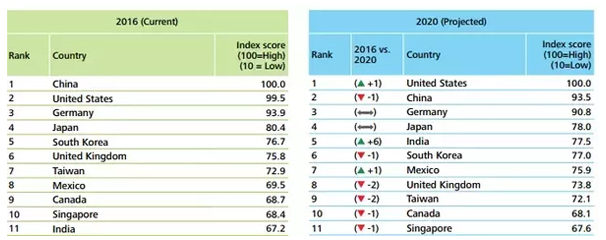
Source: Deloitte The future scope of mechanical engineering and its demand in the industry seem quite promising. According to a report in 2016 by the global consultancy firm Deloitte, India is expected to grow manifold in manufacturing by the year 2020. As per its report on Global Manufacturing Competitiveness index, India will move up 6 positions to be at 5th position. From its report, Deloitte claims that India will strengthen its hold in the manufacturing sector and thus, there would be numerous new opportunities for mechanical engineers in India. However, the compensation packages of these mechanical engineers are going to depend on the skills and expertise, which is why it has become extremely important that the skill gap be bridged in order to make the new graduates aware of the latest tools as well as technologies in the industries.
Job prospects in industries for mechanical engineers
When we talk about the different job roles for mechanical engineers, the same can be broadly classified into the following few segments –
1. Design: In this role, the mechanical engineers would be responsible for drafting technical sketches either with tools or computers. Any mechanical engineer good with sketches or computer aided drawing is ideal for such a position.
2. Production: The production job role usually involves consultation and supervision in the manufacturing of machines and their components. If you are an individual who wants to experience the manufacturing techniques and production processes, this would be the right job role for you.
3. Analysis and Testing: In this job role, you would be responsible for analysis and testing of machine parts, systems and equipment. Your responsibilities would include checking for faults that could have come up in the manufacturing or design processes.
4. Installation & Maintenance: The job role involves knowledge of installation of machine parts in the industrial location, along with their proper maintenance as per the provided specifications. The installation and maintenance are only recommended for those who are strong in practical knowledge instead of theoretical knowledge.
5. Research: Last but not the least, research is one of the most exciting job roles in mechanical engineering. Your job responsibilities would include researching and implementing findings for the development of new products using the latest technologies.
As you can see, the scope of mechanical engineering and the job prospects aren’t just good, but promising for the near future as well. Being a fundamental discipline required by almost every field of study, mechanical engineering graduates are always in huge demand. Here is a look at some of the top recruiting industries that are always on the lookout for skilled mechanical engineers-
Top 4 Industries That Employ Mechanical Engineers
1. Automobile Industry – One of the fastest growing industries, the automobile industry offers a variety of opportunities to mechanical engineers. From design to manufacturing and even maintenance, some of the top automobile brands have begun to invest in recruiting of new talent for research as well as the development of transport systems like driverless cars, bullet trains as well as pod-based transportation systems. Hence with the right set of skills and passion, the scope of mechanical engineers in the automobile industry is quite bright, which may lead to building of an exciting career.
2. Aerospace Industry – From developing flying cars to reusable satellites as well as rockets, the aerospace industry is not far behind when it comes to innovation and inventions. With the technological advancements, the aerospace industry is rapidly expanding its reach and thus, the need for skilled mechanical engineers with practical knowledge. The industry offers a variety of job roles to the mechanical engineers – from design to manufacturing, testing as well as the fabled R&D, where you get an opportunity to use the principles of physics, aeromodelling as well as dynamics to innovate the systems for better design as well as efficiency.
3. Robotics & Mechatronics – Robotic process automation and robotics itself are the booming new trends. Almost every industry is looking for automation solutions in order to increase efficiency and cut down on operation costs. However, the implementation of the same requires the supervision and efforts from skilled mechanical engineers. Whether it is the design and manufacturing of a new robotics system or the implementation of process automation for inventory management, robotics and mechatronics will always have a role for the mechanical engineers to play.
4. Power and Metal Plants – The Power industry is one of the major contributors to the economy of our nation. There are several thermal power plants all over the country and since the power plants use the principles of thermodynamics and material science, mechanical engineering graduates are required here as well.
Steel plants as well, use similar principles, which is why organisations like SAIL (Steel Authority of India Limited) recruit a large number of mechanical engineers every year.
Bridging the Skill Gap and Preparing for the Challenges
It is evident that the demand for mechanical engineers will soon surpass the supply, making mechanical engineering as one of the most valued disciplines of engineering again. However, one of the major challenges being faced by newly graduated students today is the lack of skills and proper knowledge due to the old school curriculum being followed even after the introduction of several new trends and technologies. Bridging the skill gap is the key to grabbing a good job opportunity after your studies in mechanical engineering. From coding to communication skills and being able to build interpersonal relationships, you need to be prepared for industrial demands.
Mahindra École Centrale, however, helps students bridge the skill gap with its new age curriculum designed in association with CentraleSupélec – one of the premier engineering institutions in the world.
FAQs
Is Mechanical Engineering a good career? Yes, Mechanical Engineering is a promising career with diverse job opportunities in both private and public sectors. It provides job stability, career growth, and opportunities for innovation. However, the career path depends on skills, industry demand, and technological advancements. Specialising in fields like robotics, mechatronics, or computational mechanics can enhance job prospects. What is the scope of Mechanical Engineering? Mechanical engineering has a vast scope, as it is one of the core engineering branches. It involves designing, manufacturing, and maintaining mechanical systems. Mechanical engineers work in industries like automotive, aerospace, energy, robotics, HVAC, and manufacturing. With advancements in technology, new opportunities are emerging in fields like automation, AI-driven manufacturing, and sustainable energy solutions. What is the scope of Mechanical Engineering in India after 4 years? In the next four years, mechanical engineering will continue to evolve with advancements in automation, Industry 4.0, and green energy. The demand for skilled mechanical engineers will grow in industries such as electric vehicles (EVs), 3D printing, and renewable energy. Those with additional expertise in programming, AI, and computational analysis will have better job prospects. What is the scope and salary of Mechanical Engineering? Mechanical Engineering has a broad scope across industries like automotive, aerospace, manufacturing, energy, and robotics. With advancements in AI, automation, and renewable energy, opportunities are expanding. In India, a fresher mechanical engineer earns around ₹3–6 LPA, while experienced professionals can earn ₹12+ LPA. Specialised roles in R&D, robotics, and AI-driven manufacturing offer even higher salaries.
Entrance exams serve as the gateway to several educational prospects across the globe. Whether it be engineering, law, business, or academia, these standardized entrance tests act as a crucial benchmark, assessing student’s preparedness for the rigors of their chosen field. For aspiring students, navigating the world of entrance exams can feel like venturing into a labyrinth. This guide aims to shed light on some of the most common entrance exams, empowering students to make informed decisions about their academic journeys.
JEE The term JEE stands for Joint Entrance Examination, is an assessment used for the admission criteria for multiple engineering programs across India. It comprises of two phases- JEE main and JEE advanced. The first phase, JEE main, has 90 multiple-choice questions with 300 marks, covering Mathematics, Physics, and Chemistry. Qualifying for the JEE Main examination grants individuals the chance to undertake the more demanding JEE Advanced test, which is conducted entirely on computers and acts as the sole determining factor for admission into the esteemed Indian Institutes of Technology (IITs). Achieving success in the JEE is a highly esteemed achievement, providing access to renowned engineering institutions worldwide.
SAT The Scholastic Assessment Test is a standardized test written by several students to get admission to the undergraduate and post graduate programs at various international universities and colleges. It is a digital exam that is conducted seven times per year. The SAT focuses on skills like reading, writing, and math essential for academic success in higher education. By performing well on the SAT, students demonstrate their preparedness for the critical thinking and analytical skills demanded by higher education
CAT CAT refers to the Common Admission Test that is conducted annually. It is an entrance exam for students who are interested in taking an MBA program. It examines the students in three major areas – Data Interpretation and logical reasoning and Verbal proficiency and reading comprehension and quantitative aptitude.
ACT American College Testing is a standardized testing method for aspiring students who wants to pursue undergraduate programs in the United States. This test assesses a candidate on academic areas like English, mathematics, reading and science. The ACT provides a valuable alternative to the SAT, allowing students to showcase their strengths in a different testing format.
GRE Graduate Record Examination (GRE) is a standard test required for students to pursue education at some of the universities abroad. This standardized test assesses an applicant’s academic preparedness for rigorous coursework, potentially boosting their chances of admission to top universities. Achieving an outstanding GRE score can greatly enhance your chances of receiving scholarships. Prestigious universities value impressive GRE results, increasing your appeal as a candidate for scholarships based on academic merit, which could alleviate the financial challenges of pursuing graduate studies.
GMAT The Graduate Management Admission Test (GMAT) is a standardized test intended for students who wish to pursue business-related programs worldwide. It evaluates skills in verbal reasoning, quantitative reasoning, integrated reasoning, and analytical writing. Many business schools use the GMAT to secure opportunities at prestigious universities and advance their careers in business education and professional growth.
GATE The Graduate Aptitude Test (GMAT) in Engineering is a nationwide examination that serves as an entrance for students aspiring to pursue master’s programs such as M.Tech, M.Sc., M.E. and others. Additionally, individuals inclined towards pursuing a Ph.D. can also take this exam. Moreover, GATE scores are often used as a benchmark for selecting candidates for engineering positions in Public Service Undertakings (PSUs).
CLAT The Common Law Admission Test (CLAT) is a centralized national entrance exam conducted annually by the National Law Universities (NLUs) of India. It serves as a gateway for aspiring legal professionals seeking admission to both undergraduate (LL.B.) and postgraduate (LL.M.) Law programs throughout these prestigious institutions. By performing well on the CLAT, candidates unlock the opportunity to embark on their legal careers at some of India’s most reputable law schools.
LSAT The Law School Admission Test (LSAT) is a standardized test widely accepted by law schools in North America (US and Canada) for Juris Doctor (J.D.) programs. The LSAT examines the critical skills such as analytical reasoning, logical reasoning, and reading comprehension for obtaining eligible students. A strong LSAT score, administered multiple times throughout the year, has the potential to significantly impact one’s future. It can serve as a game-changer, unlocking opportunities to attend esteemed law schools and setting the stage for a fulfilling and prosperous legal career.
As candidates diligently prepare for these examinations, they embark on a voyage of self-exploration, persistence, and determination. The extensive months of studying not only cultivate their academic abilities but also instill the resilience and resolve required to excel in their chosen fields. Despite their potential intimidation, entrance exams remain an essential pillar of global education, influencing the paths of numerous individuals and fostering a diverse range of academic pursuits. These exams propel a new generation of thinkers, innovators, and leaders onto the global stage.
Published On: November 19, 2020 India has been consistently securing a lower rank while participating in the Programme for International Student Assessment, a test conducted by the OECD secretariat. This test looks at the aptitude of students in discerning various practical problems. Getting lower ranks reflects the poor quality of the education system prevalent in India. Why are Indian students not able to cope up?
There are three ways of looking at this. First, Indian students aren’t smart, despite having access to quality teachers. Second, Indian students are actually smart, but because of want of access to quality education they aren’t able to perform well. There is also a third possibility: There are both quality education institutes, and smart students in India. However, these smart students prefer to explore options outside India — for jobs, or for pursuing higher education — leaving the poorer quality students in India.
From the demand side, quality education translates into graduates who are employable and have adequate skills to deliver the needs of corporate India. Be it doctors, engineers, or even MBA graduates, there is a dearth of quality professionals in India. This is precisely why every year corporates like Infosys (service), ITC (manufactured consumer items), Apollo (medical), and L&T (engineering), to name a few, are left with vacant seats, or prefer to recruit people with foreign degrees, rather than employ graduates from India. Yes, there are quality education institutes such as IITs, IIMs, AIIMS, etc. in India. However, the pass-outs from these institutes are either too few in number, or decide to go abroad for higher studies, or even take up work there.
From the supply side, quality of education would have to be seen in terms of contribution to research and development. This means — education institutes serving as an incubator for developing new technologies that can be of use to the entrepreneurs, to produce goods and services more efficiently. This becomes evident from the number of patents, and research articles, published from universities and colleges. Although there has been an increase in the number of patents applied and research articles published from India, it is far less compared with the more advanced economies.
It is to be noted, per-capita income of any country can be increased either by increase in labour force participation and/or because of technological breakthroughs. The growth performance of the newly industrialised economies in Asia, such as Taiwan, South Korea, Singapore, Hong Kong, is typically driven by designing curriculum, so that more people can be employed. This model of increasing growth by producing more employable graduates, implies that growth has taken place through increase in labour force participation. On the other hand, the growth process in the West is attributed to technological innovation.
India faces a dearth of both quality teachers and quality education institutes. At a time when deans of Indian origin at Ivy league business schools in the US are making national headlines, in India, the newly-opened IIMs and IITs are scouting for professors. In fact, these newly-opened institutes survive by hiring visiting professors from other institutes and universities in India.
A majority of the quality students regard education as they would any other commodity. Pursuing quality education comes with a cost. For example, many MBA students who take bank loans look at education as a return on their investment, that is, the jobs they are likely to get once they get their degree. In that way, most education institutes, especially the MBA ones, have now been transformed into sophisticated placement agencies. If the institutes cannot secure jobs, they are likely to get fewer students.
The preference for IITs and IIMs derives from the fact that the perceived returns from education in these institutes are highest here. Corporates come to IIMs and IITs, not by taking into consideration the patents and research articles published, but by being persuaded that the rigorous screening procedure in these institutes are assurance enough that quality students get in.
During a slowdown, the second-tier institutes provide more value for money for students and corporates. No matter what the business school teaches, the corporates have their own induction programme. During a slowdown, a corporate can hire students at a lower cost, compared with what it would have to offer to tier-1 graduates. Hence, in recent times, some of the IIMs faced difficulties, while second-rung business schools were able to achieve 100 per cent placement.
The other smaller group of quality students who are indeed passionate about pursuing, and not consuming education, typically leaves for the US, Australia or Western Europe, to pursue higher education. Recent evidence also suggests that because of want of adequate seats in medical colleges, students are actually going to the erstwhile Soviet Union, and even learning medicine in their local languages. Net result: India still loses out in terms of brain drain, because of adequate quality education facilities at home.
Government regulation in higher education hinders supply of quality education. It is all-pervading, whether in terms of determining fees to be charged, or foreign collaboration. When it requires around Rs. 6 lakh per year to produce an engineer, and anything between Rs. 10-12 lakh per year to produce a doctor, asking a private institute to charge state-determined fees is unreasonable. In this fashion, the privately funded universities cannot survive, leaving aside, hiring quality teachers.
What is however do-able is asking the privately-run institutes to give scholarships to the needy, meritorious students. In fact, most of the successful universities in the US are privately-run. Most of the business schools in China are thriving, and provide a better education because of their collaboration with Universities in the US and Canada — something that isn’t possible in India. To open any private institute, no-objection certificates need to be taken from multiple sources, such as the State government, State universities, and government regulatory bodies (for example, UGC, AICTE, etc.), instead of having a single-window clearance mechanism in place.
The government will do better by putting a grievance redressal mechanism in place, where the universities can be tried, or their license cancelled in the event of false promises. In the event of healthy competition, bogus education institutes won’t be able to survive. So, let the students decide. Hopefully, this will add to supply of quality education institutes, human capital, and help to sustain India’s growth.
(The author is Associate Professor (Economics), Mahindra École Centrale, College of Engineering, Hyderabad).
About Dr. Nilanjan Banik
Dr. Nilanjan Banik is an Associate Professor with MU in the Economics department.
Published On: October 1, 2020 Life at MU October 1 ,2020
Imparted by a number of the world’s top-ranked institutions, online learning offers you all the perks of attending your dream university, from a remote (and safe/secure) location. Thanks to the rapid advancement of technology, online learning is a part of course offerings by many universities around the globe and a preferred option in the current pandemic scenario. From certifications, Ph.D.s, to impactful online learning and everything in between, learning online has never been so easy.
Advances in technology now allow students to learn and study entirely online while still socializing with classmates, watching lectures and participating in subject-specific discussions. With courses available in almost every subject, and versatile time-tables to suit almost every geography, students are increasingly getting attuned to online learning as a viable alternative to on-campus study.
The tutors during online classes take care and ensure that their students receive an equivalent level of support that they get on campus.
Aspects and Resources of Online Learning
While taking an online learning program, the students will be officially registered with the respective institution and will have the access to all and equivalent resources as on-campus students, like the institution’s digital library, learning management system (like Blackboard), building membership, etc.
The respective institute and course instructor determine the format for every individual course and select the delivery methods that are best suited for the respective course or program. The resources offered for learning online will depend upon the institution where the students will be taking their online program.
For the institutions that have made the transition to using 100% online resources, students can expect to learn using the technological resources with no difficulty in attending the lectures, exams or in-person discussion sessions.
Online learning could also be a totally new experience for the students who may come from traditional learning backgrounds.
While taking the online lectures, you would be able to access the following resources associated with online learning:
E-Books, Journals, and Textbooks –
These materials are essential resources in almost every course the students take when learning online. Using the reading list for every course, or on the recommendation of course instructor, the students will need to allocate quantity of their time for reading and understanding the topics within the literature. The advantage of using this medium (particularly eBooks) is that they are completely portable, and will allow the students to review on the go from their computer, phone or tablet.
Recorded online lectures –
Lectures work as a staple of online and campus-based learning, an essential way of absorbing an amount of data during a relatively short time period. With online learning, the students can attend the lectures from their bedroom or where ever they want to.
Interactive sessions –
The greatest challenge an online learning provider faces is the way to replicate the face-to-face interaction and in-person discussions that on-campus institutions can easily provide. Online degree programs often use a mixture of forums and interactive question-and-answer sessions (Q&A) to offer students the interaction with other students and instructors they would like to get in contact with.
Points to remember while using resources of Online Learning
When you are researching a course or program, remember to see whether your textbooks are included in your tuition fees. Check if you will need to pay extra for your textbooks, or they will be available as eBooks in the institution’s digital library.
If you can, try making notes throughout your online lectures. This will make it easier for you during the exams and will be helpful in any assignments you will need to finish throughout your course.
Before beginning an online discussion forum or interactive session, make sure you read the principles and requirements.
How online learning works?
The course or module’s learning resources are going to be delivered via the institution’s online learning platform. Online students often think that their learning resources are going to be delivered via email. Most online institutions are moving far away from this unreliable method of delivery.
The training platform will vary counting on the software used, but it will usually contain a central online platform that students can access from their personal PC, mobile or tablet. As an online student, they will prefer to access the course information and complete their assignments at any time. One of the main benefits of utilizing resources that are hosted entirely online is flexibility. This will help the students to study even while concentrating on other commitments, conveniently as precious time is saved when there is no commute involved. This also means that the students who wish to continue working while studying do not need to put their careers on hold.
Students taking a course online will still be tested at regular intervals throughout their study period to assess their understanding of the course materials. The assessment will be done through the following measures:
• Individual Assignments These are probably the starting point of assessment that students will have the foremost experience with. For every assignment, the students will receive a topic, deadline and word count. They will be required to submit an assignment structured as per the guidelines set by their course instructor.
• Discussions An online academic discussion requires a special set of skills, and won’t come as naturally when you first start your online learning journey. The discussion activities may differ as per institutions, but the discussions generally start off with an issue or topic for debate. Students need to research the subject and post their responses demonstrating their own knowledge and understanding.
• Journal activities Like discussion activities, journal activities tend to be specific to online courses. A journal entry is an update on what the students have learned, and how they will use the respective learning in their future. Online learning doesn’t happen in classrooms, and journal entries are straightforward ways for course instructors to know the progress of the students within the right areas.
• Exams Although they will be nerve-wracking, the institutions may prefer to allow students to finish their exams on their own computers, at whichever location they like. Because tutors do not have any access to oversee the students performing during a virtual exam or test, the exams are typically open-book. Some institutions may use exam software or tools to watch if the students visit other websites while performing the test on their computers.
Online learning and Employment Once you get an in-depth understanding of how your qualifications earned online are recognized in your country, abroad, and in the area of interest, you will be ready to plan how you will present your online learning experience to employers. In fact, many employers now recognize that studying online (and also part-time) takes an outsized amount of dedication and commitment. The statistics show that around 33% of school students are taking a minimum of one course online, over and above their normal syllabus. This increased participation will naturally cause increased recognition of online learning beyond the classroom. Furthermore, there’s a 71% expected increase in online enrolments overall.
Published On: September 10, 2020 Admissions September 10 ,2020
India is at a stage where it could soon be a world leader in fields like production, research, IT and sciences. Key to this transformation into a new reality is world class, futuristic education. Not just skilled labor, India needs skilled leaders of the future, capable of thinking on their feet and leading the innovation chain to accelerate India’s transformation. With an aim to provide the best possible higher education to budding engineers, the Mahindra Group collaborated with one of the most prestigious engineering institutes in the world – the 180 years old École Centrale Paris and set up Mahindra École Centrale (MU) in the year 2014.
Achieving excellence in various engineering projects, having published research papers in national and international journals and after having taken competition by surprise with their performance in techno-curricular as well as extra-curricular competitions, MU Hyderabad has become one of the fastest emerging engineering schools in the country, driving interdisciplinary academic excellence.
On July 24, Mahindra University was officially announced, with a mission to develop leaders of tomorrow, capable of reflection as well as innovation – individuals who are ethical and empathetic. To drive a meaningful shift in the way that higher education is imparted in the country for the first time, MU will infuse AI and EI concepts and methodologies into interdisciplinary academic excellence, integrating the study of science and technology with the Humanities, Ethics &Philosophy, and Design.
Mahindra University includes the École Centrale School of Engineering (MU) that was set up in 2014 as Mahindra École Centrale (MU) College of Engineering. The University is sponsored by Mahindra Educational Institutions (MEI), a subsidiary of Tech Mahindra, the flagship IT company of the Mahindra Group. Mahindra University has a monumental role to play in the global dynamics of R&D and higher learning, where students are motivated to attain their best potential and Rise to a new world.
High-tech labs and Centres
The university houses a Supercomputer Lab with an advanced NVidia GPU-based supercomputer, the DGX-1. It also has a Centre for Artificial Intelligence (CAI), a Centre for Innovation & Entrepreneurship (CIE) and a Centre for Sustainable Infrastructure and Systems (CSIS). With equipment sourced from the most preferred vendors globally, the on-campus labs are on a par with the finest in the world. Its Supercomputer Lab can do high intensity computations for Artificial Intelligence (AI) applications and complex simulations in physical sciences and engineering – including fluid dynamics, structural mechanics, electromagnetics, integrated and optimized engineering design, molecular physics and related fields.
Some of the additional centers of excellence are also being considered for the University such as Centre for Computational and Experimental Mechanics, the Centre for Research in Optics and Photonics and a Centre for Executive Education.
Research and Mission
Research at Mahindra University is organized focusing on high level projects identified/developed by the faculty members. All faculty members at the University hold Ph.D. degree from the top-most universities of India as well as abroad. The research areas are predominantly engineering focused. Due to its unique orientation towards contributing to the rise of new engineers in India, MU also has teams working in the fields of media, economics and humanities.
The university aims to train multi-skilled leaders capable of reflection as well as innovation, committed to inclusive and sustainable progress along with interdisciplinary academic excellence integrating the study of science and technology with humanities, ethics and philosophy, and design. Equal emphasis on experiential learning makes Mahindra University on a par with renowned international educational institutes.
University Infrastructure
The extensive 130-acre, multi-disciplinary campus of the University in Hyderabad will offer undergraduate, post graduate and Ph.D. programs.
Mahindra University provides the best of infrastructure along with creative learning spaces that are required to develop well-rounded engineers and Ph.D. scholars in Applied Sciences and Liberal Arts. The university features spacious Seminar Halls, Lecture Theatres, Lecture Halls, and Tutorial Rooms, providing the right atmosphere for in-class learning and after-class discussions between teachers and students.
Since experiential learning is at the core of MU, state-of-the-art labs enable students to deepen their classroom learning through practical application. The vast campus and recreational facilities offer a variety of outdoor and indoor activities. Accommodation and dining facilities at the university have set new standards for comfortable and convenient living in Indian engineering colleges.
Leadership perspectives
Anand Mahindra, Chairman, Mahindra Group and Chancellor, Mahindra University
“We are getting into a new adventure in the higher education sector by setting up a 21st-century university. Over the next three years, we will be adding a lot more schools catering to various fields. We want multidisciplinary education to be the approach where a mathematician in the university is also a musician or an engineer who loves poetry.”
VINEET NAYYAR, Board of Management, Mahindra University
“We are not satisfied with creating only a top-class engineer; what we want is a business leader, for which we would train students in Humanities, Economics, History and Philosophy so that they get a holistic education and would be able to relate the technical sciences to the environment of business in which they are going to be functioning.”
Yajulu Medury, Vice-Chancellor, Mahindra University
“Mahindra University is home to a vibrant group of students from different areas of specializations with keen aptitude. They have been rigorously imbibing the best of what the university has to offer. They are being groomed to be industry-ready and future-ready engineers in an environment of multi-cultural immersion, at the point of convergence of core engineering with emerging technologies, liberal arts, creative sciences, and humanities.”
The road ahead
Over the next five years, close to 4,000 students and over 300 faculty members will be in place across the various schools at Mahindra University. The university will also be launching School of Management in 2021-22; School of Law in 2021-22; Indira Mahindra School of Education in 2021-22; School of Media & Liberal Arts in 2022-23 and School of Design in 2023-24.
We use cookies to ensure that we give you the best experience on our website. If you continue to use this site we will assume that you are happy with it.