






Home / MU-VT Interdisciplinary Advanced Research Centre for Transformative Technologies

MU-VT Interdisciplinary Advanced Research Centre for Transformative Technologies (IARCT2)

Overview

The Mahindra University–Virginia Tech Interdisciplinary Advanced Research Center for Transformative Technologies (IARCT²) is a pioneering initiative dedicated to tackling critical scientific and engineering challenges in the realm of converging and emerging technologies.

With a strong focus on innovation and sustainability, the center aims to drive transformative research that fosters a future where advanced technologies seamlessly integrate to address global needs. By bringing together interdisciplinary expertise and cutting-edge resources, IARCT² serves as a hub for breakthrough solutions that shape a smarter, more sustainable world.

MU-VT IARCT2 philosophy

Mission

The broad charter of the IARCT2 is to harness the creative talent at Mahindra University to advance interdisciplinary and collaborative research at the nexus of engineering, the physical, life, and social sciences, and the humanities.

Entrepreneurial and dynamic in nature, it will foster a proactive, responsive, and agile research culture, driving transformative ideas that push the boundaries of science, technology, positioning MU as a global leader in discovery and problem-solving.

Vision

To be a premier national and global hub for transformative research and education, advancing interdisciplinary innovation for a sustainable future.

Preamble

Welcome to MU-VT Interdisciplinary Advanced Research Center for Transformative Technologies (IARCT2) – A MU (Mahindra University) and VT (Virginia Tech, USA) collaboration

Located in Mahindra University, Hyderabad, India, the center seeks to act as a catalyst to foster deep collaboration between the two academic institutes in exploration and discovery at the cutting edge of emerging materials. With our firm belief in the incredible transformative power of interdisciplinary research, the center seeks to bring engineers, scientists, and humanists together to move beyond the predictable and incremental advances in materials of the future.

An equally important focus is on harnessing the unique properties of the emerging materials for large societal impact. We believe that this collaborative platform, virtually boundary-free, will remain as relevant in the next decade and beyond as it is today. We invite you to explore the website to learn about who we are and what we do. Your feedback and help in growing the center to global eminence will be much appreciated.

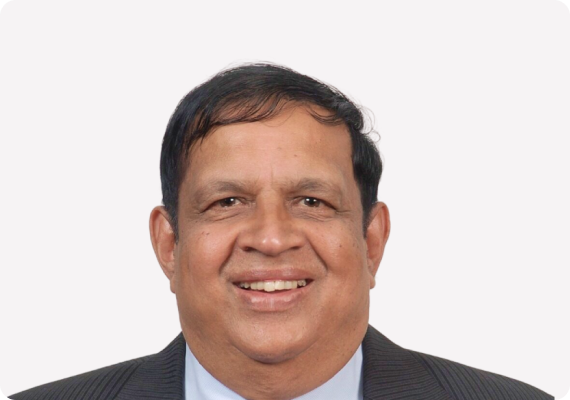
Roop L. Mahajan
MU-VT IARCT2 Chair Professor
Bell Labs Fellow, ASME Life Fellow
Lewis A Hester Chair Professor
Department of Mechanical Engineering
Virginia Tech, USA

Excellence

This principle underpins everything that we do. Our objective is to be among the
top three research institutions in all our efforts.

Faculty-focus

Our strength as an institute depends on the quality of MU’s faculty and on our
ability to support them in their transformational interdisciplinary research efforts.

Nimbleness

We must be constantly on the lookout for the “next big thing” and must be ready to position the center to exploit the opportunities offered. We must be proactive in identifying and creating these opportunities and responsive to changing circumstances.

Metrics

Our decisions will be informed and guided by measures of scholarly, societal, and financial impact.

Meet the team

Leadership team
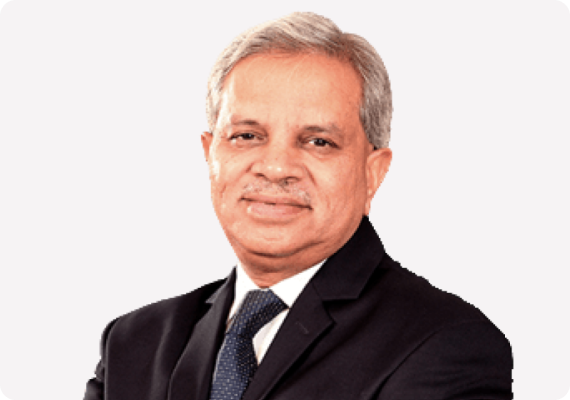
Yajulu Medury
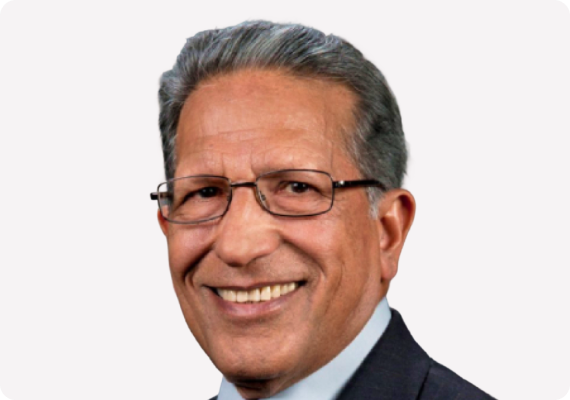
Vice Chancellor, Mahindra University

Roop L Mahajan

MU-VT, Chair Professor

Visalakshi Talakokula

MU Professor-in-charge

M K Padmanabhan

VT India Professor-in-charge

Administration team

Anitha GP

Manager- Research, MU-VT

MU-VT IARCT2 research

Thrust areas

Leader: Dr. Arya K Bhattacharya, Professor and Dean R&D
Co-leader: Dr. Prafulla Kalapatapu, Assistant Professor

Leg 1 – Natural Language Processing

  • IoT-based real-time monitoring of power substations and blackout prediction in smart grids using deep learning techniques – Dr. Neeraj Choudhary-Assistant Professor
  • Symbols to syntax: decoding the ancient writing systems (Indus valley script) through artificial intelligence – Ms. Nidhi Goyal-Assistant Professor

Leg 2 – Computer vision

  • Indian sign language translation with a real-time dataset – Dr. Dipti Mishra-Assistant Professor
  • AI-driven cephalometric landmark detection for precision orthodontics and craniofacial analysis – Dr. Neeraj Choudhary-Assistant Professor
  • DeepFake video detection for digital forensics – Dr. Ankita Jain-Assistant Professor
  • Tracking object in underwater environment – Mr. Rahul Roy-Assistant Professor

Leg 3 – Autonomous intelligence

  • Designing learning algorithms for low latency millimeter wave communication in highly dynamic environments – Dr. Gourav Saha-Assistant Professor
  • Building brain-computer interfaces (BCIs) using deep generative models – Ms. Nidhi Goyal-Assistant Professor
  • Transforming tourism through augmented/virtual reality technologies – Dr. Venkata Rajesh Kumar Tavva-Assistant Professor
  • Inverse materials design with graph diffusion model – Dr. Shampa Raghunathan-Assistant Professor
  • Automatic synthesis of music aligned with specific emotional states (Rasas) using evolutionary algorithms – MS.Prafulla Kalapatapu and Arya K Bhattacharya-Assistant Professor,Professor and Dean R&D

Leg 4 – Smart manufacturing and immersive technologies

Fusion of extended reality (augmented/virtual/mixed reality) technologies for the visualization, simulation and interaction with digital twins in automotive industry – Dr. Venkata Rajesh Kumar Tavva-Assistant Professor

Leg 5 – Artificial intelligence in scientific simulations

  • Quantum generative methods for metasurface based single photon emissions – Dr. Jayasri Dontabhaktuni-Associate Professor
  • Physics informed ML – RVDS-LSUM scheme for analysis and design of complex aerospace configurations – Prof. Arya Kumar Bhattacharya-Professor & Dean R&D
  • Machine learning Ab-Initio potentials using graph neural networks – Dr. Shampa Raghunathan-Assistant Professor

Leader: Dr. Rajinder Singh Chauhan, Professor & Dean Centre for LifeSciences
Co-leader: Dr. Arun Khattri, Associate Professor 

  • Advancing precision gene therapy through synthetic AAV serotypes with cancer-specific tropism – Dr. Aruna Kumar C
  • Predictive biomarkers and affordable assay for the stratification of Indian patients with OPMDs and oral cancer – Dr. Arun Khattri
  • Nanobodies as detection system & biotherapeutics for lung cancer – Dr. Bhaskar Paidimuddala
  • MicroRNA-based biomarkers and precision therapeutics for head and neck cancer – Dr. Manish Kumar

Leader: Prof. Visalakshi Talakokula, Assistant Dean & Professor Civil Engineering
Co-leader: Dr. Sri Kalyana Rama Jyosyula, Associate Professor

Leg 1 – Smart infrastructure

  • Performance evaluation of precast concrete elements using nano-enabled self-sensing cementitious composites and embedded piezo sensors – Dr. Sri Kalyana Rama Jyosyula, Prof. Visalakshi Talakokula, Dr. Aditya Abburi
  • Investigation of self-healing Efficiency in nano-engineered precast cementitious composites – Dr. Sri Kalyana Rama Jyosyula, Prof. Visalakshi Talakokula, Dr. Keerti Katam

Leg 2 – Smart mobility

  • Developing an implementable and sustainable MaaS framework – Dr. Saladi Subbarao, Dr. Veeraiah
  • Advanced traffic management system using V2X communications – Dr. Subbarao Boddu, Dr. Yarlagadda Jahnavi, Dr. Saladi Subbarao

Leg 3 – Smart environment

  • Reusable self-propelled visible light driven micro/nano motors for waste water treatment – Dr. Gomathi Anandhanatarajan-Associate Professor
  • IoT-based WQM monitoring system with technologies for low-cost indigenous sensing solutions – Dr Chitra Gurnani-Associate Professor and HOD of Chemistry Department

Leader: Dr Chitra Gurnani-Associate Professor and HOD of Chemistry Department
Co-leader: Dr. Gomathi Anandhanatarajan, Associate Professor

Leg 1 – Next generation energy storage technologies

  • Development of low-dimensional layered metal chalcogenides for a robust and defect engineered electrode materials for energy storage application – Dr Chitra Gurnani-Associate Professor and HOD of Chemistry Department
  • Sandwich heterostructures – MXene@completely delaminated metal – Dr. Gomathi Anandhanatarajan-Associate Professor
  • Calcium fluoride nanomaterials for advanced energy storage applications – Dr Aditya Abburi-Associate Professor

Leg 2 – Advanced sensors: intelligent, flexible and sustainable

  • Room-temperature gas and VOC detection using M₂S₃ nanostructures – Dr Chitra Gurnani-Associate Professor and HOD of Chemistry Department

Leg 3 – Clean water innovations: addressing global challenges

  • Air purification technology – Dr. Keerti Katam and Dr. Jayato Nayak
  • Optimizing waste management to mitigate open dumping​ – Dr. Sandeepan Roy
  • Waste valorization towards manufacturing of smart packaging material – Dr. Jayato Nayak
  • Utilization of C&D waste in MSE wall – Dr. Hariprasad and Dr. Janardhan

Platform technologies

A platform technology is a core technological foundation that supports the center in creation of a broad spectrum of applications, enabling cross-disciplinary solutions and fostering collaborative innovation.

School Icon

Characterization and instrumentation

Dr. Anil Annadi

School Icon

Computation

Dr. Jagan Mohan Padbidri

Dr. Mohd Ataullah Khan

School Icon

Development of graphene oxides from coal and their polymeric nanocomposites

Dr. Sonu Kumar

School Icon

Graphene integrated photocatalyst
development for transformation of
anthropogenic CO2 to Bio-methanol

Dr. Jayato Nayak

Black swan technologies

Unencumbered or curiosity-driven research refers to exploratory investigations motivated by a desire to advance knowledge without predefined applications or immediate goals. It emphasizes intellectual freedom, encouraging researchers to pursue questions of fundamental importance and uncover novel insights that may lead to Black Swan breakthroughs in the future.

School Icon

Resilience through
voluntary hardship

Dr. Chaitanya Solanki

School Icon

Exploring the pathway of human cytomegalovirus (HCMV) secretion in adult’s urine: towards innovative biosensor development and therapeutic strategies

Dr. Manish Kumar

School Icon

Magnetoelectric sensor framework
for painless muscle health monitoring

Dr. Pulla Kondaiah

School Icon

CaA digital prototype of a net- zero living building (NLB) for Mahindra University campus

Dr. Surekha Tetali
Dr. Sonam Sahu
Dr. Balasubramanian Sambasivam
Dr. Sonam Sahoo

School Icon

Anderson
localization in
disordered
photonics time
crystals and
amplifications

Dr. Somnath Ghosh

Prof. Bishnu Pal

IARCT2 facilities

Hardware

Computing

Equipment

Contact us

Phone: +91 04 67135236
Email: muvt.iarct2@mahindrauniversity.edu.in

Maps and Direction

MU-VT IARCT2
Mahindra University
Survey No: 62/1A, Bahadurpally Jeedimetla,
Hyderabad – 500043, Telangana, INDIA

    We are here to answer any questions you may have

    Start your journey with us

    Make an enquiry Chat with a student