
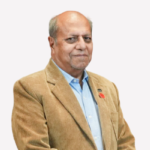






Before joining Mahindra University, he worked with Jaypee Institute of Information Technology, Noida (a deemed to be University). Dr. Chandra received his Ph.D. from JUIT, Solan, HP in 2010. During his teaching career of more than 22 years, he has taught courses such as Deep Learning, Artificial Intelligence, Data Structures, Soft Computing and Design and Analysis of Algorithms. He has served many universities as head examiner, thesis evaluator and expert of selection committee and question paper setter. He has been Involved in various outreach events that help promote learning and support the community. Dr. Satish has taken lead roles in curriculum development, NBA accreditation, NAAC and NIRF ranking process.

  • Ph.D. (Computer Science & Engineering) : Jaypee University of I.T., Solan, HP, 2010
  • M.Tech.: Birla Institute of Technology, Mesra, Ranchi, 2002
  • B.E.: Birla Institute of Technology, Mesra, Ranchi., 1997

  • Aug 2025 – present, Professor, in the Department of CSE, Mahindra University
  • Jan 2023 – Aug 2025, Associate Professor, in the Department of CSE, Mahindra University
  • Professor (2021-2023), Jaypee Jaypee Institute of Information Technology, Noida
  • Assistant Professor, Associate Professor (2011-2015), Jaypee Institute of Information Technology, Noida
  • Assistant Professor (2010-2011), Jaypee University of I.T., Solan, HP
  • Lecturer Professor (2003-2010), Jaypee University of I.T., Solan, HP
  • Associate Lecturer (2000-2003), Birla Institute of Technology, Mesra, Ranchi,
  • Systems Engineer (1997-1999), Hindustan Motors Ltd. , Kolkata

Artificial Intelligence and Machine Learning
Medical Image Analysis
Metaheuristic Computing,

Research Guidance – PhD (Completed): 05
M.Tech. (Completed): 15

With an undeterred motto for creating a Just Society, Sridhar Acharyulu has been an acclaimed academician and a seasoned professional, with opulent multi-disciplinary and Inter-disciplinary experience in law and media. Before joining Mahindra University, he served as a professor, in the School of law, at Bennett University, Greater Noida. Prior to that, he was the Central Information Commissioner (Rank equivalent to Election Commissioner/Supreme Court Judge) from 2013 to 2018; during which he delivered, several landmark judgements and orders, on transparency and privacy, under the Right to Information Act. He also served as Registrar of NALSAR University, Hyderabad. He has earned his Ph.D. in Law from Osmania University, Hyderabad.

Prof. Acharyulu is a truth-seeking columnist on socio-political happenings and policies of the state. He has written and published 50 books on Law and Journalism in both Telugu and English, more than 100 research articles and thousands of news-paper articles. As a part of his professional distinction, he has been a columnist in Sakshi (Popular Telugu Daily) and Hans India (English Daily Hyderabad). He has also prepared a status report on Child Rights in Andhra Pradesh 2000-01. As a part of his rights awareness, he has Anchored “Bhoomi Kosam” (For land) in Telugu live phone-in program on a Telugu TV channel HMTV in 2012 spanning 61 weekly episodes on Sunday during prime time.

  • LL.D.: Got LL.D. for my thesis on Judicial Legislation on Privacy versus Parliamentary Act on Right to Information in 2018.
  • Ph.D.: Ph.D. on Media Law topic “Freedom of Speech Expression vis-à-vis Law of Defamation”.
  • LL.M. Specialization in Law of Crimes and Torts
  • MCJ: Master of Communications & Journalism: Awarded 4 gold medals in M.C.J. including one for Thesis on Freedom of Speech and Contempt of Court.
  • LL.B. Awarded Gold Medal

Book Chapters
  • Dr M Sridhar Acharyulu, “Global Legal Education and NEP 2020: Availability, Accessibility and Affordability” book “Globalization of Professional Legal Education, Constitutional Conceptus” Edited by Nuzhat Parveen Khan & Garima Tiwari, Bloomsbury, 2021, ISBN 978-93-54350-82-5
  • Law Books (Published in English)
  • RTI: Duty to Disclose, 2019 Revised Edition of RTI Use and Abuse, 2015, Allahabad Law Agency Faridabad, Haryana
  • Privacy as Secrecy: (September 2018), Asia Law House, Hyderabad
  • Is Bribery a Family Affair? Analysis of Privacy of Public Servants, 2017 publication in Visakhapatnam.
  • Telangana, AP Reorganization Act, 2014, Asia Law House, Hyderabad 2015
  • Telangana: The 29th State Empowered by Article 3: Mohan Law House Delhi, 2014
  • Constitutional Governance and Judicial Process: Editor: Asia Law House, 2014
  • Nirbhaya Act (Is it impossible to stop RAPE), Asia Law House, 2013
  • Media Law- Policy, Module 1, PG Diploma Course, NalsarPro, Hyderabad.2012
  • New Media- Internet, Module III, PG Diploma Course, Nalsar Pro, Hyderabad. 2011
  • Judging Right to Information, Center for Good Governance, 2011
  • The Other side of Nuclear Liability, All India Lawyers Union AP Committee, 2010
  • Environmental Empowerment: Asia Law House, Hyderabad August 2009
  • Unfair Rent and Uncontrollable Controls, Asia Law House, Hyderabad, August 2009
  • Elections and Media: Kalaala Kaapalaa, Telugu Book on role of media in covering elections, AP Press Academy, Hyderabad. 2009 March
  • Law of Expression: (Law for Media) Asia Law House, Hyderabad, May 2007 publication, Pages 1300
  • Co-editor: P.A. Choudary’s Vision and Mission, Indian Constitutional Governance (analysis of Judgments of Justice Choudary) Asia Law House, Hyderabad, 2007 June.
  • Ramaswamy Iyer’s Law of Torts, Co-author, with Prof A. Lakshminath, published by Butterworth’s, New Delhi, 2007
  • Right to Information, Wadhwa, Nagpur, 2006, New Delhi
  • Alternative Dispute Resolution, Negotiation and Mediation, 2006, Butterworth’s, New Delhi Legal Language, Asia Law House, Hyderabad.
  • Asia Law House
  • “FIR, Arrest & Bail” published by Asia Law House.
  • Appointment of Judges
  • “Appointment of Judges: A Critical Analysis”, A Research Project for publication to Lok Satta, Hyderabad
  • Constitutional Foundations of Media Law, Module II, PG Diploma Course, Nalsar Pro, Hyderabad, 2010
  • Advertisements and Law, Fourth Module for Media Law, PG Diploma Course, Nalsar-pro, Hyderabad. 2010
  • List of Books in Telugu
  • Nilichi Gelichina Telangana, (Telugu book on formation of Telangana State) Asia Law House, 2015
  • Andhra Pradesh Vibhajana Chattam, 2014, Telugu Book on AP Reorganization Act, 2014, Asia Law House, Hyderabad, 2015.
  • Supreme Court Judgment on Salwa Judum, 2013
  • Ayodhya Teerpu: Telugu book on Ayodhya Judgment, published by EMESCO, Hyderabad, 2011
  • Right to Information Telugu Booklet, published by Telugu University and AP Official Language Commission, 2006
  • Equal Rights to Daughters, Telugu Book published by Telugu University and AP Official Language Commission, 2006
  • Asia Law House
  • Samacharam Mana Janma Hakku, Right to Information, Our Birth Right, Telugu book by Asia Law House, Hyderabad.
  • Dharmasana Chaitanyam
  • Dharmasana Chaitanyam, (Judicial Activism in Telugu)
  • Kaarmika Chattalu (Labour Laws in Telugu) revised in 2013
  • FIR, Arrest & Bail (Telugu) Revised in 2012
  • Mahilalu Chattalu (Women & Law in Telugu) Revised in 2012
  • Panchanama
  • Panchanama (Telugu)
  • Patrikarachana
  • Patrikarachana -ParuvuNastam – Court dhikkaram, writing for the press, Defamation and Contempt of Court in Telugu) publication by A.P. Press Academy, Hyderabad)
  • Nyayavyavastha (Judicial System), a book in Telugu, published by Telugu Academy, Government of Andhra Pradesh, Hyderabad, 2004
  • Paryavarana Parijnanam, Environmental Law in Telugu, published by NALSAR under Environment Capacity building programme. 2003
  • Booklets for National Human Rights Commission
    • Bonded Labour, NALSAR- NHRC booklet published, (Telugu Booklet) April 2005
    • Manual Scavenging, NALSAR- NHRC (Telugu Booklet), April 2005
    • Human Rights Commission, NALSAR- NHRC (Telugu Booklet), April 2005
    • International Treaties on Human Rights, NALSAR- NHRC (Telugu Booklet), April 2005
    • Sexual Harassment, NALSAR- NHRC (Telugu Booklet), April 2005
    • Human Rights and AIDS, NALSAR- NHRC (Telugu Booklet), April 2005
    • Child Labour, NALSAR- NHRC (Telugu Booklet), April 2005
    • Rights of Disabled, NALSAR- NHRC (Telugu Booklet), April 2005

    • July 2021 to Present, Advisor and Professor MU
    • Professor, School of Law, Bennett University, 2018-2021
    • Chief Information Commissioner 2013-2018
    • Registrar NALSAR University 2011-12
    • Chair Professor IPR (MHRD) NALSAR 2008-09
    • Coordinator NALSAR Proximate Education Centre 2008-09
    • Coordinator: Centre for Media Law & Public Policy
    • Vice Principal,Pendekanti Law College, Hyderabad 1994-2000

    • Media Law topic “Freedom of Speech Expression vis-à-vis Law of Defamation.
    • Judicial Legislation on Privacy versus Parliamentary Act on Right to Information in 2018.

    Prof. (Dr.) Ranbir Singh is the Founder Vice-Chancellor of National Law University Delhi, established by the Delhi Government in 2008. Prof. Singh has been a Vice-Chancellor for over 22 years now.

    He is the Past President of the Association of India Universities (AIU) and the Shastri Indo-Canadian Institute (SICI).

    Born in September 1949, Prof. Singh obtained B.Sc., LL.B., LL.M., and Ph.D. Degrees from Kurukshetra University. Thereafter, he continued there as a Faculty member till 1978. He then moved to Maharshi Dayanand University at Rohtak as the founding Faculty and continued there till 1996 in various capacities as Professor, Head, Dean, and Proctor. He served as Professor of Law at NLSIU during 1996-97.

    He was invited to be the Founder Vice-Chancellor of NALSAR, University of Law, established by the Andhra Pradesh Government in 1998. He has been there for ten years as the Vice-Chancellor of the well-known premier institution for legal education and research in the country, which was rated as one of the Best universities in the Country in the year 2008 in ‘India Today’.

    Prof. Singh’s contribution in redesigning legal education in the country has been instrumental, especially since he has been associated with three best law schools in India, i.e. Bangalore, Hyderabad and Delhi.

    His legal writings span the areas of Jurisprudence, Human Rights, Legal Education, Legal Aid, Personal Laws, and Justice Education, and he has more than 50 research publications to his credit.

    He has edited two publications, one on “Human Rights Education, Law and Society” and the other on “Cyber Space and the Law – Issues and Challenges”. He has also co-authored two scholarly publications, one on Fiscal Federalism – Constitutional Conspectusand the other on Constitutional Law. Under his guidance, several scholars have been awarded Ph.D. Degrees.

    Prof. (Dr.) Ranbir Singh has been assisting the Ministry of External Affairs, Government of India in preparing the India’s National Report on Human Rights for the First UPR (2008), Second UPR (2012), and Third UPR (2017). He was also a part of the High Level Indian Delegation which presented the First, Second and Third Universal Periodic Review (UPR) at United Nations Human Rights Council, Geneva held in 2008, 2012 and 2017 respectively.

    • Ph.D., Kurukshetra University
    • LL.M., Kurukshetra University
    • LL.B., Kurukshetra University
    • B.Sc., Kurukshetra University

    No Data

    • Advisor, School of Law, Mahindra University, 2025
    • Founder Vice-Chancellor of National Law University Delhi,
    • Founder Vice-Chancellor of NALSAR, University of Law,
    • Professor of Law at NLSIU, 1996-97.
    • Founding Faculty, Maharshi Dayanand University, Rohtak
    • Faculty member, Kurukshetra University,

    Awards and Recognition:

    Prof. Singh has been the recipient of many awards in recognition of his accomplishments, both as an administrator and teacher/researcher, and some of them are:

    • ‘Ambassador For Peace’ award for promoting peace and harmony by Universal Peace Federation – 2019;
    • “Lawyers’ of India’ Day Award – 2018″, for outstanding contribution to the development of Legal Education in India from Bar Association of India – 2018;
    • Symbiosis-IALS Life Time Achievement Award for Excellence in Legal and Justice Education by International Association of Law Schools, USA & Symbiosis University, Pune – 2017;
    • Life Time Achievement Award in recognition of the exemplary contribution towards Legal Education by Saveetha University – 2015;
    • ‘Karmayogi Samman’ by Haryana Institute of Fine Arts – 2012;
    • Professor N.R. Madhava Menon Best Law Teacher Award – 2011.
    • Lex Witness recognized him in the “Hall of fame: Top 50”, as an individual who have helped shape the legal landscape of modern India.
    • He was awarded “Alumnus of Distinction” by His Excellency, Dr. A. P. J. Abdul Kalam, former President of India – 2007.
    • British Council had portrayed him as one of the 12 talented, creative, and generous spirits who are making an effort personally and through their institution to ensure their engagement with the U.K., works to mutual benefit.

    Dr. E.R. Jayaram is a seasoned academic leader, legal educator, and institutional builder with over two decades of experience across premier legal institutions in India. As Dean of the School of Law at Mahindra University, he brings a visionary approach to legal education, drawing on his leadership roles at Manipal University Jaipur, GD Goenka University, and other law schools where he has successfully driven curriculum innovation, improved institutional rankings, and fostered international collaborations.

    Dr. Jayaram’s academic expertise lies in Intellectual Property Rights, with a Ph.D. focused on Genomic Data Protection and IPR Management through Open-Source Systems. His career has been marked by foundational roles in establishing law schools, setting up institutional centres for arbitration and mediation, and fostering academic ecosystems aligned with andragogical principles, Outcome-Based Education, and assurance of learning.

    Before entering academia, he served as an Associate Lawyer at Fox Mandal & Associates, one of India’s most respected corporate law firms. This experience gave him deep exposure to corporate law, commercial litigation, and intellectual property practice, which continue to enrich his academic and pedagogical framework. His transition into higher education has been consistently driven by a vision for learner autonomy, experiential learning, and professional readiness.

    As Dean at Manipal University Jaipur, he led the initiative to establish the Manipal International Centre for Conflict Resolution -India’s first institutional arbitration and mediation centre within a law school. This pioneering initiative was recognised with the Best ADR Innovation Award by the Asia-Pacific Centre for Arbitration & Mediation (APCAM). Dr. Jayaram also spearheaded the establishment of Justice Delivery Centres in academic institutions through the Gate to Justice (G2J) initiative, in partnership with the Indian Institute of Arbitration and Mediation (IIAM). These centres advance access to justice, community-based mediation, and the integration of alternative dispute resolution mechanisms into legal education and outreach.

    He was also instrumental in establishing Mar Gregorios College of Law (MGCL), where he played a pivotal role in shaping the college’s rise to prominence within Kerala’s legal education landscape. MGCL was honoured with the Institutional Excellence Award by the Society of Indian Law Firms and the Menon Institute of Legal Advocacy and Training (MILAT) in 2017. Dr. Jayaram also led the first National Law Reforms Competition in collaboration with the Law Commission of India, and oversaw the establishment of the Prof. (Dr.) N.R. Madhava Menon Chair on Legal Education.

    Dr. Jayaram’s research interests is in the area of IPR, biodiversity law, innovation policy, and technology law. He has authored several impactful publications and contributed to conference proceedings, while actively participating in national and international academic forums. His early research with the Virtual University for Agricultural Trade (VUAT) at Kerala Agricultural University focused on IPR, biodiversity, WTO law, and capacity building for local governance. He also contributed to a UNCTAD-supported study on trade and agriculture.

    He currently serves as a Member of the Bar Council of India’s Inspection Committee, contributing to regulatory oversight and quality enhancement in legal education.

    • Ph.D. (Intellectual Property Rights- Law) Mahatma Gandhi University
    • LL.M (Intellectual Property Rights- Law) Mahatma Gandhi University
    • BA LL.B Mangalore University

    Publications
    • He has authored several impactful publications in the areas of IPR, data protection, and legal education, and has contributed to conference proceedings while actively participating in national and international academic forums.

    • Dean and Professor of Law, Mahindra University, May 25- Present
    • Dean and Professor of Law, GD Goenka University, June 24- May 25
    • Dean and Professor of Law, Manipal University, Jaipur, June 22- June 24
    • Principal, Co-operative School of Law, June 20- June 22
    • Mar Gregorios College of Law, June 17- June 20
    • Associate Professor & HOD -SDM Law College, Sept 16 – June 17
    • Associate Professor, Co-operative Law College, June 13- Aug 16
    • Assistant Professor, Mar Gregorios College of Law, Trivandrum, July 12- June 13
    • Visiting Faculty, National University of Advanced Legal Studies, Jan 12- July 12
    • Visiting Faculty, School of Indian Legal Thought, Aug 08-July 12
    • Project Associate, Kerala Agricultural University, Aug 06- Aug 08
    • Associate Lawyer (Corporate & IPR), March 2000- Feb 2006

    Dr. Jayaram holds a deep research interest in intellectual property law, legal education, and access to justice. His early work focused on genomic data protection, open-source innovation, and biodiversity law, with contributions to policy-oriented research through projects at Kerala Agricultural University and UNCTAD.

    In recent years, his academic focus has expanded to the reform of legal education, particularly through learner-centric, outcome-based curriculum design grounded in andragogical approaches.

    His current area of interest involves integrating the professional practice of mediation and arbitration into legal education to strengthen access to justice, with particular emphasis on community mediation and institutional dispute resolution.

    Dr. Venkataraman has been associated with Mahindra university since its inception and its formative years at Mahindra Ecole centrale (MU) since 2014. Prior to joining MU, he has several years of post-doctoral research experience at the Laboratory for surface science and technology, Department of materials (D-MATL), Swiss federal institute of technology (ETH), Zurich, Switzerland. He obtained Ph.D. from the Department of inorganic and physical chemistry, Indian Institute of Science (I.I.Sc), Bangalore. His Ph.D. thesis has been recognized by Dr. A. Nagaraja Rao Medal and Dr. J. C. Ghosh Medal as the best Ph.D. thesis of the year in the division of chemical sciences and in the department of inorganic and physical chemistry. His current research interests are in the areas of surfaces and interfaces, surface modification, patterning and spectroscopy.

    • Ph.D.: Dept. of Inorg. & Phys. Chem., Indian Institute of Science, (IISc) Bangalore, India, 2002.
    • M.Sc.: Indian Institute of Technology, Mumbai, India, 1995. Specialization : Physical Chemistry.
    • B.Sc.: Chemistry: Salem Sowdeswari College, Salem, University of Madras, 1993.

    JOURNAL ARTICLES:
    • Cristiana Passiu, Antonella Rossi, Laetitia Bernard, Dennis Paul, John Hammond, Wolfgang E. S. Unger,Nagaiyanallur V. Venkataraman, and Nicholas D. Spencer “Fabrication and Microscopic and Spectroscopic Characterization of Planar, Bimetallic, Micro- and Nanopatterned Surfaces” Langmuir, 2017, 33, 5657−5665.
    • N. V. Venkataraman, D. Kumar, A. Rossi, S. Zurcher, N. D. Spencer “Tailoring SU-8 Surfaces: Covalent Attachment of Polymers by Means of Nitrene Insertion” Langmuir, 2014, 30, 10107.
    • Naik, V; Crobu, M; Venkataraman, N. V; Spencer, N. D. “Multiple Transmission-Reflection IR Spectroscopy Shows that Surface Hydroxyls Play only a Minor Role in Alkylsilane Monolayer Formation on Silica” J. Phys. Chem. Lett., 2013, 4, 2745.
    • Beurer, E; Venkataraman, N. V; Sommer, M; Spencer, N. D. “Protein and Nanoparticle Adsorption on Orthogonal, Charge-Density-Versus-Net-Charge Surface-Chemical Gradients”, Langmuir, 2012, 28, 3159.
    • Amstad, E; Gehring, A. U; Fischer, H; Venkataraman V. N ; Hahner, G; Textor, M; Reimhult, E. “Influence of Electronegative Substituents on the Binding Affinity of Catechol-Derived Anchors to Fe3O4 Nanoparticles” J. Phys. Chem. C, 2011, 115, 683.
    • Beurer, E; Venkataraman, N. V.; Rossi, A; Bachmann, F; Engeli, R; Spencer, N. D. “Orthogonal, Three-component, Alkanethiol-based, Surface-Chemical Gradients on Gold” Langmuir, 2010, 26, 8392.
    • Heeb, R.; Lee, S.; Venkataraman, N. V.; Spencer, N. D. “Influence of Salt on the Aqueous Lubrication Properties of End-Grafted, Ethylene Glycol-based Self-assembled Monolayers (SAMs)” ACS Appl. Mater. Interfaces, 2009, 1, 1105.
    • Venkataraman, N. V.; Zurcher, S.; Rossi, A.; Lee, S.; Naujoks, N.; Spencer, N. D. “Spatial Tuning of Metal Work Function by means of Alkanethiol and Fluorinated Alkanethiol Gradients” J. Phys. Chem. C, 2009, 113, 5620.
    • Liu, H-B.; Venkataraman, N. V.; Bauret, T.; Textor, M.; Xiao, S-J. “Multiple Transmission-Reflection Infrared Spectroscopic Measurement for High-Sensitivity Detection of Monolayers on Silicon Surfaces” J. Phys. Chem. A. 2008, 112, 12372.
    • Liu, H-B.; Venkataraman, N. V.; Spencer, N. D.; Textor, M.; Xiao, S-J. “Structural Evolution of Self-Assembled Alkanephosphate Monolayer on TiO2Chem. Phys. Chem. 2008, 9, 1961 (featured as cover page).
    • Lee, S.; Heeb, R.; Venkataraman, N. V.; Spencer, N. D. “Macroscopic Tribological Testing of Alkanethiol Self-Assembly Monolayers (SAMs): Pin-on-Disk Tribometry with Elastomeric Sliding Contacts” Tribol. Lett., 2007, 28, 229.
    • Spori, D. M.; Venkataraman, N. V.; Tosatti, S. G. P.; Durmaz, F.; Spencer, N. D.; Zurcher, S. “Influence of Alkyl Chain Length on Phosphate Self-Assembled Monolayers” Langmuir, 2007, 23, 8053.
    • Suresh, R.; Venkataraman, N.; Vasudevan, S.; Ramanathan, K. V. “Conformational Mobility in Alkyl-Chains of an Anchored Bilayer” J. Phys. Chem. C, 2007, 111, 495.
    • Venkataraman, N. V.; Zurcher, S.; Spencer, N. D. “Order and Composition of Methyl-Carboxyl and Methyl-Hydroxyl Surface-Chemical Gradients” Langmuir, 2006, 22, 4184.
    • Venkataraman, N. V.; Vasudevan, S. “Binding of cholesterol to an intercalated surfactant bilayer” J. Phys. Chem. B, 2003, 107, 10119.
    • Venkataraman, N. V.; Vasudevan, S. “Solubilization of phenol in an intercalated surfactant bilayer” J. Phys. Chem. B, 2003, 107, 5371.
    • Barman, S.; Venkataraman, N. V.; Vasudevan, S.; Seshadri, R. “Phase transitions in the anchored organic bilayers of long-chain alkylammonium lead iodides (CnH2n+1NH3)2PbI4; n = 12, 16, 18” J. Phys. Chem. B, 2003, 107, 1875.
    • Venkataraman, N. V.; Mohanambe, L.; Vasudevan, S. “Functionlization of internal surface of layered cadmium thiophosphate with cationic surfactant: adsolubilization of neutral organic molecules” J. Mater. Chem., 2003, 13, 170.
    • Venkataraman, N. V.; Bhagyalakshmi, S.; Vasudevan, S.; Seshadri, R. “Conformation and orientation of alkyl chains in the layered organic-inorganic Hybrids: (CnH2n+1NH3) 2PbI4 (n=12,16,18)” Phys. Chem. Chem. Phys., 2002, 4, 4533.

    • Jan 2021 – Associate Professor, Department of chemistry, Ecole Centrale school of Engineering, Mahindra university, Hyderabad, India
    • Mar 2014 – Dec 2020: Associate Professor, School of Natural Sciences, Mahindra Ecole Centrale (MU), Hyderabad, India
    • Apr 2010 – Mar 2012 & Jan 2013 – Jan 2014: Senior Scientist (Oberassistent): Laboratory for Surface Science and Technology, Department of Materials, Swiss Federal Institute of Technology (ETH)-Zurich, Switzerland
    • Jan 2003 – Mar 2010: Post-Doctoral Assistant: Laboratory for Surface Science and Technology, Department of Materials, Swiss Federal Institute of Technology (ETH)-Zurich, Switzerland
    • Nov 2002 – Jan 2003: Academic Guest: Laboratory for Surface Science and Technology, Department of Materials, Swiss Federal Institute of Technology (ETH)-Zurich, Switzerland
    • Aug. 1996–Jul. 1998 & Aug.1998–Jul. 2001: Junior/Senior Research Fellow: Department of Inorganic and Physical Chemistry, Indian Institute of Science, Bangalore, India
    • 1996: Project Scientist: Department of Metallurgy and Material Science, Indian Institute of Technology, Mumbai, India

    • Physicochemical modification of surfaces
    • Self-assembled monolayers
    • Controlling surface roughness/topography
    • Micro and nano-scale patterning
    • Surface spectroscopy

    Current research topics:

    • Structure-property correlations in surface modification for tribological applications
    • Understanding the role of surface roughness and surface chemistry in controlling heterogeneous crystallization

    Dr. Chitra Gurnani is currently an Professor at Department of Chemistry, École Centrale School of Engineering, Mahindra University, Hyderabad. Her research primarily focusses on designing materials for energy and sustainability. Dr. Gurnani undertook her Ph.D. in Chemistry in 2009. Following her Ph.D., she she was awarded the Royal Society Newton International Fellowship (2011-2013) where she explored new methods for the deposition of important functional binary semiconductor materials towards important targets in energy and electronics at University of Southampton, UK. She then joined as Research Fellow at Nanyang Technological University, Singapore where she worked on the synthesis of novel low coordinate/low valent main group compounds (primarily Group 13 and Group 15), and further elucidated their underlying electronic structure and patterns of reactivity. She joined Mahindra Ecole Centrale as an Assistant Professor in October 2015.

    • Ph.D. Chemistry, MDS University, India (2009)
    • M.Sc. Chemistry, MDS University, Ajmer, India (2005)
    • B.Sc. (Chemistry Hons), MDS University, Ajmer, India (2003)

    • Sayali Shrishail Harke, Yogesh Jadhav, Vikas B. Patil and Chitra Gurnani (2025). Facile Solution-Processed Deposition of Bi2S3 Nanostructures for a Highly Sensitive and Selective Room-Temperature NO2 Sensor. ACS Appl. Electron. Mater., 7(3), 1291–1304.
    • Prajakta N. Gaikwad, Trishala R. Desai, Souradyuti Ghosh and Chitra Gurnani (2024). Flexible Nanostructured NiS-Based Electrochemical Biosensor for Simultaneous Detection of DNA Nucleobases. ACS Omega, 10(3), 2561–2574. (Selected as Front cover page)
    • Trishala R. Desai, R. Sai Prasad Goud, Tukaram D. Dongale and Chitra Gurnani (2024). Evaluation of Nanostructured NiS2 Thin Films from a Single-Source Precursor for Flexible Memristive Devices. ACS omega, 8(51), 48873-48883. (Selected as Front cover page)
    • Trishala R. Desai, Aashi Gupta, Chitra Gurnani. 2024. Nanostructured NiS2 based Flexible Smart Sensors for Human Respiration Monitoring. Royal Society Philos. Trans. A, (Manuscript Accepted, DOI 10.1098/rsta.2023.0323).
    • Sayali Shrishail Harke, Tongjun Zhang, Ruomeng Huang and Chitra Gurnani * “Solution-based in-situ deposition of Sb2S3 from a single source precursor for resistive random-access memory devices”, Materials Advances, 2023, DOI: 10.1039/D3MA00205. (Selected as the inside front cover for an issue of Materials Advances).
    • T. R. Desai, S. S. Kundale, T. D. Dongale, C. Gurnani*, Evaluation of Cellulose-MXene Composite Hydrogel Based Bio-Resistive Random-Access Memory Material as Mimics for Biological Synapse. ACS. Appl. Bio Mat., 2023, 1, 1–34. (Selected as Front cover page).
    • C. Gurnani, S. L. Hawken, A. L. Hector, R. Huang, M. Jura, W. Levason, J. Perkins, G. Reid, G. Stenning, Dalton Trans., 2018, 47, 2628-2637.
    • S. L. Benjamin, C. H. de Groot, C. Gurnani, S. L. Hawken, A. L. Hector, R. Huang, M. Jura, W. Levason, E. Reid, G. Reid, S. P. Richards, G. Stenning, J. Mater. Chem. C, 2018, 29, 7734-7739.
    • R. Huang, S. L. Benjamin, C. Gurnani, Yudong Wang, A. L. Hector, W. Levason, G. Reid, C. H. (Kees) De Groot,Nature-Sci. Rep. 6, 2016, 27593-27597.
    • C. Gurnani, N. Đorđević, S. Muthaiah, D. Dimić, R. Ganguly, M. Petković, D. Vidović “Extending the chemistry of carbones: P–N bond cleavage via an SN2′-like mechanism” Chem. Commun., 2015, 51, 10762-10764.
    • Y. K. Loh, C. Gurnani, R. Ganguly, D. Vidović, “A Dicationic Iminophosphane.” Inorg. Chem., 2015, 54, 3087−3089.
    • S. L Benjamin, Y. Chang, C. Gurnani, A. L. Hector, M. Huggon, W. Levason, G. Reid, “Niobium (V) and Tantalum (V) halide chacogenoether complexes towards single source CVD precursors for ME2 thin Films.” Dalton Trans., 2014, 43, 16640. Selected for themed collection HOT articles Dalton Transactions 2014.
    • S. L Benjamin, C. H. (Kees) de Groot , C. Gurnani , A. L. Hector , R. Huang , E. Koukharenko, W. Levason , G. Reid , “Controlling the nanostructures of bismuth telluride by selective chemical vapour deposition from a single source precursor.” J. Mat. Chem. A, 2014, 2, 4865-4869.
    • R. Huang, P. N. Bartlett, S. L. Benjamin, C. Gurnani, A. L. Hector, A. Jolleys, G. P. Kissling, W. Levason, S. J. Pearce, G. Reid, C. H. (Kees) de Groot, “Selective Deposition of Phase Change Materials by Chemical Vapor Deposition and Electrodeposition.” European\Phase Change and Ovonics Symposium (E\PCOS), 2013, 11-14.
    • K. George, C. H. (Kees) de Groot , C. Gurnani , A. L. Hector , R. Huang , M. Jura , W. Levason , G. Reid , “Telluroether and Selenoether Complexes as Single Source Reagents for Low Pressure Chemical Vapor Deposition of Crystalline Ga2Te3 and Ga2Se3 Thin Films.” Chem. Mater., 2013, 25, 1829−1836.
    • C. Gurnani, A. L. Hector, E. Jager, D. C. Pugh, W. Levason, G. Reid, “Tin(II) fluoride vs. tin(II) chloride – a comparison of their coordination chemistry with neutral ligands.” Dalton Trans., 2013, 42, 8364-8374.
    • K. George, C. H. (Kees) de Groot , C. Gurnani , A. L. Hector , R. Huang , M. Jura , W. Levason , G. Reid , “Low pressure chemical vapour deposition of crystalline Ga 2Te3 and Ga2Se3 thin films from single source precursors using telluroether and selenoether complexes.” Physics Procedia., 2013, 142-148. (Special Issue EUROCVD19 Nineteenth European Conference on Chemical Vapor Deposition).
    • C. Gurnani , C. H. (Kees) de Groot , S. L Benjamin, A. L. Hector , R. Huang , K. Ignatyev, W. Levason , F. Thomas, G. Reid , “Area Selective Low Pressure CVD Growth of Titanium Diselenide Thin Films into Micro patterned Substrates.” Chem. Mater., 2013, 25, 4719-4724.
    • C. H. (Kees) de Groot , C. Gurnani , A. L. Hector , R. Huang , M. Jura , W. Levason , G. Reid , “Highly Selective Chemical Vapor Deposition of Tin Diselenide Thin Films onto Patterned Substrates via Single Source Diselenoether Precursors.” Chem. Mater., 2012, 24, 4442–4449.
    • C. Gurnani, M. Jura, W. Levason, R. Ratnani, G. Reid, M. Webster, “Preparation and structures of tellurium (IV) halide complexes with thioether coordination.” Dalton Trans. , 2009, 4122-4128.
    • C. Gurnani, M. Jura, W. Levason, R. Ratnani, G. Reid, M. Webster, “Synthesis, characterisation and structures of thio-, seleno- and telluro-ether complexes of indium (III) halides.” Dalton Trans., 2009, 1611-1619.
    • C. Gurnani, W. Levason, R. Ratnani, G. Reid, M. Webster, “Synthesis, characterisation and structures of thio-, seleno- and telluro-ether complexes of gallium (III).” Dalton Trans., 2008, 6274-6282.
    • J. Drake, C. Gurnani, S. Maheshwari, R. Ratnani, “Crystal structure of Bis[O,O’-di(p-tolyl)thiophosphoryl]disulphide,[(p-MeC6H4O)2PS2] 2.Anal. Sci., 2008, 24(9), x197-x198.
    • J. Drake, C. Gurnani, M. Hursthouse, M. Light, M. Nirwan, R. Ratnani, “Synthesis and spectroscopic characterisation of dimethyl/di(n-butyl)tin(IV)bisO,O’-ditolyldithiophosphate) complexes. Crystal Structures of Me2Sn[S2P(OC6H4Me-o)2]2 and n-Bu2Sn[S2P(OC6H4Me-o)2]2.” Appl. Organometal. Chem., 2007, 21, 539 – 544.
    • A. Bingham, J. Drake, C. Gurnani, M. Hursthouse, M. Light, M. Nirwan, R. Ratnani, “Triethyl ammonium salt of O,O’-bis(p -tolyl) dithiophosphate, [Et3NH]+[4-MeC6H4O]2PS2]2. J. Chem. Cryst., 2006, 36(10), 627-630.
    BOOK CHAPTERS:
    • C. Gurnani, W. Levason and Reid G. (2013) Macrocyclic Thio-, Seleno-, and Telluroether Ligands. In: Reedijk, J. (Ed.) Elsevier Reference Module in Chemistry, Molecular Sciences and Chemical Engineering. Waltham, MA: Elsevier. 11-Sep-2013 doi:10.1016/B978-0-12-409547-2.00979-3.
    • C. Gurnani , W. Levason and G. Reid. (2013) Acyclic Thio-, Seleno-, and Telluroether Ligands. In: Reedijk, J. (Ed.) Elsevier Reference Module in Chemistry, Molecular Sciences and Chemical Engineering. Waltham, MA: Elsevier. 11-Sep-2013 doi:10.1016/B978-0-12-409547-2.00887-8.
    Patents
    • Suprabha S. Dixit, Sayali Shrishail Harke, and Chitra Gurnani, “Metal sulfides-based device for on-site detection of heavy metal ions in water and method therefor”, India Patent application IN202441030989, April 2024.
    • Sayali Shrishail Harke and Chitra Gurnani, “Method of preparation of M2S3 (M=Sb, Bi) films at low temperature”, India Patent application IN202341027475, April 2023.
    • C. Gurnani , Sai Madhavan and Sai Tati Teja, “Portable Modular Interlocking and Low-Cost Redox Flow Cell Stack Unit” India Patent application, 202041048937, Dec 2021.
    SELECTED CONFERENCE PRESENTATIONS:
    • Selective Chemical Vapor Deposition of Nanoscale Arrays of Sb2Te3, C. Gurnani, W. Levason, G. Reid, 28thAnnual General Meeting of Material Research Society of India (MRSI-2017) IIT Bombay, Mumbai, India, (2017).
    • Chemical Vapor Deposition of Nanoscale Arrays of Main group chalcogenides, C. Gurnani, W. Levason, G. Reid, UK-India Symposium on Functional Materials, University of Edinburgh, UK, (2016).
    • Comparison of reactivity of carbodiphosphorane with different phosphines, C. Gurnani, D. Vidovic, 8th International Chemistry Conference, Singapore, (2014).
    Workshops
    • Participated in Workshop on “ Advanced Material Characterisation techniques” organised by IIT-Hyderabad Aug 2019.
    Invited Talks:
    • “Molecular Precursors for Selective Growth of Metal Chalcogenides for Sustainable Energy Harvesting Applications”, Chitra Gurnani, Commonwealth Science Congress 2021 (2021)
    • “New Reagents for selective growth of thermoelectric metal chalcogenides for energy harvesting” Chitra Gurnani, National Webinar conducted by Government Victoria College Palakkad, Kerala (2021).
    • Selective Chemical Vapor deposition of Chalcogenides for Thermoelectric Applications Chitra Gurnani, Resource Person for Faculty Development Program jointly organized by Commissionerate College Education Rajasthan and Department of Chemistry, SPC Government College Ajmer (2021)
    • Selective Chemical Vapour Deposition of Main Group Chalcogenides” Chitra Gurnani Department of Chemistry, University of Bath, UK, Feb 2016, UK
    • Chalcogenide Alloys: From Single Source Precursors to Phase Change and Thermoelectric Application, Chitra Gurnani STFC, Harwell Innovation Campus, Oxford (2015).
    • Invited talk at the Royal Society of Chemistry (UK)-India Deccan Local Section to deliver a lecture addressing UG and PG students Women in Science at St Ann’s College for Women, Mehdipatnam, Hyderabad on (2015).

    • Professor, Department of Chemistry, Mahindra University, Hyderabad, 2025
    • Associate Professor, Department of Chemistry, Mahindra University, Hyderabad, 2018 – 2025
    • Assistant Professor, Department of Chemistry, Mahindra University, Hyderabad, 2018- 2015
    • Research Fellow, Nanyang Technological University, Singapore 2013-2015
    • Royal Society Newton International Fellow, University of Southampton, UK, 2011-2013
    • Assistant Professor, Central University of Rajasthan, 2010
    • Lecturer,Regional Institute of Education (RIE), Ajmer

    My research area focusses on finding solutions to technologically and scientifically stimulating societal concerns, with a special emphasis on materials for energy and sustainability.

    • Design and engineering of next-generation flow-battery technologies
    • Chemical Vapour Deposition of Chalcogenide alloys for Energy Harvesting applications
    • Novel Routes to Clean Energy Technologies: Hydrogen generation by Photocatalytic Water Splitting
    • Two dimensional materials for high performance electrode materials for Lithium ion battery
    • Bioinspired Catalysis: New Nitrogenase mimics as materials for dinitrogen reduction

    Research Grants:

    • “Novel Routes to Clean energy Technologies, PI: Chitra Gurnani, Co-PI A. Gomathi Amount-6 Lakh, Funding Agency: Internal Research Call Mahindra University, Aug 2021.
    • Newton Alumni Funding (2014, 2015, 2016, 2017, 2021)PI: Chitra Gurnani, Amount awarded: ₤6000/year. Funding Agency: Royal Society, UK.
    • Newton International Fellowship (2011-2013); PI: Chitra Gurnani; Amount awarded ₤104,000

    Research Positions: Visiting Academic, Department of Chemistry, University of Southampton, UK

    PhD Students Under Supervision

    • Sayali Shrishail Harke
    • Trishala Rajendra Desai

    UG students (project completed)

    • Bharath Reddy (2021):Synthesis and Characterization of metal dithiophosphate complexes
    • Sai Madhavan, Sai Tati Teja (2020)– Redox Flow Battery
    • Shiva Bhisne, Sri Chandana (2017)— Interlocking Plastic Brick
    • Shaik Shahul (2016)-Nanostructured Thermoelectric Materials

    Professional Memberships

    • American Chemical Society (ACS)
    • Royal Society of Chemistry (RSC)
    • Material Research Society, (MRS),USA,
    • Material Research Society of India (MRSI)
    Awards
    • Newton International Fellowship (2011-2013) – awarded by The Royal Society, UK.
    • Commonwealth Split-Site Doctoral Scholarship (2007–2008) – awarded by the Foreign Commonwealth Office and Association of commonwealth universities, UK
    • Young Scientist Award (2006) – Prof A.K. Dey Memorial Award at 43rdAnnual Convention of Chemists of Indian Chemical Society, Aurangabad, India.
    • Young Scientist Award (2006)M.L Bhasin Memorial Award at 42nd Annual Convention of Chemists of Indian Chemical Society, Kolkata, India
    • Best Student Award (2005) – M.Sc. Chemistry, MDS University Ajmer, India
    Others

    PhD students (under supervision)

    • Sayali Shrishail Harke (Aug 2020)
    • Trishala Rajendra Desai (Jan 2021)
    • Suprabha Dixit (Aug 2022)
    • Prajakta Gaikwad (Aug 2022)

    UG students : Group News:

    PhD student Sayali Shrishail Harke has been awarded for poster presentation at International Conference on Emerging Materials for Sustainable Development (EMSD-2022) organized by IEEE at CSIR-CSIO, Chandigarh from 9th Oct -11th Oct 2022. Sayali received second prize in the category of Materials for Clean Energy. She presented her work on “Elucidation of performance of a portable, modular vanadium redox flow cell unit”.

    Dr. Jayasri Dontabhaktuni is an Professor in Department of Physics at Mahindra University. She is involved in teaching Classical and Quantum mechanics, Electromagnetic theory, Quantum Computing (elective), Nano thermodynamics for undergraduates and numerical methods for post-graduate students.

    Dr. Dontabhaktuni pursued her Ph.D. in Physics from University of Hyderabad, India. She went to pursue her post-doctoral studies with prestigious Marie-Curie fellowship at University of Ljubljana, Slovenia during 2009-2011. She got selected for DST FASTTRACK young scientist award in

    Her current research interests primarily include Quantum Algorithms, Soft photonics, dielectric metasurfaces, quantum technologies specifically using light-matter interactions with nanostructures and Inverse design of materials. She has been working on primarily design and application of novel devices using numerical simulations. In Quantum computing her main interests include hybrid quantum machine learning for robotics and health care applications, generative methods for inverse design of materials, optimization methods, etc.

    She has conducted various training programs on Quantum Computing, acted as resource person in FDP’s and workshops. She has conducted training on Quantum Computing to corporate engineers and other industry professionals apart from academia.
    She published in more than 20 international peer-reviewed journals with some prestigious journals like PNAS, Scientific Reports, Softmatter, etc and filed patents.

    • Ph.D. (Physics), University of Hyderabad, India, 2009.
    • M. Tech. (Computational Techniques in Physics), University of Hyderabad, India, 2004.
    • M. Sc. (Physics), Acharya Nagarjuna University, India, 2002.
    • B. Sc. (Physics), Nagarjuna University, 2000.

    Publication in peer-reviewed Journals
    • Anu. K. M and J. Dontabhaktuni, ‘Tailoring Quasi-BIC States in Liquid Crystal-Integrated WS2 Nanostructured Metasurfaces for Tunable High Q-Factor Optoelectronic Devices, ACS Appl. Nano Mater. , 8, 16, 8066–8075, 2025.
    • Warrier, S.R., Reddy, D.S.H., Bada, S. et al. On-board classification of underwater images using hybrid classical-quantum CNN-based method. Quantum Mach. Intell.6, 70, 2024. https://doi.org/10.1007/s42484-024-00206-8
    • Maruthiyodan Veetil, Rasna, Xu, Xuewu, Dontabhaktuni, Jayasri, Liang, Xinan, Kuznetsov, Arseniy I. and Paniagua-Dominguez, Ramon. “Nanoantenna induced liquid crystal alignment for high performance tunable metasurface”, Nanophotonics, vol. 13, no. 12, pp. 2127-2139, 2024.
    • Jayesh Sadasivan et al,Journal of Optics.25 125401, 2023.
    • Sakhare, P.A., Atmakuri, M. and Dontabhaktuni, J. Tailoring the resonant modes in liquid crystal based all-dielectric metasurfaces. Sci. Rep. 13, 6780 (2023) IF: 5. https://doi.org/10.1038/s41598-023-33693-z
    • Sakhare, P. A., & Dontabhaktuni, J. (2022). Ultra Fast Switching of DFLC Based Dynamic Metasurfaces. Frontiers in Physics, 207 IF: 3.7.
    • S. Amanaganti, M. Ravnik and J. Dontabhaktuni, ’Collective photonic response of high refractive index metasurfaces’, Sci. Rep, 10, 15599 (2020) IF:5
    • Jayasri Dontabhaktuni, Miha Ravnik and Slobodan Zumer, ’Quasi-Crystalline colloidal tilings in thin nematic films’, Crystals – Special Issue ”Structure and Properties of Quasicrystalline Materials”, 8(7), 275 (2018) IF:2.5.
    • SaiPraneeth Madduri, Miha Ravnik and Jayasri Dontabhaktuni, ‘Self-organized 3D Quasicrystalline structures in thin nematic films’, Softmatter (2018) (under review).
    • Jayasri Dontabhaktuni, Miha Ravnik and Slobodan Zumer, ‘ Designing colloidal quasi-crystals in nematic liquid crystals’, Proc. Natl. Acad. Sci., USA, 111, 2464 (2014). (https://www.pnas.org/content/111/7/2464.short)
    • Jayasri Dontabhaktuni, Regina Jose, K. P. N. Murthy and V. S. S. Sastry,’ Effect of phase shift between geometrical and chemical patterning in nematic liquid crystal cells: A Monte Carlo Study’, J. Comp. Mater. Sci., 92, 238-243, (2014).
    • Jayasri Dontabhaktuni, Miha Ravnik and Slobodan Zumer, ‘ Shape tuning the colloidal assemblies in nematic liquid crystals’, Softmatter, 8 1657-1663 (2012).
    • D. Jayasri, T. Sairam, K. P. N. Murthy and V. S. S. Sastry, ‘Liquid crystal films on curved surfaces: A multi-canonical Monte Carlo study’, Physica A, 390 4549-4554 (2011).
    • Regina Jose, D. Jayasri, Surajit Dhara, K. P. N. Murthy and V. S. S. Sastry, ‘Effect of external field on the nematic to isotropic transition: An entropic sampling study’, Mol. Cryst. Liq. Cryst. 545 168 (2011).
    • D. Jayasri, V. S. S. Sastry and K. P. N. Murthy, ‘Phase transitions in liquid crystal elastomers – A Monte Carlo study employing non-Boltzmann sampling’, Physica A, 388, 385-391 (2009).
    • D. Jayasri, V. S. S. Sastry and K. P. N. Murthy, ‘Effect of cross-link density on the nematic-isotropic phase transition in liquid crystal elastomers’, J. Comp. Mater. Sci. 44, 185-189 (2008).
    • D. Jayasri, V. S. S. Sastry and K. P. N. Murthy, ‘Wang-Landau Monte Carlo simulation of isotropic-nematic in liquid crystals’, Phys. Rev. E. 72, 036702 (2005).
    Publications in peer-reviewed conference proceedings
    • Sri Harshavardhan Reddy Devarapalli, Harshdeep Jadhav, Jayasri Dontabhaktuni, “Image compression using quantum wavelet transforms,” Proc. SPIE 13391, Quantum Computing, Communication, and Simulation V, 1339117 (2025); https://doi.org/10.1117/12.3056452
    • J. Sadasivan, S. Chowdhury, Rituraj, J. Dontabhaktuni, S. Krishnamurthy and S. Krishnan, “All Dielectric LWIR Metasurface Reflectors for Space Technologies,” 2024 IEEE Space, Aerospace and Defence Conference (SPACE), Bangalore, India, 2024, pp. 326-329, doi: 10.1109/SPACE63117.2024.10668251.
    • Bada, S., Warrier, S. R., & Dontabhaktuni, J. (2023). Detection of brain cancer using quantum-classical CNN-based method. Proc.SPIE, 12446, 1244616. https://doi.org/10.1117/12.265013.
    • Sadasivan, J., Krishnan, S. R., & Dontabhaktuni, J. (2021). Resonance characteristics of sub-wavelength high-refractive index dielectric metasurfaces as a function of lattice constant. Proc.SPIE, 11795, 117952N. https://doi.org/10.1117/12.259958.
    • S. Amanaganti and J. Dontabhaktuni, ‘High RI dielectric rings in liquid crystals as tunable metasurfaces’, Metamaterials XII 11025, 110250J (2019).
    • S. Amanaganti, D. R. Chowdhury, M. Ravnik and J. Dontabhaktuni, ’Electromagnetic response of dielectric nanostructures in liquid crystals’, Proc. SPIE 9004, Emerging Liquid Crystal Technologies XIII, 105551F, SanFrancisco, USA (2018).
    • Miha Ravnik, Jayasri Dontabhaktuni, Miha Cancula and Slobodan Zumer, ‘Nematic tilings as photonic materials’, Proc. SPIE 9004, Emerging Liquid Crystal Technologies IX, 90040C (2014).
    • D. Jayasri, T. Sairam, V. S. S. Sastry and K. P. N. Murthy, ‘Surface anchoring in thin nematic films: A non-Boltzmann Monte Carlo simulation’, Proceedings of the 52nd DAE Solid State Physics Symposium, Mysore, 191-192 (2007).
    Books
    • ‘Monte Carlo studies of liquid crystalline systems’, LAP Lambert Academic publishers, Germany, 2011.
    Awards
    • Selected for Dr. D. S. Kothari post-doctoral fellowship by UGC, India (2013)
    • Selected for Marie-Curie ITN ‘HIERARCHY’ project as experienced researcher (Aug 2009-2011).
    • Awarded DST Fast track young scientist award (2011).
    Panel Discussions
    • Panelist in ‘Funneling the quantum research eco-system’, Tech Mahindra, 14th April 2023 (online).
    • Panelist in ‘Pathways to pursuing Quantum for all’, QETCI, 23rd January 2023 (online).
    Invited Talks
    • ‘Hybrid Quantum Machine Learning methods-use cases in image classification’, Analog Devices on the occasion of Innovation Day, ADBI, Bangalore, 23rd June 2023.
    • ‘Quantum Machine learning methods – uses cases in image processing’, 19th May 2023.
    • ‘Soft Photonics – Liquid crystal based metasurfaces’, HydSoft, IIT Hyderabad, 13th May 2023. ‘Hybrid Quantum machine learning methods- Use cases in image classification’, SSSIHL, Jan 2023.
    • Quantum Machine learning methods – uses cases in image processing’, IIIT Bangalore, 19th May 2023; Silicon Valley quantum computing group meetup, USA, 10th June (online).
    • ‘Design of reconfigurable all-dielectric metasurfaces’, IIIT Hyderabad, June 2022.
    • ‘Quantum computing algorithms for image classification’, Collaboration discussion, Tech Mahindra, Pune, May 2022.
    • ‘Collective response of dielectric metasurfaces’, SSSIHL, Puttaparthi, 2021.
    • ‘Quantum Computing’, Tech Talk Series, Mahindra Research Valley (MRV), 8th June 2020 (online).
    • ‘High refractive index dielectric structures in liquid crystals as tunable metasurfaces’, LMIN 2019, IGCAR, Kalpakkam, 15th-17th July 2019.
    • ‘High refractive index dielectric rings in liquid crystals’, Wednesday Colloquium, Isaac Newton Institute of Mathematical Sciences, University of Cambridge, 29th May 2019.
    • ’Simulations in Softmatter’,International confer- ence on computer simulations in natural sciences, Presidency College, Madras, 4th-6th April 2018.
    • ‘Colloidal interactions in nematics’ at Soft matter young investigator’s meet, Pondicherry December 2015.
    • ‘Tuning the colloidal interactions in nematic liquid crystals’ at National conference on current trends in soft matter held at CUTN, Tiruvarur on 19-20th March 2015 (Acted as a session chair).
    • ‘Two-dimensional tilings of nematic colloids’ at CMBS-13, held in Jan 11-14th, 2013 at BHU, Varanasi, India.
    • ‘Computer simulations of liquid crystals – An overview’ at colloquium on Oct 2010, at CMSD, University of Hyderabad, Hydrerabad.
    Selected Conference Presentations
    • S. Bada, S. R. Warrier and J. Dontabhaktuni, ’Detection of brian cancer using Quantum-classical CNN based method’, QIP, Ghent, Belgium, Feb 2023; SPIE Quantum West USA 2023.
    • S. Warrier, S. Bada, R. Achanta, S. Uppapalli and J. Dontabhaktuni, ‘Motion-blur detection in underwater images using classical-quantum CNN based methods’, QIP, Ghent, Belgium 2023.
    • S. Amanaganti and J. Dontabhaktuni, ‘High refractive index dielectric rings in liquid crystals as tunable metasurfaces’, SPIE Opto+OptoElectronics 2019, 1-4th April 2019, Prague, Czech Republic.
    • S. Madduri, A. Bregar, M. Ravnik and J. Dontabhaktuni, ’Self-organized 3D quasicrystals in nematic liquid crystals’, International Liquid Crystal Conference 2018, Kyoto, Japan.
    • S. Amanaganti, M. Ravnik, D. R. Chowdhury and J. Dontabhaktuni, ‘Electromagnetic response of dielectric nanostructures in liquid crystals’, SPIE Photonics West OPTO (Emerging liquid crystal technologies XIII), San Fransisco, California, US (Jan 2018).
    • SaiPraneeth Madduri, Miha Ravnik and Jayasri Dontabhaktuni, ‘Self-organized 3D Quasicrystalline structures in thin nematic films’, COMPFLU-2017, IIT Madras, India (2017).
    • S. Amanaganti, D. R. Chowdhury, M. Ravnik and J. Dontabhaktuni, ’Electromagnetic response of dielectric structures in liquid crystals’, COMPFLU-2017, IIT Madras, India (2017).
    • Jayasri Dontabhaktuni, ‘Liquid Crystals in restricted geometries-A Monte Carlo study’, LACAM 2016, Mahindra Ecole Centrale, India.
    • Jayasri Dontabhaktuni, ‘Two-dimensional tilings of nematic colloidal platelets’, ILCC -2014, Trinity College, Dublin, Ireland.
    • Jayasri Dontabhaktuni, Miha Ravnik and Slobodan Zumer, ‘Shape tuning the colloidal assemblies in nematic liquid crystals’, poster presentation by a co-author in ILCC, 2012 held in August, at Mainz, Germany.
    • Jayasri Dontabhaktuni, Miha Ravnik and Slobodan Zumer, ‘Tuning the self-assembly of polygonal colloidal platelets in nematic liquid crystals: A numerical simulation study’, ECLC, Maribor, Slovenia, 2011.
    • Jayasri Dontabhaktuni, Miha Ravnik and Slobodan Zumer, ‘ Simulation of faceted colloidal particles in nematic liquid crystals’, 23rd ILCC, Krakow, Poland, (2010).

    • April 2014 – Present, Associate Professor, Ecole Centrale School of Engineering, Mahindra University
    • D. S. Kothari Post-Doctoral Researcher CMSD, University of Hyderabad
    • Marie Curie Experienced Researcher FMF, University of Ljubljana, Slovenia

    Current Research Interests:

    • Design of liquid crystal based metamaterials for applications in quantum technologies and sensing;
    • Design of hybrid 2D materials + dielectric materials for quantum technologies;
    • Hybrid quantum algorithms for inverse design of metamaterials with specific functionalities;
    • Quantum Algorithms in computer vision, data security and data compression; (technology development)
    • Simulations of self-organization of colloidal particles in liquid crystals, defects and topology;

    Funding:

    SERB – CRG for dielectric metamaterials (2018-2021),
    Industry funding for Quantum algorithm applications (2025-2027).

    Ram Prasad Sekar is an interdisciplinary researcher in the field of biotechnology and materials science engineering, with a focus on advanced drug delivery systems. He completed his Ph.D. at the Indian Institute of Technology Madras (India) under the supervision of Prof. A. Jayakrishnan and Prof. T.S. Sampath Kumar. His doctoral thesis mainly focused on the combinational delivery of anticancer drugs, developing bone void substitutes, and multidrug encapsulated ceramic/polymer grafted nanoparticles for bone cancer therapy.

    He served as a research associate at the Rajiv Gandhi Centre for Biotechnology (RGCB) in India, where he investigated polymer drug conjugates for brain-targeted drug delivery. Mainly his research at RGCB focused on investigating the blood-brain barrier permeability and pharmacokinetic properties of polymer drug conjugates. Then Ram moved to Colorado, USA, for his postdoctoral research at Colorado School of Mines (Mines), Colorado, USA. His postdoctoral research at Mines focuses on polymeric nanocarriers for effective nucleic acid delivery and CRISPR Cas9 RNP delivery (focus on gene editing for genetic diseases).

    He also had a brief career in the pharmaceutical sector, successfully transferring lab-scale drug formulations to pilot-scale production.

    Currently, he has joined as an assistant professor in the Center for Life Science department at Mahindra University. His research group is going to focus on gene therapy, drug delivery, and bi

    • Ph.D. – Biotechnology and Metallurgical & Materials Engineering (2014 – 2020) Indian Institute of Technology Madras (IIT Madras), Chennai, Tamil Nadu, India
    • M.Pharmacy – Pharmaceutics (2011 – 2013) Madras Medical College, The Tamil Nadu Dr. M.G.R. Medical University Chennai, Tamil Nadu, India
    • B.Pharmacy – Pharmaceutical Sciences (2006 – 2010) Madras Medical College, The Tamil Nadu Dr. M.G.R. Medical University Chennai, Tamil Nadu, India

    Publications
    • Adam P. Humpal, Alexander Dhupar, Ram Prasad Sekar, Nancy S. Muyanja, Anuj Chauhan, Ramya Kumar, “Polymer Microstructure Directs the Solvent-Selective Swelling Response of Polymer Brushes” Macromolecules 2025, 58, 17, 9110–912, https://doi.org/10.1021/acs.macromol.5c01659.
    • Ram Prasad Sekar, Jessica L. Lawson, Caleb McGrath, Grant Wheeler, Gautier Moreau, Chelsea G. Johansen, Nikki L. Farnsworth, and Ramya Kumar, “Tuning DLVO interactions alters polymer-mediated pDNA delivery in a cell type-dependent manner” Langmuir 2025https://doi.org/10.1021/acs.langmuir.5c00089.
    • Jessica L. Lawson, Ram Prasad Sekar, Aryelle R. E Wright, Grant Wheeler, Jillian Yanes, Jordan Estridge, Chelsea Johansen Nikki Farnsworth, Praveen Kumar, Jian Wei Tay, Ramya Kumar, “The spatial distribution of lipophilic cations in gradient copolymers regulates pDNA binding interactions, polyplex aggregation, and transgene expression. Biomacromolecules 2024 25 (10), 6855-6870,  https://doi.org/10.1021/acs.biomac.4c01101.
    • Aswathy Prasad, Ram Prasad Sekar, Smitha Devi Sudhamani, Jayakrishnan Athipettah, Lightson Ngashangva “Novel Functional Carbon Dots as Nanocarriers for Efficient-Loading and Sustained Release of Doxorubicin for Cancer Therapeutics”, Biomedical Materials2024, 19 065018, https://iopscience.iop.org/article/10.1088/1748-605X/ad7f3a.
    • Ram Prasad Sekar, Jessica L. Lawson, Aryelle R.E. Wright, Caleb McGrath, Cesar Schadeck, Praveen Kumar, Jian Tay, Joseph Dragovan, Ramya Kumar “Poly (L-glutamic acid) augments the transfection performance of lipophilic polycations by overcoming trade-offs among cytotoxicity, pDNA delivery efficiency, and serum stability” RSC Applied Polymers, 2024, 2, 701-718, https://doi.org/10.1039/D4LP00085D.
    • Ram Prasad Sekar, Sruthi Sudheendran Leena, Ani Deepthi, Resmi.A. N, Ramapurath S.Jayasree, K. S. Sandhya, A. Jayakrishnan, “Doxorubicin-Polysorbate 80 Conjugates: Targeting Effective and Sustained Delivery to the Brain” RSC Pharmaceutics, 2024, 1, 412 – 429. https://doi.org/10.1039/D4PM00053F
    • S. Ram Prasad, T. S Sampath Kumar, A. Jayakrishnan, “Nanocarrier based drug delivery systems for bone cancer therapy: a review” Biomedical Materials 2021, 16, 044107. https://doi.org/10.1088/1748-605X/abf7d5.
    • S. Ram Prasad, A. Jayakrishnan, T. S Sampath Kumar, “Hydroxyapatite-Dextran Methacrylate Core/Shell Hybrid Nanocarriers for Combinatorial Drug Therapy” Journal of Materials Research, 2020, 35, 18, 2451-2465, https://doi.org/10.1557/jmr.2020.193.
    • S. Ram Prasad, A. Jayakrishnan, T. S Sampath Kumar, “Combinational delivery of anticancer drugs for osteosarcoma treatment using electro sprayed core shell nanocarriers” Journal of Material Science: Materials in Medicine, 2020, 31, 44. https://doi.org/10.1007/s10856-020-06379-5.
    • S. Ram Prasad, A. Jayakrishnan, T. S Sampath Kumar, “Hydroxyapatite-poly(vinyl alcohol) core-shell nanoparticles for dual delivery of methotrexate and gemcitabine for bone cancer treatment” Journal of Drug Delivery Science and Technology, 2019.51:629-638. https://doi.org/10.1016/j.jddst.2019.03.041.
    • S. Ram Prasad, T. S Sampath Kumar, A. Jayakrishnan, “Ceramic core with polymer corona hybrid nanocarrier for the treatment of osteosarcoma with co-delivery of protein and anti-cancer drug” Nanotechnology, 2017, 29:015101. https://doi.org/10.1088/1361-6528/aa9a21.
    • Selvapriya Kumaraswamy, Sutharsan R. Thangasundaralingam, Ram Prasad Sekar, A. Jayakrishnan, “A floating-type dosage form of repaglinide in polycarbonate microspheres” Journal of Drug Delivery Science and Technology, 2017,41: 99-105.  https://doi.org/10.1016/j.jddst.2017.07.005.

    • Assistant Professor, Centre for Life Sciences (2026- Present)
    • Post-Doctoral Fellow (2023 – 2025) Colorado School of Mines, Golden, Colorado, USA
    • Research Associate (2020 – 2022) Rajiv Gandhi Center for Biotechnology (RGCB), Trivandrum, Kerala, India
    • Formulation R & D Technical Head (May 2020 – Sep 2020) Primas Bioscience Pvt. Ltd. Chennai, Tamil Nadu, India

    • Our research group focuses on drug delivery, gene delivery, and biomaterials.
    • Finding a better path towards delivering therapeutic cargos…
    • My overarching goal (long-term) is to discover an appropriate micro-or nanocarrier for the successful delivery of therapeutic payloads (small molecules, pDNA, mRNA, and CRISPR Cas9-RNP) for the treatment of neurodegenerative diseases. Distinct types of non-viral carriers such as polymers, lipids, metals, carbon nanotubes, dendrimers, polymer-conjugates, and hydrogels were employed for the delivery of small molecules, nucleic acids, RNPs. Each carrier has its unique advantages as well as its limitations; an appropriate carrier must be selected considering the disease site, target area, dose, and applications. Meticulous material (carrier) selection plays a pivotal role in successful drug and gene delivery. I would like to implement three major steps towards my research goals.
    • The first step is identification/selection and engineering the microstructure of delivery carriers based on the target site (transportation across BBB), disease (spinal muscular atrophy), and biological phenomenon (to overcome endocytosis, immune response and serum interactions).
    • Second, pre-screening the microstructure and nanocarrier properties employing computational/in silico or artificial intelligence (AI)/machine learning (ML) approaches to understand the pharmacokinetics and pharmacological parameters.
    • Third, optimizing the nanocarrier design rules and testing the engineered microstructures in suitable in vitro studies will be conducted using relevant cell lines. Therapeutic efficacy of the optimized combinational nano/micro formulations will be evaluated by in vivo animal studies.
    • Scopus Author ID:  57208089196
    • Google Scholar | ORCID | LinkedIn | ResearchGate

    Dr. Ashish Kumar did his Ph.D. at the National Institute of Immunology, New Delhi, India, in the laboratory of Dr. Dinakar M. Salunke, determining the structural function role of medicinally important plants. Later, he moved to the National Institute of Health, Bethesda, US, for his postdoctoral training under the direction of Dr. Joseph Marcotrigiano, and he determined the first structure of the hepatitis C virus surface glycoprotein E2 with its cognate human receptor, CD81, as a complex (Nature Journal, 2021). Dr. Ashish Kumar published numerous papers in the area of structural virology. From 2022, he became a research associate scientist (RF-FTE). He received the prestigious Salzman Award for the year 2022 from the Foundation of the National Institute of Health and, most recently, was a finalist in the prestigious trans-NIH Earl Stadtman Early Independent Faculty Career Award.

    • Ph.D. in Life Science (2008-2014) National Institute of Immunology, Jawaharlal Nehru University, New Delhi, India
    • MS in Biotechnology (2006-2008) University of Jammu, Jammu & Kashmir, India
    • B.Sc in Life Sciences (Zoology, Botany and Chemistry) (2003-2005) University of Lucknow, Uttar Pradesh, India

    Publications
    • Sara M Maloney, Teressa M Shaw, Kylie M Nennig, Malorie S Larsen, Aadit Shah, Ashish Kumar, Joseph Marcotrigiano, Joe Grove, Eric J Snijder, Robert N Kirchdoerfer, Adam L Bailey. CD81 is a receptor for equine arteritis virus (family: Arteriviridae). mBio 16:e00623-25. https://doi.org/10.1128/mbio.00623-25
    • Mart Reimund, Altaira D. Dearborn, Giorgio Graziano, Haotian Lei, Anthony M. Ciancone, Francis J. O’Reilly, Ashish Kumar, Ronald Holewinski, Edward B. Neufeld, Alan T. Remaley†, Joseph Marcotrigiano†. Structure of apolipoprotein b100 bound to low-density lipoprotein receptor. Nature (August 2024, In press)
    • Wei Bu, Ashish Kumar, Nathan L Board, JungHyun Kim, Kennichi Dowdell, Shu Zhang, Yona Lei, Anna Hostal, Tammy Krogmann, Yanmei Wang, Stefania Pittaluga, Joseph Marcotrigiano, Jeffrey I Cohen. Epstein-Barr virus gp42 antibodies reveal sites of vulnerability for receptor binding and fusion to B cells. Immunity, 57(3), 559–573.e6 (2024). https://doi.org/10.1016/j.immuni.2024.02.008
    • Jennifer Casiano Matos, Kaneemozhe Harichandran, Jingrong Tang, Denis O Sviri-dov, Giacomo Sidoti Migliore, Motoshi Suzuki, Lisa R Olano, Alvaro Hobbs, Ashish Kumar, Myeisha U Paskel, Mattia Bonsignori, Altaira D Dearborn, Alan T Remaley, Joseph Marcotrigiano. Hepatitis C virus E1 recruits high-density lipoprotein to support infectivity and evade antibody recognition. Journal of Virology 98(1):e0084923 (2024). http://doi:10.1128/jvi.00849-23
    • Ashish Kumar, Tiana Rohe, Elizabeth J. Elrod, Abdul G. Khan, Altaira D. Dearborn, Ryan Kissinger, Arash Grakoui, Joseph Marcotrigiano. “Regions of hepatitis C virus E2 required for membrane association. Nature Communications 14, 433 (2023). https://doi.org/10.1038/s41467-023-36183-y
    • Ashish Kumar, Reafa A. Hossain, Samantha A. Yost, Wei Bu, Yuanyuan Wang, Altaira D. Dearborn, Arash Grakoui, Jeffrey I. Cohen, and Joseph Marcotrigiano. “Structural insights into hepatitis C virus receptor binding and entry.” Nature 598, 521–525 (2021). https://doi.org/10.1038/s41586-021-03913-5
    • Abha Jain, Amit Kumar, Meha Shikhi, Ashish Kumar, Deepak. T. Nair, and Dinakar M. Salunke. “The structure of MP-4 from Mucuna pruriens at 2.22 Å resolution.” Acta Crystallographica Section F: Structural Biology Communications 76, no. 2 (2020): 47-57. https://doi.org/10.1107/S2053230X20000199
    • Sarita Chandan Sharma, Ashish Kumar, Sharad Vashisht, and Dinakar M. Salunke. “High resolution structural and functional analysis of a hemopexin motif protein from Dolichos.” Scientific reports 9, no. 1 (2019): 1-13. https://doi.org/10.1038/s41598-019-56257-6
    • Ashish Kumar, Harmeet Kaur, Abha Jain, Deepak T. Nair, and Dinakar M. Salunke. “Docking, thermodynamics and molecular dynamics (MD) studies of a non-canonical protease inhibitor, MP-4, from Mucuna pruriens.” Scientific reports 8, no. 1 (2018): 1-12. https://doi.org/10.1038/s41598-017-18733-9
    • Pidathala RV Shabareesh, Ashish Kumar, Dinakar M. Salunke, and Kanwal J. Kaur. “Structural and functional studies of differentially O‐glycosylated analogs of a thrombin inhibitory peptide–variegin.” Journal of Peptide Science 23, no. 12 (2017): 880-888. https://doi.org/10.1002/psc.3052
    • Ashish Kumar, Chitra Gupta, Deepak T. Nair, and Dinakar M. Salunke. “MP-4 contributes to snake venom neutralization by Mucuna pruriens seeds through an indirect antibody-mediated mechanism.” Journal of Biological Chemistry 291, no. 21 (2016): 11373-11384. https://doi.org/10.1074/jbc.M115.699173
    • Abha Jain, Ashish Kumar, and Dinakar M. Salunke. “Crystal structure of the vicilin from Solanum melongena reveals existence of different anionic ligands in structurally similar pockets.” Scientific reports 6, no. 1 (2016): 1-11. https://doi.org/10.1038/srep23600
    • Sharad Vashisht, Ashish Kumar, Kanwal J. Kaur, and Dinakar M. Salunke. “Antibodies can exploit molecular crowding to bind new antigens at noncanonical paratope positions.” ChemistrySelect 1, no. 19 (2016): 6287-6292. https://doi.org/10.1002/slct.201600945
    • For complete list of publications: https://scholar.google.com/citationshl=en&user=htNcKOEAAAAJ&view_op=list_works&sortby=pubdate

    • Research Associate Scientist (RF-FTE) (February 2022- present) National Institute of Allergy and Infectious Diseases (NIAID), National Institute of Health (NIH), Bethesda, Maryland 20892 US
    • Visiting Post-Doctoral Fellow (February 2018- January 2022) National Institute of Allergy and Infectious Diseases (NIAID), National Institute of Health (NIH), Bethesda, Maryland 20892 US
    • Post-Doctoral Research Fellow (December 2016- January 2018) The Pennsylvania State University, Eberly College of Science, University Park, PA-16802
    • Post-Doctoral Research Fellow and Senior Technology Office (December 2014- December 2016) National Institute of Immunology, Jawaharlal Nehru University, New Delhi, India, and Regional Centre for Biotechnology (RCB), Faridabad, Haryana (NCR Delhi), India

    • The goal of my research is to perform translational research based on knowledge being acquired through in vitro and in vivo and structural information on RNA viruses, particularly newly emerging and mutating viruses. One of the RNA virus families is flavivirus; it is an old family; however, many members still need attention to develop effective therapeutics. Flaviviruses have been identified as the causative agents of a number of human diseases. It consists of more than 70 small, positive-sense, single-stranded RNA viruses transmitted by arthropods, primarily ticks and mosquitoes. Since the global incidence of flavivirus infections is increasing due to climate change, globalization, and urbanization, there is an increased emphasis on understanding the molecular mechanisms underlying flavivirus infections and pathogenesis. Vaccines continue to be the most effective method for preventing viral infections. However, existing flavivirus vaccines can induce severe adverse effects and have certain limitations. Therefore, systematic and novel approaches to vaccine and drug discovery are required in the field of flavivirus. Mostly flaviviruses enter host cells via receptor-mediated endocytosis; however, flaviviruses utilize diverse receptors and attachment factors in various tissues of their natural hosts. Understanding the molecular mechanism by which flaviviruses use host cell receptors and factors for entry could facilitate the development of novel therapeutics. And, understanding the pathways that are being utilized by these viruses for the pathogenesis could be potential checkpoints for the development of an effective vaccine or drug. We will utilize cutting age techniques such as Cryo-electron microscopy (Cryo-EM), X-ray crystallography, and other biophysical techniques as a basic tool to address the questions in RNA virology.
    • Major Areas of Research-
      • Assembly and entry of RNA viruses
      • Understanding the molecular mechanisms of membrane fusion used by RNA viruses
      • Humoral immunity to RNA viruses
      • The development of therapeutics based on structural knowledge using either viral proteins or the whole virus

    Manish obtained his Ph.D. in Biotechnology from Calcutta University/Bose Institute, Kolkata in 2019. During his doctoral research in the laboratory of Prof. Basu, he studied the role of host microRNAs and transcription factors mediated regulation of Mycobacterium tuberculosis infection. Subsequently, he joined Dr. Altan-Bonnet’ lab at National Heart, Lung, and Blood Institute, National Institutes of Health, USA from 2019-2021, as a postdoctoral fellow to study Host-Virus dynamics and role of extracellular vesicles in virus transmission. He then moved to Dr. Vidigal’s lab at National Cancer Institute, National Institutes of Health, USA from 2022-2025 to explore the role of RNAi in disease and development. He joined Centre for Life Sciences as an Assistant Professor in 2025.

    • Ph.D. in Biotechnology from Calcutta University/Bose Institute, Kolkata (2011-2019).
    • M.Sc. in Biotechnology from Babasaheb Bhimrao Ambedkar University, Lucknow (2008-2010).
    • B.Sc. in Applied Science from University of Allahabad, Allahabad (2005-2008).

    Publications
    • Manish Kumar, Andrea G. Maria, Mahendra Prajapat & Joana A. Vidigal. AGO2 slicing of a domesticated retrotransposon is necessary for normal vasculature development. bioRxiv, 2025.04. 02.646793. PMID: 40235999
    • Manish Kumar & Joana A. Vidigal. AGO2 localizes to the nucleus in quiescence and represses transposon expression. Nature Structural & Molecular Biology. 2023, 30:1838-1839.
    • Laura Sala*, Manish Kumar* (equal contribution), Mahendra Prajapat*, Srividya Chandrasekhar, Rachel L. Cosby, Gaspare La Rocca, Todd S. Macfarlan, Parirokh Awasthi, Raj Chari, Michael Kruhlak, and Joana A. Vidigal. AGO2 silences mobile transposons in the nucleus of quiescent cells. Nature Structural & Molecular Biology. 2023, 30:1985-1995.
    • Pankaj Birari, Soumya Mal, Debayan Majumder, Arun K Sharma, Manish Kumar, Troyee Das, Zhumur Ghosh, Kuladip Jana, Umesh D Gupta, Manikuntala Kundu, Joyoti Basu, Nur77 influences immunometabolism to regulate the release of proinflammatory cytokines and the formation of lipid bodies during Mycobacterium tuberculosis infection of macrophages. Pathogens and Disease. 2023, 81: ftad033.
    • Lepcha, Thurbu, Manish Kumar, Arun Kumar Sharma, Soumya Mal, Debayan Majumder, Kuladip Jana, Joyoti Basu, and Manikuntala Kundu. Uncovering the role of microRNA671-5p/CDCA7L/monoamine oxidase-A signaling in Helicobacter pylori mediated apoptosis in gastric epithelial cells. Pathogens and Disease. 2023, 81: ftad006.
    • Abhishek Pandeya, Raj Kumar Khalko, Sukhveer Singh, Manish Kumar, and Sunil Babu Gosipatala. Hcmv-miR-UL148D regulates the staurosporine-induced apoptosis by targeting the Endoplasmic Reticulum to nucleus signaling (ERN1). PLOS One. 2022, 17(9): e0275072.
    • Sourish Ghosh, Manish Kumar, Marianita Santiana, Ashish Mishra, Mengyang Zhang, ChiblyA.M., Hakashi Nakamura, Tsutomu Tanaka, John Chiorini, Matthew Hoffman, and Nihal Altan-Bonnet. Enteric viruses replicate in salivary glands and bypass the fecal-oral route of transmission. Nature. 2022, 607(7918): 345-350.
    • Manish Kumar and Nihal Altan-Bonnet. Viral pores are everywhere. Molecular Cell. 2021,81(10): 2061-2063.
    • Mengyang Zhang, Sourish Ghosh, Manish Kumar, Marianita Santiana, Christopher K. E. Bleck, Natthawan Chaimongkol, Nihal Altan-Bonnet, and Danmeng Shuai. Emerging Pathogenic Unit of Vesicle-Cloaked Murine Norovirus Clusters is Resistant to Environmental Stresses and UV254 Disinfection. Environmental Science & Technology. 2021, 55(9):6197-6205.
    • Manish Kumar, Debayan Majumdar, Soumya Mal, Sohini Chakraborty, Pushpa Gupta, Kuladip Jana, Umesh D. Gupta, Zhumur Ghosh, Manikuntala Kundu and Joyoti Basu. Activating transcription factor 3 modulates the macrophage immune response to Mycobacterium tuberculosis infection via reciprocal regulation of inflammatory genes and lipid body formation. Cell. Microbiol. 2020, 22(3): e13142.
    • Arijita Subuddhi, Manish Kumar, Debayan Majumder, Arijita Sarkar, Zhumur Ghosh, Madavan Vasudevan, Manikuntala Kundu and Joyoti Basu. Unraveling the role of H3K4 trimethylation lncRNA HOTAIR in SATB1 and DUSP4-dependent survival of virulent Mycobacterium tuberculosis in macrophages. Tuberculosis. 2020, 120:101897.
    • Srijon Kaushik Banerjee, Suruchi Lata, Arun Kumar Sharma, Shreya Bagchi, Manish Kumar, Sanjaya Kumar Sahu, Pushpa Gupta, Kuladip Jana, Umesh D. Gupta, Ramandeep Singh, Sudipto Saha, Joyoti Basu and ManikuntalaKundu. The sensor kinase MtrB of Mycobacterium tuberculosis regulates hypoxic survival and establishment of infection. J. Biol. Chem. 2019, 294(52):19852- 19876.
    • Chandreyee Datta, Arijita Subuddhi*, Manish Kumar* (equal contribution), Thurbu Lepcha, Sohini Chakraborty, Zhumur Ghosh, Asish kumar Mukhopadhyay, Joyoti Basu, and Manikuntala Kundu. Genome-wide mRNA- miRNA profiling uncovers a role of the microRNAmiR-29b-1-5p/PHLPP1 signaling pathway in Helicobacter pylori-driven matrix metalloproteinase production in gastric epithelial cells. Cell Microbiol. 2018, 11: e12859.
    • Ayan Chatterjee, Arun Kumar Sharma, Amar Chandra Mahatha, Srijon Kaushik Banerjee, Manish Kumar, Sudipto Saha, Joyoti Basu and Manikuntala Kundu. Global mapping of MtrA-binding sites links MtrA to the regulation of its targets in Mycobacterium tuberculosis. Microbiology. 2018, 164:99-110.
    • Sanjaya Kumar Sahu*, Manish Kumar* (equal contribution), Sohini Chakraborty, Srijon Kaushik Banerjee, Ranjeet Kumar, Pushpa Gupta, Kuladip Jana, Umesh D. Gupta, Zhumur Ghosh, Manikuntala Kundu, and Joyoti Basu. miR-26a/KLF4 and CREB-C/EBP-β regulate innate immune signaling, the polarization of macrophages, and the trafficking of Mycobacterium tuberculosis to lysosomes during infection. PLOS Pathogens. 2017, 13(5): e1006410.
    • Srijon Kaushik Banerjee, Manish Kumar, Reshma Alokam, Arun Kumar Sharma, Ayan Chatterjee, Ranjeet Kumar, Sanjaya Kumar Sahu, Kuladip Jana, Ramandeep Singh, Perumal Yogeeswari, Dharmarajan Sriram, Joyoti Basu and Manikuntala Kundu. Targeting multiple response regulators of Mycobacterium tuberculosis augments the host immune response to infection. Sci. Reports. 2016, 6: 25851.
    • Ranjeet Kumar, Sanjaya Kumar Sahu, Manish Kumar, Kuladip Jana, Pushpa Gupta, Umesh D. Gupta, Manikuntala Kundu and Joyoti Basu. MicroRNA-17-5p regulates autophagy in Mycobacterium tuberculosis-infected macrophages by targeting Mcl-1 and Stat3. Cell. Microbiol. 2016, 18(5): 679-691.
    • Manish Kumar*, Sanjaya Kumar Sahu*, Ranjeet Kumar* (equal contribution), Arijita Subuddhi, Ranjan Kumar Maji, Kuladip Jana, Pushpa Gupta, Johanna Raffetseder, Maria Lerm, Zhumur Ghosh, Geert Van Loo, Rudi Beyaert, Umesh D. Gupta, Manikuntala Kundu and Joyoti Basu. MicroRNA let-7 modulates the immune response to Mycobacterium tuberculosis infection via control of A20, an inhibitor of the NF-κB pathway. Cell Host & Microbe. 2015, 17(3): 345-356.
    • Ranjeet Kumar, Priyanka Halder, Sanjaya Kumar Sahu, Manish Kumar, Mandavi Kumari,Kuladip Jana, Zhumur Ghosh, Pawan Sharma, Manikuntala Kundu and Joyoti Basu. Identification of the novel role of ESAT-6-dependent miR-155 induction during infection of macrophages with Mycobacterium tuberculosisCell. Microbiol. 2012, 14(10): 1620-1631.
    • Nisha Singh, Manish Kumar, and Rakesh Kumar Singh. Leishmaniasis: Current status of available drugs and new potential drug targets. Asian Pac. J. Trop. Med. 2012, 5(6): 485-497.
    Book Chapter
    • Manish Kumar, Manikuntala Kundu and Joyoti Basu. The role of microRNAs in bacterial infections. AGO-Driven Non-Coding RNAs. 2019, pages 57-71. Published by Academic Press.

    • 2025- Present- Assistant Professor, Centre for Life Sciences, Mahindra University
    • 2022-2025- Postdoctoral Fellow, National Cancer Institute, NIH, USA.
    • 2019-2021- Postdoctoral Fellow, National Heart, Lung, and Blood Institute, NIH, USA.

    • Research concept
    • Welcome to our research laboratory dedicated to Innate Immunity & Extracellular Vesicles (EVs), where we explore the host’s defense mechanisms in the context of infectious diseases. The ability of innate immune system to sense pathogenic organisms and respond appropriately to control infection is paramount for our survival. To achieve this, innate immune system identify invading pathogens and respond by initiating inflammation. Macrophages, vital components of innate immunity are found in various tissue and play a crucial role in coordinating inflammatory responses and eliminating invading microorganisms. Macrophage derived extracellular vesicles also play crucial role in immune surveillance, inflammation, and intercellular communication, in addition to its direct microbes killing ability. Our primary goal is to combat specific pathogens by harnessing the body’s natural defense mechanism, rather than relying on antibiotics that bacteria can quickly develop resistance to.
    • Research projects 
    • Exploring macrophage biology in the context of pathogenic infections
      Our goal is to develop a nuanced understanding of epigenetic, transcriptional, and post-transcription regulation of innate immune cell signaling pathways in order to identify therapeutic targets that are mediated by the host.
    • Exploring the role of EVs in modulating immune responses
      We are exploring the contents of EVs derived from macrophages and other immune cells, focusing on their role in cellular communication and their impact on the establishment or resolution of infection.
    • Development of EVs- based diagnostics and therapeutics for infectious diseases
      We are identifying membrane-displayed antigens on EVs during infection and utilizing these antigens to develop, optimize, and evaluate detection assays. Additionally, we are engineering EVs for the targeted delivery of RNAi therapeutics.
    • Research approaches
    •           We are using multidisciplinary approaches to validate our hypothesis like:
    • Molecular biology & Immunology techniques
    • Cellular biology & advanced imaging techniques
    • High-throughput omics
    • EV engineering using CRISPR and advanced EV isolation
    • In vitro and in vivo immune models
    • We are seeking enthusiastic Ph.D. candidates in accordance with Mahindra University guidelines. Master students interested in pursuing dissertations are also welcome to apply.
    • Postdoctoral candidates with their own research grants, such as NPDF, ICMR, DBT etc are encouraged to apply. We are also open to discussing project proposals to help secure these fellowships.
    • If our research excites you, feel free to write manish.kumar@mahindrauniversity.edu.in or visit our lab by contacting us in advance.
    Make an enquiry Chat with a student