














Ph.D. in Computational Biology
An interdisciplinary doctoral research programme that blends biological inquiry with computational and data-driven approaches to address complex scientific challenges.
Programme overview
The Ph.D. in Computational Biology at Mahindra University is offered through the Centre for Life Sciences and was launched in Fall 2023 as a research-driven programme integrating biology with computational technologies. The specialisation prepares candidates to design and conduct independent research that applies quantitative, algorithmic and analytical methods to biological problems and datasets.

Interdisciplinary research training
that melds life science foundations with computational modelling and analysis.

Rigorous coursework and research methodology
preparing candidates for advanced data-oriented investigation.

Original thesis work
that contributes new insights or tools at the intersection of biology, computation and data science.

Exposure to real-world scientific problems
in domains such as genomics, systems biology and biomedical data analysis.
Programme details
Expected outcomes
Graduates of the program will:
- Advanced knowledge: Develop deep expertise in areas such as artificial intelligence, machine learning, and their applications in biology and healthcare.
- Research methods: Gain hands-on training in advanced computational tools and data analysis techniques, including high-performance computing, computational modelling and analytical pipelines.
- Original research: Conduct independent and collaborative research projects that contribute new knowledge and may lead to the development of software tools, R packages, Python libraries or innovative technology solutions.
- Pedagogy: Gain teaching experience and mentorship skills through teaching assistantships in relevant courses and academic activities.
- Communication: Develop the ability to effectively communicate research outcomes through journal publications, conference presentations and academic seminars.
- Professionalism: Understand and apply scientific, professional and ethical standards essential for successful careers in academia, research and industry.
Key differentiators
- World-class research infrastructure – Access to over 11,000 sq. ft. of dedicated research laboratory space, NVIDIA supercomputing clusters (20 CPUs and 40,960 CUDA cores, with planned expansion), along with facilities for biosensors, 3D printing and robotics research.
- Strong industry connections – Collaborations with Hyderabad’s leading biotech and MedTech ecosystem, comprising 800+ companies and 20+ incubators.
- Globally trained faculty – Faculty members trained at leading international institutions provide opportunities for joint supervision, collaborative research and academic exchange.
- Interdisciplinary research focus – Emphasis on translational research at the intersection of artificial intelligence, healthcare technologies, clinical decision systems and bio-inspired innovation.
- Entrepreneurship support – Scholars with commercially viable research ideas receive guidance through the Centre for Innovation and Entrepreneurship.
- Competitive fellowship – A fellowship of ₹30,000 per month, along with campus accommodation and meals provided at no cost.
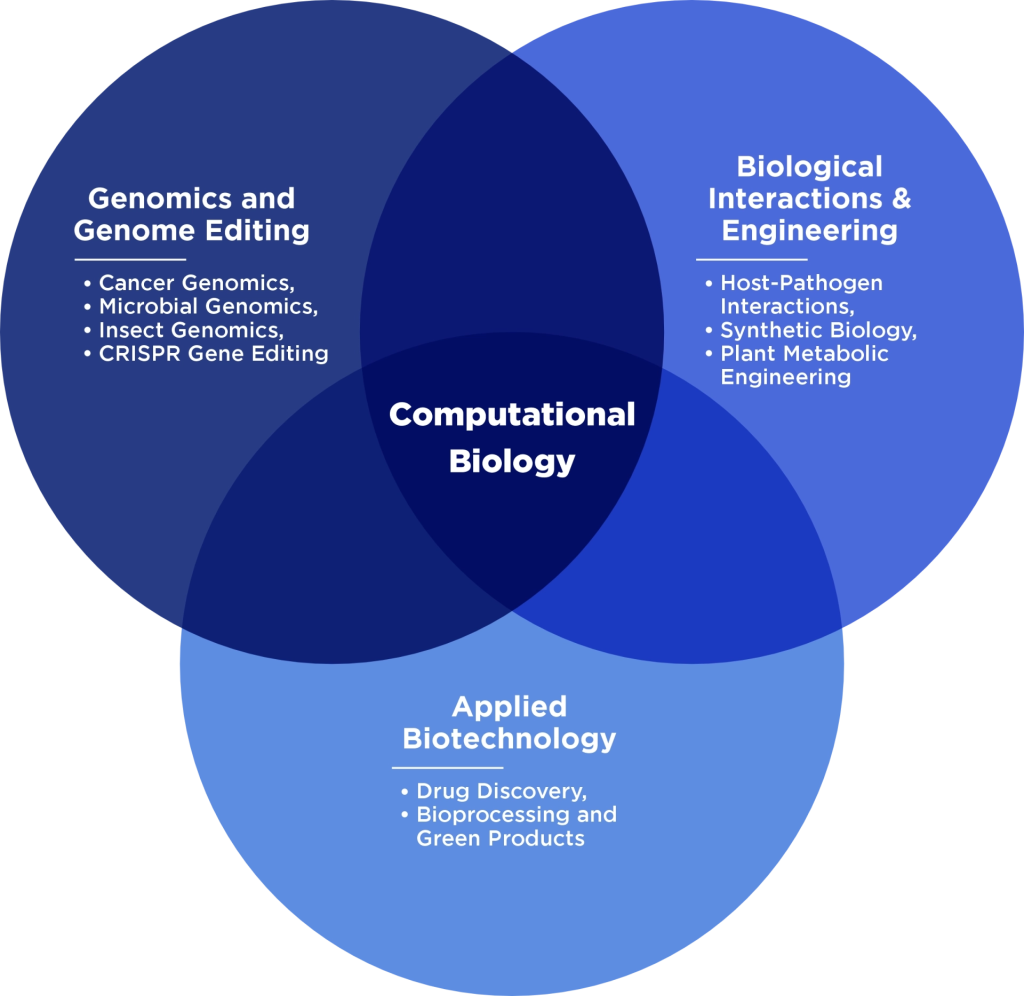
Specialisations
Core themes
- AI in healthcare
- Computational drug discovery
- Biomedical image analytics
- Disease modelling
- Computational genomics
- Computational biosciences
- Clinical informatics
FAQs
It is a research degree that prepares scholars to conduct independent original research in life science disciplines, culminating in a doctoral thesis.
Duration varies but is typically structured to be completed within six years, depending on research progress and requirements.
Yes. The programme includes a set of prescribed coursework to build research foundations before dissertation work.
The programme includes areas such as biotechnology, computational biology and other life science subfields as defined by faculty expertise and research priorities at the Centre for Life Sciences.
