





Home / Undergraduate / Page 3

B.Tech in VLSI Design & Technology

A 4-year undergraduate programme specialising in VLSI design, semiconductor technology and chip-design tools, preparing engineers for the global semiconductor ecosystem.

B.Tech in VLSI design and technology overview

This programme is crafted in response to India’s semiconductor mission, and trains students in VLSI design, analog/digital circuits, logic synthesis, device simulation and physical verification flows, using industry-standard tools from EDA companies. Students experience:

Solid foundational understanding

in computing, electrical and mathematical modules in early semesters.

Hands-on experience

in advanced VLSI design, memory design & testing, analog/digital full-custom circuit design using simulation tools.

Project-driven learning

culminating in embedded hardware projects and research project phases, enabling students to own complex design tasks.

Industry orientation

with exposure to major semiconductor firms such as Intel, Qualcomm, Broadcom, AMD, TSMC, preparing graduates to join the semiconductor value-chain.

Programme details

Scope of employment

Students in the B.Tech programme may pursue career opportunities with leading semiconductor design and manufacturing companies such as Intel, Qualcomm, Synopsys, Cadence, Siemens, Dell, Broadcom, AMD, NVIDIA, Apple, TSMC, GlobalFoundries, Samsung, Apex Semiconductors, NXP Semiconductors and STMicroelectronics.

These organisations represent a broad spectrum of the semiconductor ecosystem, where demand for skilled talent in design, manufacturing and technology development continues to grow.

Programme specific outcomes

PSO1: Apply principles of mathematics, science and engineering to analyse and solve complex problems in VLSI design and technology.

PSO2: Conduct research and review relevant literature on VLSI design methodologies, emerging technologies and industry trends.

PSO3: Design, simulate and validate digital and analogue circuits and systems at multiple levels using modern VLSI design techniques.

PSO4: Utilise industry-standard electronic design automation (EDA) tools for the design and analysis of VLSI circuits and systems.

PSO5: Recognise the importance of continuous learning and engage in professional development to remain current with advancements in VLSI design and related technologies.

Academic structure

Our academic structure is designed to establish robust foundations, followed by increasing specialization in later years.

  • Total credits & degree requirement: The programme requires not less than 165 credits to be awarded a B.Tech degree.
  • Duration: 4 years / 8 semesters

Laboratories

Students have access to advanced design automation software from leading Electronic Design Automation (EDA) companies such as Synopsys and Cadence. The laboratory enables B.Tech students to learn the complete VLSI design flow, from architecture and circuit design to physical verification, using tools such as Design Compiler, ICC2, PrimeTime, StarRCXT and Sentaurus TCAD.

Students also gain experience in analogue and digital full-custom circuit design using Cadence Virtuoso with sub-micron technologies. Additional Cadence tools, including Assura, Innovus, Incisive and Genus, are available for circuit-level physical design and verification, gate-level physical design, functional simulation, synthesis and pre-layout timing analysis.

These resources provide students with the flexibility to explore and develop innovative designs while gaining hands-on experience with industry-standard tools.

CourseL-T-PCredits
Calculus and ODE4-1-05
Quantum Chemistry & Spectroscopy2-1-24
Introduction to Electrical Engineering2-1-24
Introduction to Computing3-0-24
Earth & Environmental Sciences2-0-02
English3-0-03
Media Project1-0-21.5
French I0-2-00.5
Introduction to Entrepreneurship0-0-21
CourseL-T-PCredits
Linear Algebra & Complex Analysis3-1-04
Classical & Quantum Mechanics2-1-24
Introduction to Biology3-0-03
Introduction to Electronics2-1-24
Discrete Mathematical Structures3-0-03
Data Structures3-0-24
Entrepreneurship Practice0-0-21
Professional Ethics0-1-01
French II0-2-00.5
CourseL-T-PCredits
Probability & Statistics3-1-04
Electromagnetics & Optics3-1-25
Signals and Systems3-1-04
Digital System Design3-0-24
Design & Analysis of Algorithms3-0-24
Lean Startup0-0-31
Principles of Economics1-1-01.5
French III0-2-00.5
CourseL-T-PCredits
Analog Circuits3-1-25
Semiconductor Devices3-1-25
Semiconductor Materials & Characterization3-0-03
Optimization Techniques for AI3-0-03
Theory of Computation3-0-03
Design Thinking1-0-22
Financial Accounting1-1-01.5
French IV0-2-00.5
CourseL-T-PCredits
Introduction to VLSI Design3-0-34.5
Programmable Devices3-0-24
VLSI Fabrication Technology3-0-24
Digital Signal Processing2-1-24
Object Oriented Programming2-0-23
Machine Learning3-0-03
Liberal Arts Elective I2-0-02
French V (opt)0-2-00.5
CourseL-T-PCredits
Computing Systems Architecture3-0-03
Advanced VLSI Design3-0-03
Memory Design & Testing2-0-23
Program Elective I3-0-03
Liberal Arts Elective II2-0-02
Introduction to Professional Development2-0-02
French VI (opt)0-2-00.5
CourseL-T-PCredits
Program Elective II3-0-03
Program Elective III3-0-03
Program Elective IV3-0-03
Liberal Arts Elective III2-0-02
Research Project Phase I0-1-43
French VII (opt)0-2-00.5
CourseL-T-PCredits
Final Year Project Phase II0-4-109
French VIII (opt)0-2-00.5

FAQs

The course structure addresses the full chip-design process, from circuit theory and logic design to simulation and verification using professional-grade EDA tools.

Students are trained using Cadence and Synopsys platforms for analog/digital circuit design, layout and testing, ensuring industry relevance.

Project modules in embedded hardware, design verification and fabrication processes translate core principles into hands-on expertise.

Graduates are suited for semiconductor firms, chip-design consultancies and R&D labs worldwide, addressing the growing demand for VLSI engineers.

Through national semiconductor initiatives, specialised laboratories and research collaborations, students gain an understanding of how VLSI innovation powers future technologies.
Start your journey with us

Home / Undergraduate / Page 3

B.Tech in Nanotechnology

A 4-year undergraduate programme that merges nano-scale science with engineering applications to shape future innovators in materials, healthcare and electronics.

B.Tech in nanotechnology overview

The B.Tech in Nanotechnology programme at Mahindra University provides a strong interdisciplinary foundation across key engineering disciplines, including mechanical, electrical and computer science. This programme focuses on engineering matter at the nanoscale (0.1–100 nm) for applications across healthcare, electronics, energy and advanced manufacturing, combining foundational engineering with advanced nano-scale applications. Students experience:

Foundational exposure

to mechanical, electrical and computer science engineering through common courses in the first three semesters.

Progressive training

from semester four through seven in nano-science, nano-materials and nano-device engineering, enabling deep specialisation.

Hands-on learning

in advanced labs, nanoscale fabrication and device testing environments, equipping students to work in emerging technologies

Strong positioning

for research and industry roles in nanotechnology-driven sectors, supported by the university’s residential, global-facing engineering programme.

Programme details

Academic structure

  • During the first three semesters, students undertake common courses that introduce core engineering concepts along with foundational subjects in mathematics, natural sciences, humanities and social sciences.
  • From Semester 4 to Semester 7, students are progressively exposed to fundamental and advanced courses that underpin nanomaterials and nano-devices. The programme equips students with the scientific and technological knowledge required to work in this rapidly evolving field.
  • Nanotechnology has emerged as a significant area of study over the past few decades and serves as a key enabler of innovation across multiple engineering domains.
  • The final semester is primarily dedicated to an internship or an industrial or academic research project, allowing students to apply their learning in real-world or research environments.
CourseL-T-PCredits
Math I – Calculus & ODE4-1-05
Earth and Environmental Sciences2-0-02
Fundamentals of Drawing & Practice0-0-42
Introduction to Computer Science2-1-24
Learning to Learn1-0-22
Photography I: Still and Moving Images1-0-43
Introduction to Media and Communication1-0-22
French I0-2-00.5
CourseL-T-PCredits
Math II – Linear Algebra, Complex Analysis3-1-04
Physics – I2-1-24
Discrete Mathematical Structures2-0-02
Data Structures2-2-25
Visual Communication and Graphic Design0-1-43
Professional Writing1-0-01
Professional Ethics1-0-01
Introduction to Game Design1-0-43
French II0-2-00.5
CourseL-T-PCredits
Math III – Probability and Stats3-1-04
Design and Analysis of Algorithms3-1-04
Optimization Techniques for AI3-0-03
Object Oriented Programming2-0-23
Introduction to Computation and Media2-0-02
Computer Graphics2-0-23
Media Production0-0-84
Economics (Fractal)3-0-01.5
French III0-2-00.5
CourseL-T-PCredits
Math IV – Numerical Methods3-0-24
Theory of Computation3-0-03
Machine Learning with Python3-0-24
Programming Workshop0-0-21
Modelling and Animation2-0-44
Advanced Computer Graphics2-0-23
Design Thinking1-0-22
French IV0-2-00.5
Financial Accounting3-0-01.5
CourseL-T-PCredits
Operating Systems3-0-24
DBMS3-0-24
Digital Image Processing2-0-23
Augmented, Virtual & Extended Reality2-0-23
Interactive Sound and Music2-1-24
Elective I3-0-03
HSS Elective I2-0-02
French V (Optional)0-0-00
CourseL-T-PCredits
User Centred Design Methods2-0-23
Data Visualization and Communication2-0-23
Media Psychology2-0-02
Computational Creativity2-0-23
Elective II3-0-03
3rd Year Project0-1-43
Professional Development & Employability Skills2-0-02
HSS Elective II2-0-02
French VI (Optional)0-2-00
CourseL-T-PCredits
Human Computer Interaction2-0-23
Entrepreneurship Practice & Lean Startup Management3-0-03
Elective III3-0-03
Final Year Project – Phase I0-0-189
HSS Elective III2-0-02
French VII (Optional)0-2-00
CourseL-T-PCredits
Elective IV3-0-03
Elective V3-0-03
Final Year Project – Phase II0-4-109
French VIII (Optional)0-2-00

FAQs

The programme blends fundamentals of engineering with cutting-edge nano-science and provides a platform to build nano-materials and devices, giving students a rare interdisciplinary advantage.

From early semesters students cover core engineering disciplines, and then move into specialised nano-science and device engineering with strong hands-on lab exposure and applied learning.

Our fully-residential, global curriculum emphasises emerging technologies, with access to advanced laboratories and exposure to research and industry applications, equipping graduates for high-impact roles.

Graduates are prepared for roles in healthcare materials, electronics, energy sectors, device fabrication, advanced manufacturing and academic research in nanotechnology-enabled innovations.

The curriculum emphasises emerging technologies, global engineering challenges and the ability to master complexities of multinational organisations, thereby fostering innovation-led graduates.

Start your journey with us

Home / Undergraduate / Page 3

B.Tech in Mechatronics Engineering

A 4-year undergraduate programme at the intersection of mechanics, electronics and computation, preparing engineers to build the future intelligent systems.

B.Tech in mechatronics engineering overview

This interdisciplinary programme is offered by the Department of Mechanical Engineering in the École Centrale School of Engineering at Mahindra University, in collaboration with the Departments of Electrical and Electronics Engineering and Computer Science Engineering. The four-year degree programme provides a strong engineering foundation through courses in mechanics, electronics, computer programming, mathematics and physics. Students also gain exposure to areas such as management, design, intelligent machines, healthcare technologies and automated manufacturing.

Bridging disciplines

of mechanical engineering, electronics and computer science converge so students gain the versatility to work across automation, robotics and advanced manufacturing.

Hands-on exposure

to control systems, embedded programming, sensors and actuation through labs and project-driven modules.

Electives & research opportunities

in emerging domains like robotics, smart manufacturing and cyber-physical systems.

Industry-aligned internships

and capstone designs where students build prototypes and automation solutions, creating a strong foundation for careers in smart technologies.

Programme details

About

Students may specialise in one of the following areas within the broader field of mechatronics:

  • Artificial intelligence and machine learning
  • Advanced manufacturing
  • Intelligent machines
  • Healthcare systems

Competencies

Programme outcome

Characteristic attributes of graduating students:

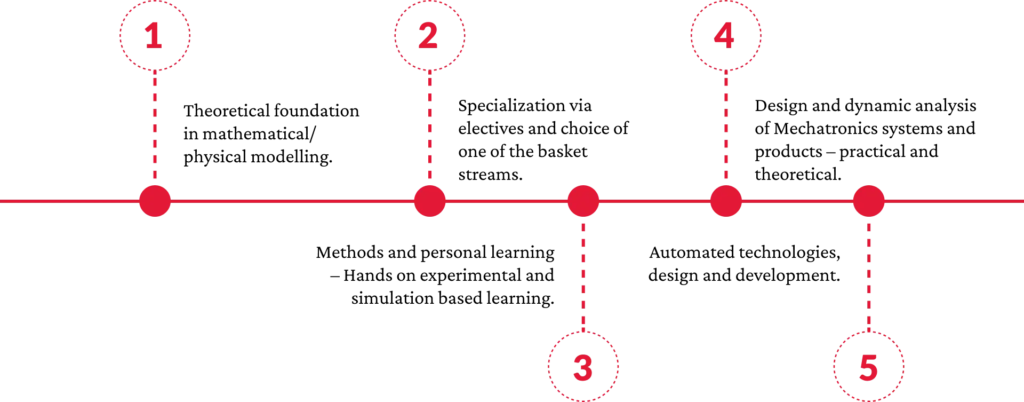
  • Understand core engineering concepts supported by strong foundations in mathematical and physical modelling, and software engineering.
  • Apply principles of mechanical design, electronics and control systems to engineering problems.
  • Use engineering methods and tools to design and develop mechanical components and systems in a mechatronics context.
  • Develop integrated mechatronic systems and products by applying appropriate engineering techniques and tools.
  • Design and implement analogue and digital electronic circuits, and develop embedded hardware and software for mechatronic applications.
CourseL-T-PCredits
Calculus & ODE4-1-05
Chemistry – I2-1-03
Introduction to Electrical & Electronics Engineering2-1-24
Engineering Drawing0-0-31.5
Mechanics2-1-03
Earth & Environmental Sciences2-0-02
English0-3-03
Media Project0-0-31.5
Introduction to Entrepreneurship0-0-31
French I0-2-00.5
CourseL-T-PCredits
Linear Algebra & Complex Analysis3-1-04
Physics – I2-1-24
Chemistry / Biology2-0-23
Thermodynamics2-1-03
Introduction to Computing2-1-24
Computer Aided Engineering Drawing1-0-32.5
Workshop Practice0-0-21
Entrepreneurship Practice0-0-21
Professional Ethics0-1-01
French II0-2-00.5
CourseL-T-PCredits
Probability & Statistics3-1-04
Physics – II3-1-25
Data Structures2-2-25
Materials Science2-0-23
Thermal Engineering3-1-04
Lean Start-up0-0-31
Principles of Economics (7 weeks)3-0-01.5
French III0-2-00.5
CourseL-T-PCredits
Numerical Methods3-0-24
Fluid Mechanics3-1-04
Solid Mechanics2-1-03
Theory of Machines3-0-24
Manufacturing Processes4-0-04
Design Thinking1-0-22
Financial Accounting (7 weeks)3-0-01.5
French IV0-2-00.5
CourseL-T-PCredits
Measurement & Instrumentation2-0-23
Heat & Mass Transfer3-1-04
Design of Machine Elements3-1-04
Introduction to Robotics3-0-03
Mechatronics Systems3-0-24
Stream Course I3-0-03
HSS / Management Elective I2-0-02
French V (Optional)0-2-00
CourseL-T-PCredits
Control Systems3-1-04
Embedded Systems3-0-24
Machine Learning3-1-04
Stream Course II3-0-03
Open Elective I3-0-03
HSS / Management Elective II2-0-02
Systems Engineering Project0-1-43
Introduction to Professional Development2-0-02
French VI (Optional)0-2-00
CourseL-T-PCredits
Industrial Automation3-0-24
Stream Course III3-0-03
Open Elective II3-0-03
Advanced Control Systems3-0-03
HSS / Management Elective III2-0-02
Year-4 Project0-1-43
French VII (Optional)0-2-00
CourseL-T-PCredits
Stream Course IV3-0-03
Open Elective III3-0-03
Year-4 Project0-5-89
French VIII (Optional)0-2-00

FAQs

By integrating mechanical design, electronics, and computing, the programme enables students to build intelligent systems and smart machines that define Industry 4.0.

Students engage in hands-on robotics, embedded systems, and control design, combining technical mastery with creativity to build real prototypes and automation solutions.

Innovation is embedded every semester through design studios, project-based courses, and collaboration with research and incubation centres on campus.

Graduates are prepared for roles in robotics, automation, autonomous vehicles, and IoT-based industries: fields driving the next wave of engineering transformation.

The curriculum ensures conceptual clarity through strong fundamentals, complemented by project work and lab experiences that bring ideas to life.

Start your journey with us

Home / Undergraduate / Page 3

B.Tech in Electronics and Communication Engineering (ECE)

A 4-year undergraduate programme designed to build engineers fluent in electronics, communication systems and hands-on hardware-software integration.

B.Tech in ECE overview

We prepare students to design, build and optimise the electronic and communication systems that power modern technology: from embedded devices and semiconductor hardware to wireless networks and signal processing applications. The programme blends strong engineering fundamentals with hands-on laboratory work and real-world problem solving. Students experience:

Cultivating an engineering mindset

focused on designing, analysing and improving real-world electronic and communication systems.

Strong exposure

to applied problem-solving through labs, projects and system-level thinking rather than isolated components.

Flexibility to shape

individual interests as technologies evolve, rather than being locked into narrow specialisations.

Preparation for diverse technology-driven

roles across core engineering industries, product development and emerging digital sectors.

Programme details

Academic progression requirement

  • A minimum CGPA of 4.00 is required for promotion to the next academic year, and a minimum CGPA of 4.50 is required to graduate from the programme.
  • A student completing academic year N may be promoted to year N+1 if they have earned at least:
    • 60% of the credits in the current academic year (N), and
    • 90% of the credits from all previous academic years (< N).
  • Students who receive failing grades in courses may appear for supplementary examinations in those courses.

Academic structure

Our academic structure is designed to establish robust foundations, followed by increasing specialization in later years.

  • Total credits & degree requirement: The programme requires not less than 165 credits to be awarded a B.Tech degree.
  • Duration: 4 years / 8 semesters
CourseL-T-PCredits
Calculus and ODE4-1-05
Quantum Chemistry & Spectroscopy2-1-24
Introduction to Computing3-0-24
Earth and Environmental Sciences2-0-02
Introduction to Electrical Engineering2-1-24
English0-3-03
Media Project1-0-21.5
French – I0-2-00.5
Introduction to Entrepreneurship0-0-21
CourseL-T-PCredits
Linear Algebra and Complex Analysis3-1-04
Classical & Quantum Mechanics2-1-24
Introduction to Biology3-0-03
Data Structures3-0-24
Discrete Mathematical Structures3-0-03
Introduction to Electronics2-1-24
Entrepreneurship Practice0-0-21
Professional Ethics0-1-01
French – II0-2-00.5
CourseL-T-PCredits
Probability and Statistics3-1-04
Electromagnetics & Optics3-1-25
Signals and Systems3-1-04
Digital System Design3-0-24
Network Analysis and Synthesis3-1-04
Lean Start-up0-0-31
Principles of Economics1-1-01.5
French – III0-2-00.5
CourseL-T-PCredits
Electromagnetic Waves3-1-04
Random Processes for Electrical Engineering3-1-04
Analog Circuits3-1-25
Control Systems2-1-03
Design Thinking1-0-22
Financial Accounting1-1-01.5
French – IV0-2-00.5
CourseL-T-PCredits
Introduction to VLSI Design3-0-34.5
Communication Theory and Systems3-0-24
Programmable Devices3-0-24
Digital Signal Processing2-1-24
Machine Learning3-0-03
Liberal Arts Elective I2-0-02
French – V (optional)0-2-00.5
CourseL-T-PCredits
Principles of Wireless Communication3-0-03
Computing Systems Architecture3-0-03
Communication Electronics3-0-24
Computer and Communication Networks3-0-03
Program Elective I3-0-03
Program Elective II3-0-03
Liberal Arts Elective II2-0-02
Introduction to Professional Development2-0-02
French – VI (optional)0-2-00.5
CourseL-T-PCredits
Embedded Hardware Project0-0-63
Optical Communication3-0-03
Program Elective III3-0-03
Program Elective IV3-0-03
Research Project Phase I0-0-63
Liberal Arts Elective III2-0-02
French – VII (optional)0-2-00.5
CourseL-T-PCredits
Research Project Phase II0-0-2412
French – VIII (optional)0-2-00.5

FAQs

The curriculum combines strong fundamentals with advanced subjects in electronics and communication, supported by practical lab work – equipping students for evolving industry demands.

Yes. Core subjects include laboratory components and the semester structure is designed to provide strong practical exposure alongside theoretical learning.

Electives allow students to deepen their knowledge in specific electronics and communication areas of interest, helping them tailor their expertise.

Graduates are well placed for roles in electronics, communication systems design, embedded systems, or further study and research in related fields.

Through a curriculum that emphasises laboratory work, applied learning, electives, and exposure to industry practice, the programme prepares graduates to adapt and lead in the field.

Start your journey with us

Home / Undergraduate / Page 3

B.Tech in Electrical & Computer Engineering

A 4-year undergraduate programme merging electrical engineering and computer science to equip students for smart systems and future mobility.

B.Tech in electrical & computer engineering overview

We prepare students with a broad-based, practical-oriented curriculum in electrical engineering with special emphasis on electric mobility, smart grids, renewable energy, IoT and integrated computer systems. Fundamental courses cover signals, systems, digital/analogue circuits, microcomputers and machines. Students experience:

Solid foundation

in basic sciences and fundamental electrical engineering courses including signals, digital & analogue circuits, and microcomputers.

Immersive laboratory

and project courses in building circuits, systems for power converters, drives and electric mobility platforms.

Specialised modules

addressing smart cities, smart grid systems, energy storage, battery management and electric vehicles, tying engineering to real-world societal challenges.

Preparation for careers

in sustainable infrastructure, mobility, renewables and integrated electrical-computer systems, bridging domains for future innovations.

Programme details

Academic structure

Our academic structure is designed to establish robust foundations, followed by increasing specialization in later years.

  • Total credits & degree requirement: The programme requires not less than 165 credits to be awarded a B.Tech degree.
  • Duration: 4 years / 8 semesters

Programme outcomes

  • Railways and mobility infrastructure: Indian Railways, metro rail corporations, Hitachi, ABB, Schneider Electric, GE and Siemens.
  • Electric two- and three-wheeler manufacturers: Ather Energy, Hero Electric, TVS Motor, Ola Electric, Okinawa, Revolt Motors, Honda, Vida, Rissala Electric, Bajaj Auto, Sunrun Motors, Mahindra Electric and Piaggio.
  • Electric car and bus manufacturers: Tata Motors, Mahindra & Mahindra, Hyundai, Ashok Leyland, Olectra, Eicher and MRV.
  • EV component and feeder industries: Lucas–TVS, Bosch, Automotive Axles, Hella, Lumax Auto, Schaeffler, Valeo, Shakti Pumps, Electra EV and Dana TM4.
  • Battery manufacturers: HBL, Panasonic, Amara Raja, Exide and Eveready.
  • EV charging and power infrastructure companies: Delta Electronics, Eaton and Statiq.

FAQs

The curriculum integrates core electrical engineering with computer systems and smart-mobility modules, equipping students for the evolving domain of smart infrastructure and mobility.

Absolutely. The programme emphasises laboratory and project work in power converters, drives, smart grid and battery systems, giving students hands-on experience in cutting-edge domains.

With modules in renewable energy, smart cities and electric mobility, the programme aligns with global technological trends and societal needs.

Graduates are well placed for careers in electric mobility, smart grid and infrastructure systems, renewable energy, integrated hardware-software design and advanced research.

The curriculum is designed for practicality and relevance, emphasising real-world systems, lab work, and societal engineering problems, thereby nurturing adaptable, future-ready engineers.

Start your journey with us

Home / Undergraduate / Page 3

B.Tech in Data Science

A 4-year undergraduate programme empowering students to transform vast data into actionable insights through technology, statistics and domain knowledge.

B.Tech in data science overview

We prepare students to turn data into insight, combining mathematics, statistics, computer science, and ethics with hands-on experience in real-world tools and industry applications across finance, healthcare, and e-commerce.We prepare students to turn data into insights. Students experience:

Core foundational learning

in mathematics, statistics and computing in early semesters, setting the stage for advanced analytic work

Practical workshops & labs

in Python, R, MATLAB and data visualisation, students become adept at working with real datasets

Evolving curriculum

with machine learning, big data, optimisation techniques and data-visualisation, enabling specialisation and depth

Professional development

through live projects, industry internships and a capstone project in the final year, ensuring graduates are workplace-ready

Programme details

Academic structure

Our academic structure is designed to establish robust foundations, followed by increasing specialization in later years.

  • Total credits & degree requirement: The programme requires not less than 165 credits to be awarded a B.Tech degree.
  • Duration: 4 years / 8 semesters
CourseL-T-PCredits
Mathematics I (Calculus & ODE)
Python
Introduction to Electrical & Electronics Engineering
Earth and Environmental Sciences
Introduction to Computing
English
Media Project
French I
Introduction to Entrepreneurship
CourseL-T-PCredits
Linear Algebra
Classical and Quantum Mechanics
Biology
Digital Logic Design & Computer Architecture
Data Structures and Algorithms
Discrete Mathematical Structures
Entrepreneurship Practice
Professional Ethics
French II
CourseL-T-PCredits
Probability Data Engineering
Signals and Systems
Operating Systems
Foundations of Data Science
Programming Workshop
Data Science Workshop: R Programming
Lean Start-up
Principles of Economics
French III
CourseL-T-PCredits
Numerical Methods
Artificial Intelligence
Computational Methods for Statistics
Optimization Techniques for AI
Data Visualization
Data Science Workshop: MATLAB
Design Thinking
Financial Accounting
French IV
CourseL-T-PCredits
Object-Oriented Programming
Machine Learning
Information Retrieval
Big Data Analysis
Program Elective 1
Program Elective 2
Liberal Arts Elective 1
Programming Workshop
Web Technology Workshop
French V (Optional)
CourseL-T-PCredits
Data Mining
Software Engineering
Program Elective 3
Program Elective 4
Program Elective 5
Programming Workshop
Data Visualization Workshop
Introduction to Professional Development
Liberal Arts Elective 2
French VI (Optional)
CourseL-T-PCredits
Program Elective 6
Program Elective 7
Program Elective 8
Program Elective 9
Liberal Arts Elective 3
Project
French VII (Optional)
CourseL-T-PCredits
Project
French VIII (Optional)

FAQs

The curriculum blends computing, mathematics, statistics and ethics, with applied projects and internships, so students graduate with both knowledge and practical experience.

Yes, the programme places strong emphasis on hands-on workshops in Python, R and MATLAB, data-mining and visualisation, plus live projects with real datasets.

Absolutely. Graduates are positioned for careers as data analysts, engineers or AI specialists, and are also prepared for higher studies in analytics, business intelligence or data science.

By embedding applied learning, industry internships, and modules in emerging areas such as big data and machine learning, the programme ensures graduates stay agile and current.

Start your journey with us

Home / Undergraduate / Page 3

B.Tech in Computational Biology

A 4-year undergraduate programme designed to harness the power of computing, statistics and biology to decode life-systems.

B.Tech in computation biology overview

We empower students to harness data and computational science to solve real biological challenges, opening pathways to impactful careers in healthcare, biotechnology, agriculture, and research. Students experience:

Multidisciplinary integration

of computing, algorithm design, AI/ML with molecular biology, genomics, biophysics and statistics to address complex biological systems

Specialisation opportunities

in domains such as drug discovery, genomics and bio-image analytics, providing a diverse set of potential career paths

Tailored curriculum

designed for data-driven life-science applications, equipping students for roles in software, analytics, bio-informatics and research

Specialised domains

in emerging life science areas such as computational drug discovery, genomic data science, healthcare informatics and agricultural computation

Programme specialisations

The programme offers specialisations for students keen to pursue career in a particular domain.

Computational drug discovery

Uses artificial intelligence, modelling and computational tools to accelerate drug design, screening, repurposing and pharmacological analysis.

Genomic data science

Applies bioinformatics and data science to analyse genomic data, enabling advances in precision medicine and personalised healthcare.

Health informatics

Focuses on managing and analysing healthcare data to improve clinical decision-making, patient care and healthcare systems.

Bioimage analytics and decision support

Uses computational tools and artificial intelligence to analyse medical and biological images for diagnostics and clinical decision support.

Pathogen genomics

Studies the genetic makeup of infectious organisms to support disease surveillance, diagnostics, vaccine development and outbreak control.

Computation in agriculture

Applies data analytics, sensors and AI tools to optimise crop management, resource use and agricultural productivity.

Biological systems modelling

Develops computational models of biological systems to understand cellular processes and support advances in biotechnology, drug discovery and biomanufacturing.

Programme details

Technical competencies delivered

  • Biological data generation technologies and their applications in genomics and bioinformatics.
  • Statistical methods used in molecular biology, genomics, medical and population genetics research.
  • Bioinformatics tools and their practical applications in analysing biological data.
  • Computational approaches to solving scientific problems, including algorithm design, time and space complexity, and hardware requirements.
  • Command-line and scripting-based computing skills relevant to computational biology.
  • Design and development of software systems of varying complexity for scientific applications.
  • Understanding the local and global impact of bioinformatics and genomics on individuals, organisations and society.
  • Professional, ethical, legal and security considerations in bioinformatics and genomics practice.
  • Effective communication of bioinformatics and genomics concepts to diverse audiences.
  • Collaborative teamwork to achieve shared scientific goals.
  • Commitment to continuous learning and professional development in computational biology.

Career opportunities

  • Data analyst
  • Application developer
  • Software engineer
  • Research specialist
  • Data manager
  • Opportunities for postgraduate studies in areas such as computer science, genomics and clinical informatics.
  • Genomics: Omics technologies and novel applications of gene and genome sequencing across diverse biotechnology domains.
  • Strand Life Sciences
  • Rasa Life Science Informatics
  • MarksMan Healthcare Communications
  • Xcode Life Sciences
  • Natural Text
  • Helix Biosciences
  • Clevergene
  • Nucleome Informatics
  • AgriGenome Labs
  • BD Biosciences
  • Biogenick
  • Genotypic Technology
CourseL-T-PCredits
Basic Mathematics I / Introduction to Biology*3-0-03
Introduction to Computing2-1-24
Chemistry of Biomolecules3-0-24
Physics for BT & CB3-1-25
Earth and Environmental Sciences2-0-02
English0-3-03
Media Project0-0-21.5
French – I0-2-00.5
Introduction to Entrepreneurship0-0-31
CourseL-T-PCredits
Molecular Genetics3-0-24
Biophysics2-0-23
Programming Workshop (C++)0-0-21
Programming Workshop (Linux)0-0-21
Linear Algebra & Complex Analysis3-1-04
Discrete Mathematics2-0-02
Data Structures3-0-24
Entrepreneurship Practice1-0-01
Professional Ethics0-1-01
SDGs and Our Career1-0-01
French – II0-2-00.5
CourseL-T-PCredits
Fundamentals of Data Science1-0-22
Computational Biology3-0-24
Data Engineering & Visualization Workshop (ETL & Tableau)0-1-22
Programming Workshop (Python & BioPython)0-0-21
Probability & Statistics3-1-04
Design & Analysis of Algorithms3-0-24
Lean Start-up (Fractal)1-0-01
Principles of Economics (Fractal)3-0-01.5
Sustainability & AI1-0-01
French – III0-2-00.5
CourseL-T-PCredits
Omic Technologies3-0-24
Structural Bioinformatics & Drug Discovery3-0-24
Biological Database Management3-0-24
ML Workshop0-0-21
Machine Learning3-0-03
Design Thinking1-0-22
Financial Accounting3-0-01.5
Water and Us1-0-01
French – IV0-2-00.5
CourseL-T-PCredits
Microbes and Immune Systems3-0-24
NLP Workshop0-0-21
Computational Genomics & Systems Biology3-0-24
Programming Workshop (R)0-0-21
Object Oriented Programming2-0-23
Web Tech Workshop0-0-21
NLP3-0-03
Elective I3-0-03
Elective II3-0-03
HSS Elective – I2-0-02
CourseL-T-PCredits
Research Methods & IPR2-0-02
Algorithms in Bioinformatics2-0-23
Programming Workshop (Java & BioJava)0-0-21
Generative AI in Life Sciences3-0-24
Web Tech Workshop0-0-21
Deep Neural Networks3-0-24
Elective III3-0-03
Elective IV3-0-03
Introduction to Professional Development2-0-02
HSS Elective – II2-0-02
CourseL-T-PCredits
Employability Skills1-0-11.5
Elective V3-0-03
Elective VI3-0-03
Elective VII3-0-03
HSS Elective – III2-0-02
CourseL-T-PCredits
Research Project (Industrial Internship / R&D Institute)0-0-3015

FAQs

Yes. The programme is designed for students with a strong analytical mindset. Biology concepts are introduced progressively and taught alongside computational methods, allowing students to build biological understanding without requiring prior deep expertise in life sciences.

The programme is academically rigorous, as it combines computing, statistics and biology. However, the curriculum is structured to balance theory with application, ensuring students are supported as they move across disciplines rather than being overwhelmed by them.

Graduates are well-prepared for a range of roles. In addition to life-science and biotech positions, students develop strong programming, data analysis and modelling skills that are applicable to software, analytics and data-science roles, depending on electives and projects chosen.

Yes. The interdisciplinary training in computation, statistics and biology aligns well with global postgraduate programmes in computational biology, bioinformatics, data science, biomedical engineering and related research-oriented fields.

This programme is ideal for students who are curious about how technology can solve biological and healthcare problems, enjoy working with data, and are comfortable learning across disciplines rather than focusing on a single traditional engineering stream.

Start your journey with us

Home / Undergraduate / Page 3

B.Tech in Computation & Media

A 4-year programme combining computing, media, design and immersive technologies for careers in digital media and storytelling.

B.Tech in computation & media overview

We prepare students to shape the future of digital media, communication and storytelling through a strong foundation in computing, media theory, design and immersive technologies, blending technical rigor with creative, project-based learning. Students experience:

Integrated media production,

storytelling and communication skills blended with engineering and computing

Hands-on exposure

to immersive technologies, AR/VR, interactive sound and computational creativity

Project-based learning

across media production, human-computer interaction and user-centred design

Preparation for careers

spanning game design, film & video, journalism, advertising, UX/UI and digital media strategy

Programme details

Our academic structure is designed to establish robust foundations, followed by increasing specialization in later years.

  • Credit structure: Basic Sciences, Computing & Engineering, Humanities, Social & Creative Sciences, Media Studies, Design & Enterprise Sciences
  • Total credits & degree requirement: The programme requires not less than 165 credits to be awarded a B.Tech degree.
  • Duration: 4 years / 8 semesters
  • Core vs Professional phases: The first two years constitute the “Core Program,” and the last two years the “Professional Program,” with electives introduced in the latter phase.

Assessment is designed to evaluate students’ progressive understanding throughout the programme. Continuous assessment plays a central role and contributes significantly to the final grade. Evaluation is based on specific, tangible outputs such as projects, presentations and assignments. Active participation is an important component, and students are expected to attend all classes. While examinations are conducted, they carry a relatively smaller weight in the overall evaluation.

Plagiarism is strictly prohibited and will result in a zero grade. Repeated instances may lead to academic suspension or other disciplinary action.

Typical grading distribution

  • Research / role-play / debate / presentations – 20%
  • Class quizzes / in-class tests / take-home assignments – 25%
  • Midterm examination – 15%
  • Semester-end examination or final project – 30%
  • Class participation – 10%

The pedagogical model places strong emphasis on regular participation and continuous evaluation. Limited absences may be permitted at the discretion of the faculty member; however, repeated absences may affect a student’s ability to complete course requirements successfully. Due to the nature of continuous assessment, missed submissions or activities may not always be recoverable, though individual instructors may review exceptional cases.

  • Leverage emerging technologies to enable an interactive, personalised and diverse communication ecosystem.
  • Develop students into specialised, technology-driven storytellers with strong foundations in media and communication.
  • Adopt continuous assessment while reinforcing in-class evaluation methods.
  • Encourage learning through multiple formats, including classroom instruction, mentoring and simulated practice, culminating in student-led projects.
  • Prepare students to operate in an evolving media environment shaped by changing technologies, policies and professional practices.
  • Emphasise both conceptual understanding and practical application in advanced semesters, supported by engagement with academic research and industry experts.
  • Enable students to undertake a specialised capstone project by the end of the programme.
  • Provide structured exposure to social and industry environments through guided experiential learning under faculty supervision.
  • Offer three internships during the programme: a social sector internship or initiative, two mandatory industry internships, and one optional internship.

Students gain exposure to social and industry practices through structured learning experiences under faculty supervision. The programme includes multiple internship opportunities: a social sector internship or initiative, at least one mandatory industry internship, and one optional internship. These experiences help bridge the gap between academic concepts and real-world practice.

Graduates typically pursue careers in fields such as news media, film, television, game design, advertising, public relations and related industries. The programme also introduces elements of entrepreneurship as part of the advanced curriculum.

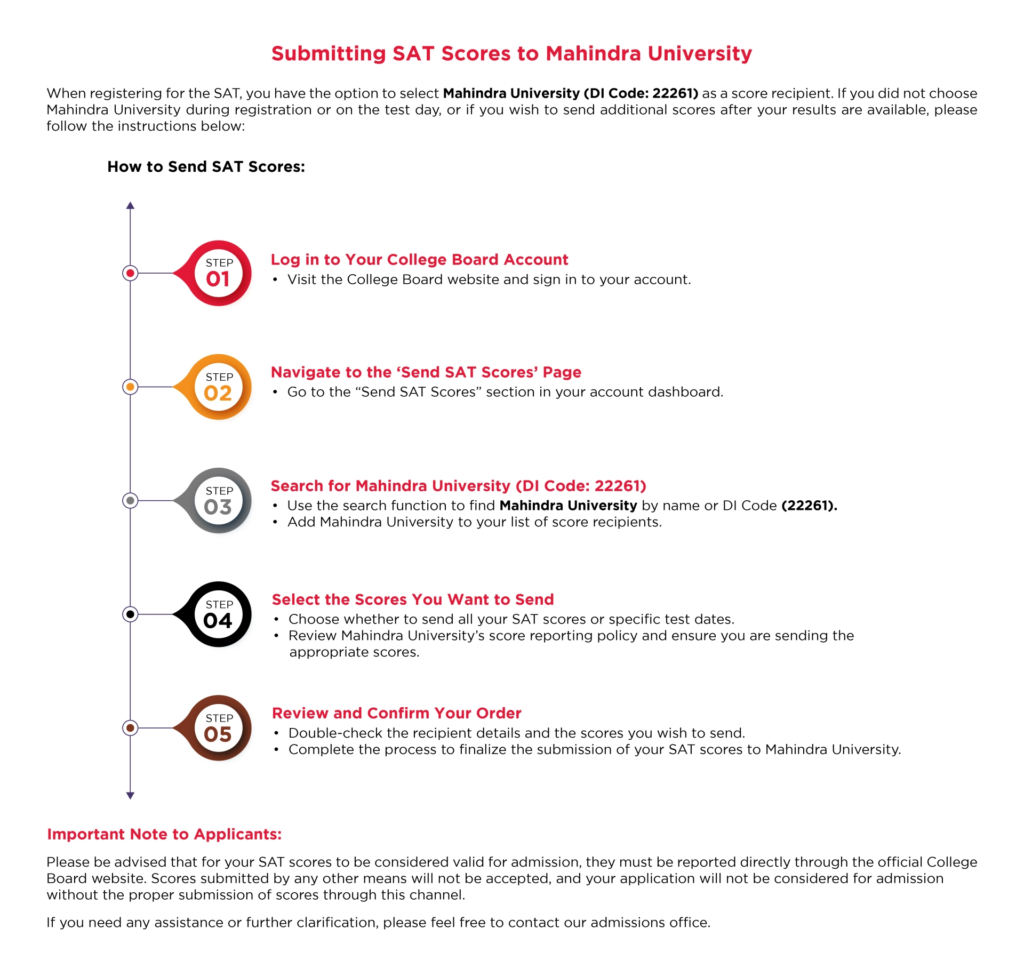
Submitting SAT scores

CourseL-T-PCredits
Math I – Calculus & ODE4-1-05
Earth and Environmental Sciences2-0-02
Fundamentals of Drawing & Practice0-0-42
Introduction to Computer Science2-1-24
Learning to Learn1-0-22
Photography I: Still and Moving Images1-0-43
Introduction to Media and Communication1-0-22
French I0-2-00.5
CourseL-T-PCredits
Math II – Linear Algebra, Complex Analysis3-1-04
Physics – I2-1-24
Discrete Mathematical Structures2-0-02
Data Structures2-2-25
Visual Communication and Graphic Design0-1-43
Professional Writing1-0-01
Professional Ethics1-0-01
Introduction to Game Design1-0-43
French II0-2-00.5
CourseL-T-PCredits
Math III – Probability and Stats3-1-04
Design and Analysis of Algorithms3-1-04
Optimization Techniques for AI3-0-03
Object Oriented Programming2-0-23
Introduction to Computation and Media2-0-02
Computer Graphics2-0-23
Media Production0-0-84
Economics (Fractal)3-0-01.5
French III0-2-00.5
CourseL-T-PCredits
Math IV – Numerical Methods3-0-24
Theory of Computation3-0-03
Machine Learning with Python3-0-24
Programming Workshop0-0-21
Modelling and Animation2-0-44
Advanced Computer Graphics2-0-23
Design Thinking1-0-22
French IV0-2-00.5
Financial Accounting3-0-01.5
CourseL-T-PCredits
Operating Systems3-0-24
DBMS3-0-24
Digital Image Processing2-0-23
Augmented, Virtual & Extended Reality2-0-23
Interactive Sound and Music2-1-24
Elective I3-0-03
HSS Elective I2-0-02
French V (Optional)0-0-00
CourseL-T-PCredits
User Centred Design Methods2-0-23
Data Visualization and Communication2-0-23
Media Psychology2-0-02
Computational Creativity2-0-23
Elective II3-0-03
3rd Year Project0-1-43
Professional Development & Employability Skills2-0-02
HSS Elective II2-0-02
French VI (Optional)0-2-00
CourseL-T-PCredits
Human Computer Interaction2-0-23
Entrepreneurship Practice & Lean Startup Management3-0-03
Elective III3-0-03
Final Year Project – Phase I0-0-189
HSS Elective III2-0-02
French VII (Optional)0-2-00
CourseL-T-PCredits
Elective IV3-0-03
Elective V3-0-03
Final Year Project – Phase II0-4-109
French VIII (Optional)0-2-00

Eligibility:

  • Must have passed 10+2 (or equivalent) from a recognised board, with physics, chemistry and mathematics in 12th grade are eligible.
  • Minimum aggregate of 60% or equivalent in 10+2 for candidates applying through JEE / SAT / ACT. 
  • One of the following accepted test scores:
    • Qualify JEE (Main) and be eligible to write JEE Advanced (or achieve top All India Rank in JEE Main)
    • Valid SAT Subject Test scores (Mathematics, Physics, Chemistry), minimum 1800
    • Valid SAT Test Score (minimum 800)
    • Valid ACT composite score (minimum 18)
  • For applications via SAT / ACT, a technical & aptitude-based interview may be required. 

Fee structure (per annum):

CategoryAcademic feesHostel chargesCaution deposit *
Indian Students₹ 5,00,000₹ 1,70,000₹ 20,000 
PIO / NRI StudentsUSD 9,000USD 3,000USD 400 

*Refundable at the end of study or graduation. Hostel stay is mandatory for B.Tech students. Fees are subject to revision each year.

Important dates

Admission milestoneDate
Last date to apply for the first round of admissions21 January 2026
First round of personal interviews1 February 2026
Last date for receipt of applications for admission9 July 2026

Dates are subjected to changed.

FAQs

It is intentionally balanced. Students build strong computing foundations (programming, algorithms, graphics) while also developing creative skills in media production, design and storytelling. Graduates are expected to be technically competent and creatively fluent.

Graduates work in roles such as UX/UI designer, game designer, interactive media developer, data visualisation specialist, media technologist, product designer, digital content strategist, or pursue higher studies in media technology, HCI or design.

No. A background in physics, chemistry and mathematics at the 10+2 level is sufficient. Creative skills are developed progressively through coursework and projects during the programme.

While computer science focuses primarily on software systems and computation, this programme applies computing to media, communication and human-centred design. It emphasises storytelling, interaction, visual communication and immersive experiences alongside core computing.

Yes. The curriculum includes multiple studio-based courses, media labs, interdisciplinary projects, internships and a final-year capstone project, ensuring students graduate with a strong portfolio of real-world work.

Start your journey with us

Home / Undergraduate / Page 3

B.Tech in Civil Engineering

A 4-year undergraduate programme equipping engineers to design, build and sustain the infrastructure of tomorrow.

B.Tech in civil engineering overview

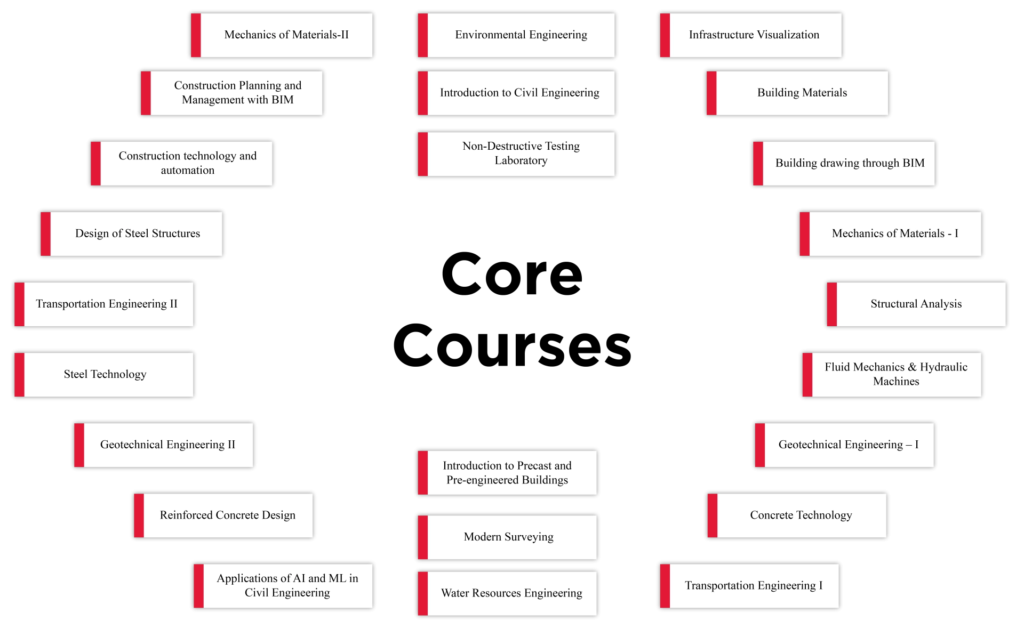
We prepare students to shape the future of infrastructure and urban systems through a strong foundation in structures, geotechnics, transportation, water resources, and environmental engineering, blending technical depth with practical project experience. Students experience:

Comprehensive grounding

in core civil engineering domains such as mechanics of soils and fluids, structural analysis, transportation engineering and surveying

Project-based learning

and departmental projects give students practical experience in construction technology and civic systems

Choice of electives

enabling focus on specialisations such as geotechnical, structural, environmental or water-resources engineering

Exposure to contemporary

infrastructure challenges and technologies, inspiring graduates to design resilient, sustainable and efficient built environments

Programme details

Objectives

  • Equip students with a strong scientific foundation and creative engineering mindset to address complex problems with a global perspective.
  • Develop critical analytical skills required to plan, design, build, maintain and rehabilitate infrastructure for a sustainable future.
  • Promote interdisciplinary understanding and the effective use of appropriate technologies to address real-world implementation challenges.
  • Foster clear communication and ethical leadership while working collaboratively in diverse teams.
  • Encourage adaptability to evolving global needs through continuous learning and lifelong professional development.

Academic structure

Our academic structure is designed to establish robust foundations, followed by increasing specialization in later years.

  • Credit structure: Basic Sciences (47 credits), Basic Engineering (28 credits), Humanities, Social & Creative Sciences (15 credits), Enterprise Sciences (10 credits)
  • Total credits & degree requirement: The programme requires not less than 165 credits to be awarded a B.Tech degree.
  • Duration: 4 years / 8 semesters.

MoUs

FAQs

The curriculum emphasises current topics such as sustainable construction, environmental systems, transportation and water-resources, ensuring students are ready for real-world infrastructure challenges.

Yes, students undertake multiple departmental projects, leveraging labs, field work and construction technology modules to apply engineering in practice.

Electives in structural, geotechnical, environmental and transport engineering allow students to tailor their learning and prepare for roles in design firms, consultancy, public works or research.

By integrating courses on smart infrastructure, sustainable materials, environmental systems and project management, the programme equips graduates to lead in tomorrow’s built environment.

Graduates are well-positioned for roles in infrastructure development, consultancy, construction management, urban planning, environmental and water-resource engineering, as well as further study.

Start your journey with us

Home / Undergraduate / Page 3

B.Tech in Biotechnology

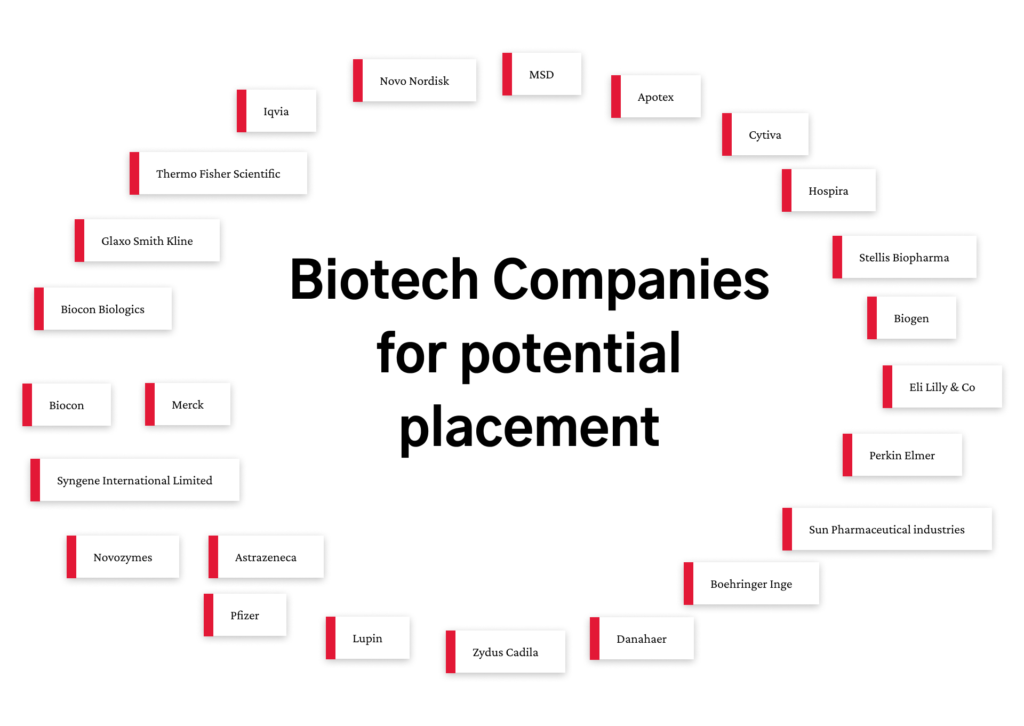
A 4-year undergraduate programme combining biology, engineering and innovation to create professionals in life-sciences technologies.
B.Tech in biotechnology overview

We immerse students in genomics, gene editing, synthetic biology, precision medicine, and biomanufacturing, empowering them to drive breakthroughs in healthcare, agriculture, materials, and food technology. The B.Tech Biotechnology programme combines biological sciences with engineering principles to prepare students for innovation in healthcare, agriculture, and industrial biotechnology. Students also have the option to continue into an integrated five-year M.Tech Biotechnology programme after completing the four-year B.Tech.

Deep exposure

to genomics, gene editing (CRISPR), synthetic biology and precision medicine, giving students advanced biological-engineering expertise.

A structured curriculum

where by Semester IV you’re already tackling OMIC technologies, upstream processing and AI/data science for bio-technologists.

Practical training

in bio-manufacturing, cell culture, micro-fluidics and biomaterials students work with systems that bridge biology and engineering.

Career-forward focus

with scope for specialisation in environment, food, pharmaceuticals, industrial biotech and research.

Programme specialisations

Pharmaceutical biotechnology

Focuses on the development of biologic drugs such as antibodies, vaccines and nucleic-acid therapies using molecular biology, protein engineering and bioprocessing technologies.

Green chemicals and bio-products

Explores sustainable alternatives to petrochemical products through biotechnology, including enzymes, biofuels and bio-based industrial chemicals.

Digital agriculture

Applies data analytics, sensors and advanced technologies to optimise crop production, resource use and decision-making in modern agriculture.

Precision medicine

Examines how genomics and biological data can be used to design personalised medical treatments and improve patient outcomes.

Gut microbiome

Studies microbial communities in the human body and their role in health, disease diagnostics and emerging therapeutic applications.

Food processing and nutrition

Focuses on technologies that improve food safety, nutritional value and shelf life while supporting sustainable food production.

Biopharmaceutical technology

Covers the development and manufacturing of biologic medicines, integrating molecular biology, drug formulation and bioprocess engineering.

Biomanufacturing and green products

Uses engineered biological systems and fermentation technologies to produce biomaterials, chemicals and therapeutic products sustainably.

Diagnostics and biomarkers

Explores molecular diagnostics and biomarker discovery for early disease detection and improved clinical decision-making.

Programme details

Core technical competencies to be developed through the programme

Genomics
Omics technologies and genome sequencing applications across biotechnology and biomedical research.

Gene editing
Gene cloning, CRISPR-based genome editing, gene therapy, gene silencing, and development of transgenic plants and animals.

Precision medicine
Genomics-driven discovery of drug targets, cell therapies and advanced drug delivery technologies.
Microfluidics
Lab-on-a-chip systems for rapid diagnostics, biopharma screening, disease modelling and point-of-care testing.

Biomanufacturing
Cell culture and fermentation technologies for recombinant production of therapeutics, biomaterials and specialty chemicals.mahindra

Synthetic biology
Engineering biological systems and gene networks to develop cell factories, microbiome-based solutions and cellular agriculture.

Tissue engineering
Regenerative medicine approaches including tissue grafts, organ repair technologies and cultured biomaterials.

AI and big biological data
Application of artificial intelligence in drug discovery, biomarker identification, medical imaging and digital agriculture analytics.

GMP and regulatory affairs
Principles of product quality, safety standards and regulatory frameworks in biotechnology and biopharmaceutical development.

Bioprinting
Bioprinting technologies using bio-inks and biomaterials for medical applications such as tissue constructs and personalised grafts.

  • Technical solution manager
  • Research associate
  • Medical scientist
  • Biomedical engineer
  • Microbiologist
  • R&D and process development scientist
  • Biomanufacturing specialist
  • Bioproduction operator
  • Project assistant
  • Project management engineer
  • Trainee research associate
  • Agricultural consultant
  • Opportunities for higher education abroad

Academic structure

Our academic structure is designed to establish robust foundations, followed by increasing specialization in later years.

  • Credit structure: Basic Sciences (47 credits), Basic Engineering (28 credits), Humanities, Social & Creative Sciences (15 credits), Enterprise Sciences (10 credits)
  • Total credits & degree requirement: The programme requires not less than 165 credits to be awarded a B.Tech degree.
  • Duration: 4 years / 8 semesters
  • Core vs Professional phases: The first two years constitute the “Core Program,” and the last two years the “Professional Program,” with electives introduced in the latter phase.
CourseL-T-PCredits
Basic Mathematics / Introduction to Biology*3-0-03
World of Biotechnology & Computational Biology1-0-01
Chemistry of Biomolecules3-0-24
Biological Systems: Microbes2-0-02
Physics for Biotechnology2-0-23
Earth and Environmental Sciences2-0-02
English0-3-03
Media Project0-0-21.5
Introduction to Entrepreneurship0-0-31
French I0-2-00.5
CourseL-T-PCredits
Molecular Genetics3-0-24
Descriptive Statistics2-0-02
Biological Systems: Plants2-0-02
Biological Systems: Animals2-0-02
Biophysics2-0-23
Chemistry – II2-0-23
Introduction to Computing2-1-24
Entrepreneurship Practice0-0-21
Professional Ethics0-1-01
SDGs and Our Career1-0-01
French II0-2-00.5
CourseL-T-PCredits
Enzymes & Metabolism3-0-24
Microbial Technology2-0-23
Python & Biopython1-0-22
Immune Systems & Immunotechnology3-0-24
Gene Technologies2-0-44
Introduction to Nanotechnology & Nanoscience3-0-03
Lean Start-up0-0-31
Principles of Economics3-0-01.5
Sustainability and AI1-0-01
French III0-2-00.5
CourseL-T-PCredits
Omic Technologies3-0-24
Cell Culture Technologies2-0-23
Bioprocess – Upstream Processing3-0-24
AI & Data Science for Biotechnologists3-0-24
Biostatistics2-1-24
Design Thinking1-0-22
Financial Accounting3-0-01.5
Water and Us1-0-01
French IV0-2-00.5
CourseL-T-PCredits
Food Processing & Nutrition3-0-24
Bioinformatics & Computational Biology3-0-24
Agricultural Biotechnology3-0-24
Bioprocess – Downstream Processing3-0-24
Elective I3-0-03
Elective II3-0-03
Humanities / Management Elective I2-0-02
CourseL-T-PCredits
Green Biotechnology & Pollution Abatement3-0-03
Bioproducts: QC & Regulatory Affairs2-0-02
Synthetic Biology & Applications3-0-24
Research Methods & IPR2-0-02
Elective III3-0-03
Elective IV3-0-03
Introduction to Professional Development2-0-02
Humanities / Management Elective II2-0-02
CourseL-T-PCredits
Employability Skills1-0-11.5
Elective V3-0-03
Elective VI3-0-03
Elective VII3-0-03
Humanities / Management Elective III2-0-02
CourseL-T-PCredits
Research Project (Industrial Internship / R&D Institute)0-0-3015

FAQs

The curriculum integrates molecular biology, genetics and bioprocessing with engineering and computational tools, equipping students for innovation in applied biosciences.

Students receive hands-on training in biomanufacturing, microfluidics, gene editing and biomaterials, building the technical expertise necessary for biotechnology industries.

Graduates contribute to healthcare, pharmaceuticals, agriculture, food technology and environmental sustainability through advanced biotechnological methods.

Project-based learning, exposure to OMIC technologies, and AI applications in biotechnology foster critical thinking and problem-solving.
The inclusion of synthetic biology, precision medicine and data-driven approaches ensures graduates are prepared for next-generation life-science careers.

Start your journey with us

Make an enquiry Chat with a student