








Economic Policy Centre
Overview
The Economic Policy Centre (EPC) at Mahindra University is a dedicated platform for economic research, policy analysis, and evidence-based decision-making. The Centre brings together economists, policymakers, researchers, and industry leaders to examine emerging economic challenges and develop insights that have real-world relevance.
Through research, policy engagement, industry collaboration, and knowledge exchange, EPC seeks to bridge the gap between economic thought and practice. Its work spans policy research, advisory inputs, high-impact public forums, executive education, and support for faculty and doctoral research. With a focus on India’s economic growth, competitiveness, and business environment, the Centre aims to foster informed dialogue and contribute to evidence-based solutions that help shape a stronger and more resilient economy.

Cross-Sector Collaboration
A dedicated platform linking researchers, government, industry, and policymakers to solve productivity, competitiveness, technology, and employment challenges.

Research to Real-World Impact
Unlike conventional academic centres, it combines rigorous research with stakeholder consultation, field pilots, and policy engagement.

Evidence for Better Decisions
An evidence-led Centre that builds original datasets, conducts policy diagnostics, and translates complex economic trends into decision-ready insights.

Independent Thought Leadership
A neutral convening space for policymakers, businesses, civil society, researchers, and students to deliberate on shared development challenges.

Integrated Economic Perspectives
A Centre that addresses emerging challenges—AI, digital infrastructure, climate transition, trade, manufacturing, and skills—through an integrated economic lens.
Philosophy
The Centre is grounded in a pragmatic, evidence-based, and socially relevant philosophy of knowledge: it treats economics and public policy not as abstract theory alone, but as tools for understanding and improving real-world outcomes for households, firms, and communities.
Vision
To make India a better place to do business through rigorous economic research, evidence-based policy, and meaningful dialogue between academia, policymakers, and industry.
Objectives

Advance Economic Research

Enable Evidence Based Policy

Connect Academia, Policy & Industry

Strengthen Research & Knowledge Exchange

Support a Stronger Business Environment
Head & Deputy Head

Nilanjan Banik

Pradeep Racherla
FAQs
The Economic Policy Center is a platform for economic research, policy dialogue, and stakeholder engagement on issues of national and regional importance. It aims to connect academic knowledge with policy challenges facing businesses, industry, government, and society.
The Center seeks to:
- Conduct rigorous research on contemporary economic issues.
- Encourage informed discussion among policymakers, academics, industry leaders, and civil society.
- Develop evidence-based policy frameworks.
- Examine how public policy can support business growth, investment, innovation, and inclusive development.
The Center addresses a broad range of economic and policy issues, including:
- Industrial policy and economic growth.
- Global Capability Centers and international business.
- Trade, investment, and global economic disruptions.
- MSMEs and enterprise development.
- Technology, innovation, and digital infrastructure.
- Regional development and the business environment.
Its activities may evolve in response to emerging economic challenges.
The Center’s programmes are relevant to policymakers, government officials, industry and business leaders, academics, researchers, students, entrepreneurs, and representatives of civil society. Its events promote dialogue among stakeholders with different perspectives and areas of expertise.
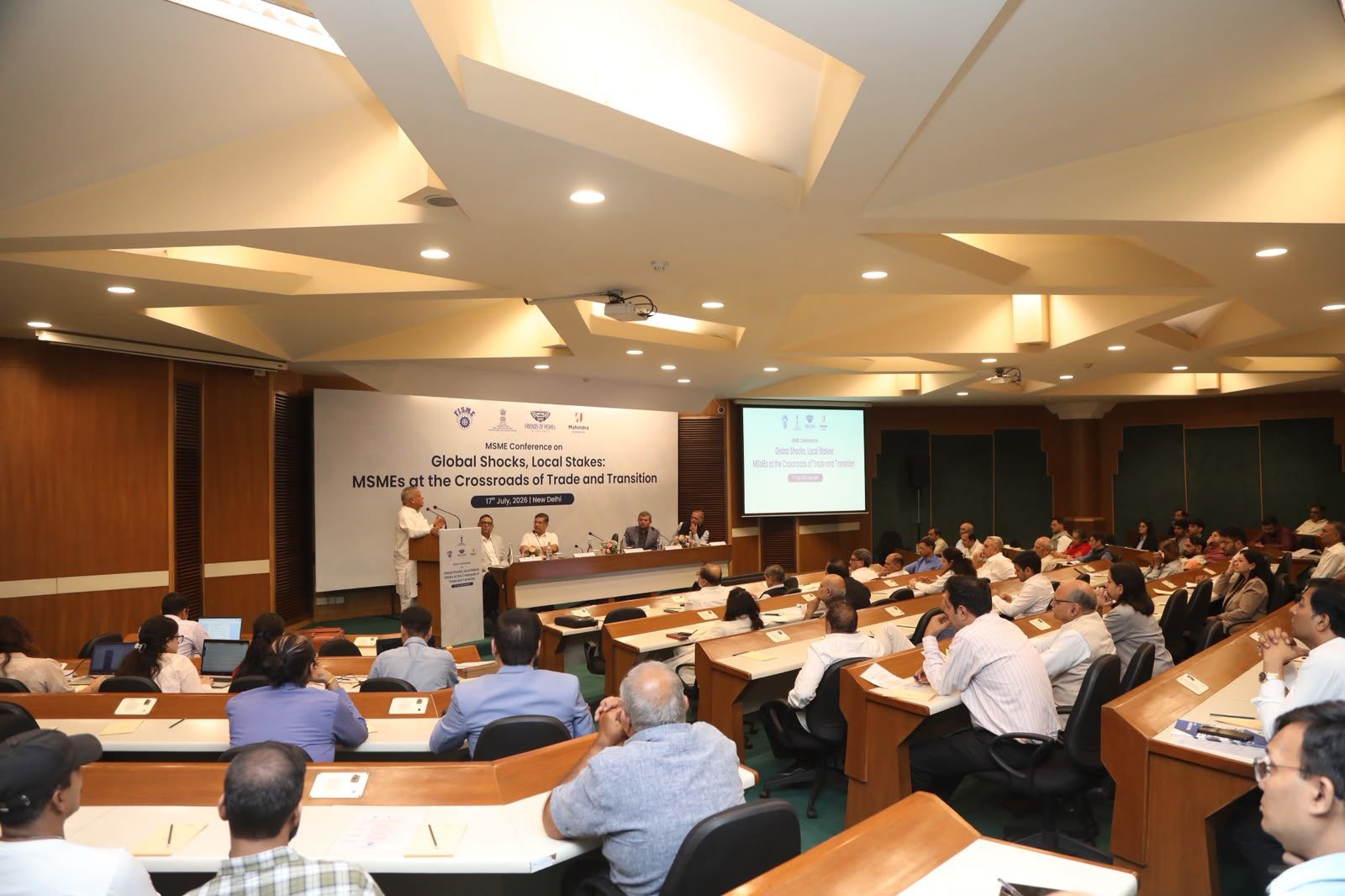
The Center organizes policy conferences, seminars, roundtable discussions, research initiatives, public lectures, and stakeholder consultations. Its inaugural major programme examined Hyderabad’s role in India’s Global Capability Center ecosystem, while subsequent initiatives have addressed the effects of global trade disruptions on Indian MSMEs.
