










Centre for AI and Supercomputing
Overview
The Centre for AI and Supercomputing at Mahindra University is a research and teaching hub built for the age of artificial intelligence. It brings together computer science, mathematics, statistics, quantitative finance, and high-performance and quantum computing to advance frugal, trustworthy, and scientific AI, and to prepare graduates who can direct AI systems, reason with data, and defend their thinking in the open.
The Centre is organised around four arms that give it both rigour and reach: Statistics and Data Science, Quantitative Economics and Finance, Computer Science and Engineering with Applicable Computing as the computational pivot, and High-Performance and Quantum Computing. Powered by the University’s NVIDIA supercomputing infrastructure, its research is coupled to national missions and to real problems in science, sustainability, health, mobility, and design. The Centre works in close partnership with departments across the University, with industry, and with leading institutions in India and abroad, including the University of California San Diego.

AI-native by design
Pedagogy, assessment, and research are built around AI from the start, rather than retrofitted onto older habits.

Frugal-compute research identity
The Centre aims for world-class results per rupee and per watt, powered by the University’s own NVIDIA supercomputing systems.

A strong computational pivot
A vibrant Department of Computer Science and Engineering retains its identity in theory research, from algorithms and cryptography to formal methods and quantum computing, while driving applied AI.

The Convergence model
Dedicated faculty carry AI into every discipline, so engineering, the sciences, and other schools gain expert AI teaching and ready research partners without building separate AI groups of their own.

Global and national bridges
A collaboration with the University of California San Diego spans joint programmes, co-supervised doctoral scholars, and shared research, while the Centre’s Smart Transportation hub is being taken up as a national effort with IndiaAI and industry partners.

Industry-coupled scholarship
Research groups are anchored by industrial and national-mission partners, with joint grants, consulting, and co-supervised doctoral work.

Assessment as a research product
The Centre studies and builds AI-era examination and evaluation methods, a distinctive niche that few institutions occupy.

Focused research areas
Foundation and frugal AI including small language models for Indian languages; AI for science; AI for life sciences and health; trustworthy and safe AI; agentic systems and AI for software; AI in education; and human-centred AI, creative systems, and assistive technology.
Philosophy
The Centre holds that a great university is built by purpose, people, and patience, and not by scale or by a corporate logo. Being young is treated as an advantage: with no legacy to defend, the Centre can build the AI-era university from first principles.
The Centre chooses its niches deliberately, works frugally in means and precisely in aim, and measures itself by the reach of its ideas rather than by its size or its years. Its research aspires to be judged by the hardest juries in the world and welcomed there as a peer. In short, the Centre sets out to teach what AI cannot do, to research what the country most needs, and to make its own methods a model that others adopt.
Publications
The Centre’s faculty and its home Department of Computer Science and Engineering publish at leading international venues. Entries marked Prof. Saha are authored by the Centre’s Dean. Journal quality is shown by Scopus quartile and conference quality by CORE rank. In the 2023 to 2025 window the Department alone recorded 185 publications, 47 of them Q1 journal papers, with 708 Scopus citations at an h-index of 13.
- PowerQuant: Architecture-Agnostic GPU Power Estimation via Quantile Regression. ACM HPDC 2026. CORE A · Prof. Saha
- SurfaceEncoder: Semi-Supervised Representation Learning for Global Wheelchair Accessibility. ECML-PKDD 2026. CORE A · Prof. Saha
- How Much Should the Agent See? A Disclosure Axis for LLM Agents. EMNLP 2026. CORE A · Prof. Saha
- QuantProb: Generalizing Probabilities along with Predictions for a Pre-trained Classifier. UAI 2024 (PMLR). CORE A · Prof. Saha
- Attributed Abnormality Graph Embedding for Clinically Accurate X-Ray Report Generation. IEEE Transactions on Medical Imaging. Scopus Q1, 2023
- FIMBISAE: A Multimodal Biometric Secured Data Access Framework for Internet of Things. IEEE Internet of Things Journal. Scopus Q1, 2023
- Postulating exoplanetary habitability via a novel anomaly detection method. Monthly Notices of the Royal Astronomical Society (MNRAS). Scopus Q1, 2022 · Prof. Saha
- CEESA meets machine learning: a Constant Elasticity Earth Similarity Approach to habitability and classification of exoplanets. Astronomy and Computing. Scopus Q1, 2020 · Prof. Saha
- Machine learning-driven structural health monitoring: STFT-based feature extraction. Structures. Scopus Q1, 2025
- A Novel Clustering-Based Hybrid Feature Selection Approach Using Ant Colony Optimization. Arabian Journal for Science and Engineering. Scopus Q1, 2023
- Habitability classification of exoplanets: a machine learning insight. The European Physical Journal Special Topics. Scopus Q2, 2021 · Prof. Saha
- Evolution of novel activation functions in neural network training for astronomy data. The European Physical Journal Special Topics. Scopus Q2, 2021 · Prof. Saha
- A lightweight optimized intrusion detection system using machine learning. Telecommunication Systems. Scopus Q2, 2024
A review on structural health monitoring: past to present. Innovative Infrastructure Solutions. Scopus Q2, 2023
Research Highlights and Trends
The Department of Computer Science and Engineering’s 2023 to 2025 record shows a clear shift toward quality. Nearly 69 percent of journal articles appeared in Scopus Q1 venues (47 of 68), and 57 of 68 sit in Q1 or Q2. Mean impact factor is 4.66, with a high of 12.4, and mean CiteScore is 6.40. Twenty-eight papers carry an overseas co-author across 20 countries, at an average of 3.6 authors per paper.
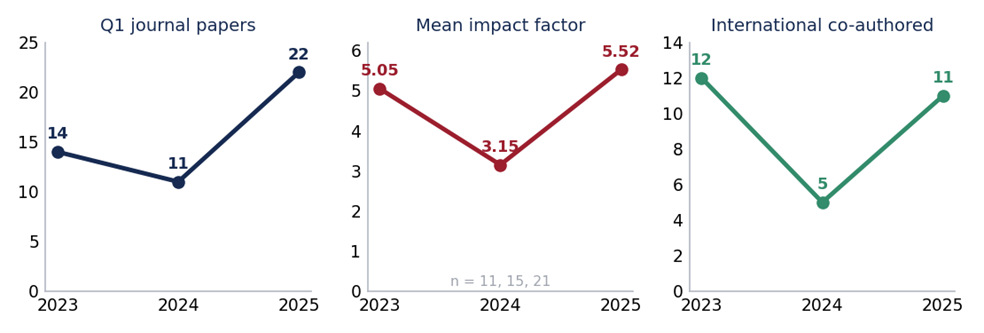
Year-wise trends: Q1 journal papers, mean impact factor, and internationally co-authored papers.
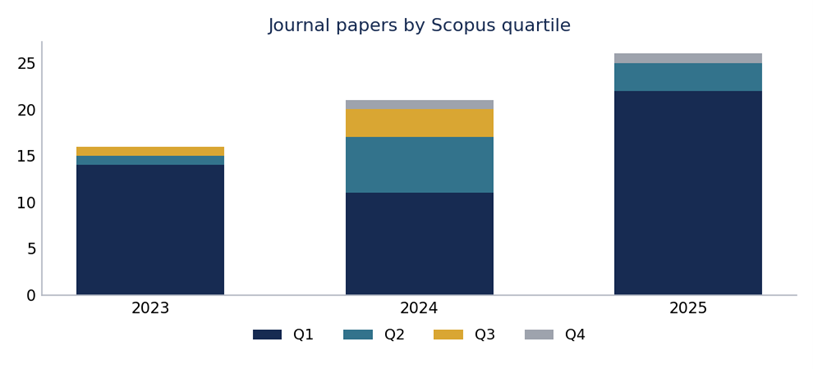
Journal papers by Scopus quartile each year; the Q1 share is the largest and grew to 22 of 27 papers in 2025.
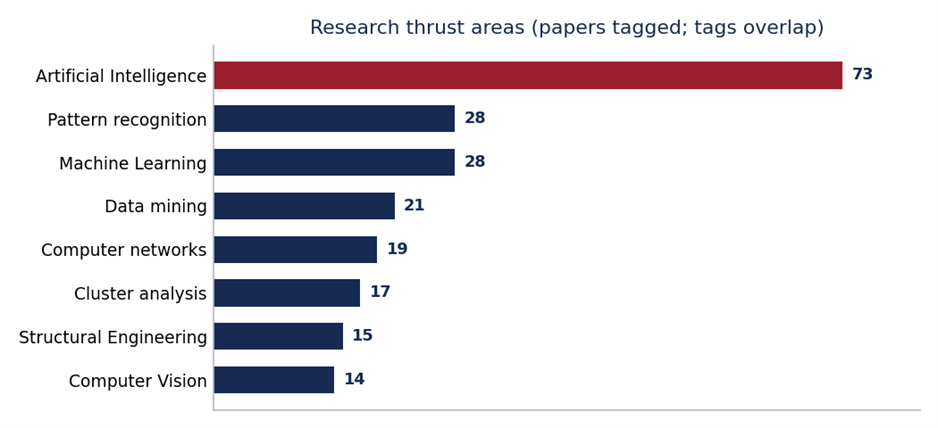
Research thrust areas by number of tagged papers; tags overlap, so counts are not exclusive.
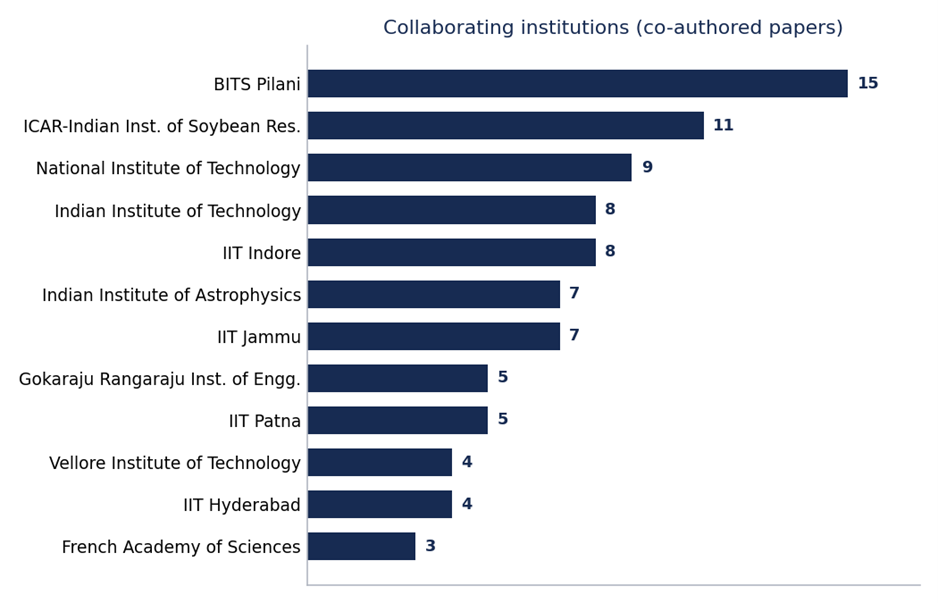
Collaborating institutions by number of co-authored papers.
Our Academic Offerings
Education in AI and data science.
Collaborative programmes with UC San Diego
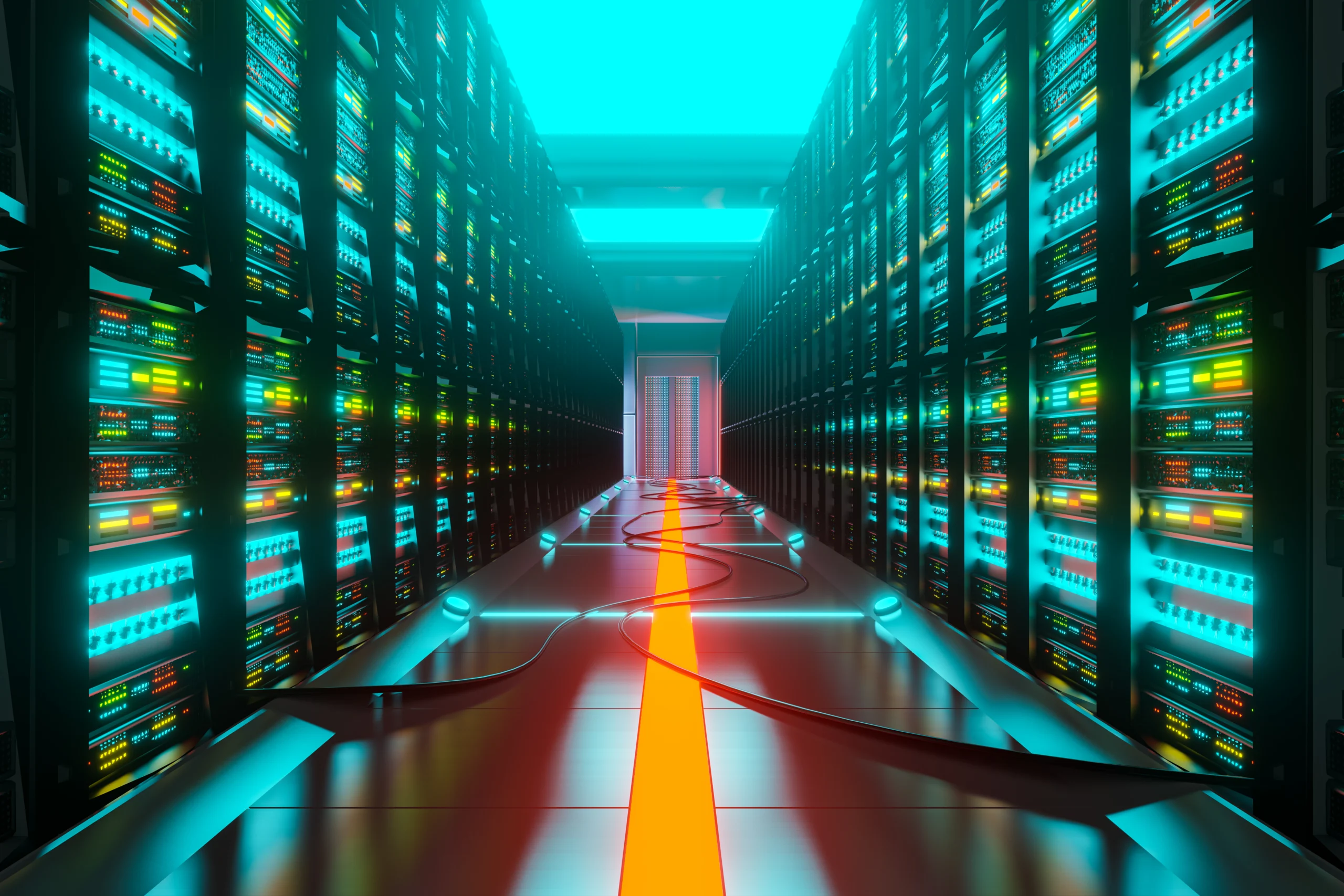
Supercomputing access

A dual and multi-track faculty model

Flagship initiatives

Partnerships

Research with impact

For students, faculty, and partners
Professor & Head
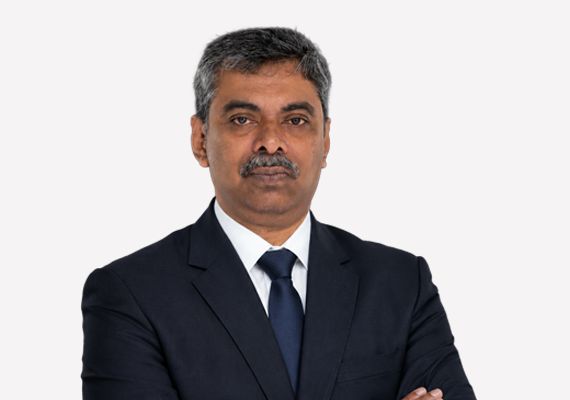
Snehanshu Saha
FAQs
The Centre works on artificial intelligence that is frugal, trustworthy, and genuinely useful. Two flagship areas lead the agenda, and a broader set of research themes sits alongside them.
- Smart Transportation. Perception and vision, vehicle-to-infrastructure (V2I) systems, risk-aware route optimization, and spatial computing with LiDAR and SLAM for GPS-denied navigation, together with structural health monitoring of roads and bridges and safety solutions for Indian roads. This work runs on shared UC San Diego and MU high-performance computing.
- Human-Computer Interaction and assistive technology. Interaction and interface design, affective and physiological sensing, and AI-based navigation aids for visually impaired wheelchair users, so that AI systems amplify human ability rather than replace it.
Beyond these flagships, the Centre’s research spans:
- Foundational and frugal AI, including small language models for Indian languages.
- AI for Science and Sustainability, including green transportation, data-center power monitoring, and predictive cooling.
- Trustworthy and safe AI, evaluation science, and agentic systems.
Computer vision, pattern recognition, machine learning, data mining, and networks, which are the department’s strongest publishing areas.
The Centre plans two residential postgraduate programmes on the Mahindra University campus:
- A residential PG programme in Data Science. A rigorous, hands-on masters that pairs a strong mathematical and computational foundation with real-world projects and supercomputing access.
- A residential PG programme in Quantitative Economics and Data Science. A distinctive programme at the meeting point of econometrics, decision science, and modern machine learning, for students who want to model markets, risk, and behaviour with data.
Both are designed to be industry-coupled and research-led. They sit alongside collaborative offerings with UC San Diego, including an online Master of Data Science hosted at Mahindra University and jointly supervised doctoral scholars.
At the core is a strong foundational team of CORE AI experts. Their remit is to build:
- Models that work in both small-data and big-data regimes.
- Agentic AI systems.
- Machine learning for high-performance computing (HPC) systems.
- Test-time adaptation and robustness.
Around this core, the Centre is building focused groups coupled to its flagship areas, Smart Transportation, Human-Computer Interaction and assistive technology, Sustainability, AI for Science, and Trustworthy AI, each anchored by an industry or national-mission partner. The build plan follows the Convergence model, in which AI researchers teach into every discipline while their research home stays in AI and Computer Science. Over the first two years the Centre aims to grow its faculty strength substantially, with dedicated Convergence Faculty, Professors of Practice, and Research-track members, supported by pre-doctoral Research Fellows and teaching assistants.
The Centre is AI-native by design. Rather than retrofit AI onto old habits, it builds pedagogy, assessment, and research around AI from the start. It pursues a deliberately frugal-compute identity, aiming for world-class results per rupee and per watt. In one line, it sets out to teach what AI cannot do, to research what the country most needs, and to treat collaboration across departments as structural rather than ornamental.
The Centre is powered by the University’s NVIDIA supercomputing systems, with scheduled, SLURM-based access for research and teaching and burst access to national compute for the largest runs. Guaranteed compute is part of how the Centre attracts and retains strong faculty and doctoral talent.
Internationally, the University of California San Diego, through joint programmes, co-supervised scholars, and shared research, and collabotations exist with the French Academy of Sciences, Penn State University, Caltech, Miami University, Virginia Tech to name a few. Nationally, Tech Mahindra’s Makers Lab, with academic collaborations spanning BITS Pilani, several Indian Institutes of Technology, the Indian Institute of Astrophysics, and the National Institute of Technology. Within the University, the Centre partners with Engineering, the School of Design Innovation, and the Centre for Life Sciences.
In the 2023 to 2025 window the home Department of Computer Science and Engineering recorded 185 publications, including 47 Q1 journal papers and 708 Scopus citations at an h-index of 13, with nearly 69 percent of journal articles in Q1. Recent work by the Centre’s leadership appears at top-tier venues including HPDC, ECML-PKDD, EMNLP, and UAI, all ranked CORE A or A*, and in journals such as Monthly Notices of the Royal Astronomical Society and IEEE Transactions.
Through co-supervised doctoral work, joint grants and consulting, internships and industry-sponsored projects, Convergence courses taught into other departments, and shared use of the Centre’s supercomputing. Prospective students can look out for the residential postgraduate programmes and doctoral openings, and partners are welcome to propose joint problems in any of the focus areas above.
