







Quick facts
Machine-learning researcher developing methods in Computational Learning Theory, the Mathematics of Data Science, and interpretable deep learning. Ph.D. in Mathematical Sciences (UT Arlington). 200+ papers in leading journals and conferences, including IEEE and ACM Transactions and CORE A*/A venues; three European patents. Creator of AdaSwarm, ChaosNet, QuantProb, and LipschitzLR. Senior Member of IEEE and ACM; Fellow of IETE; Editor, Journal of Finance Research (Elsevier). Citations: 3,100; h-index: 26; i10-index: 64.
Publications
No publications added yet.
Research
No Research Interests added yet.
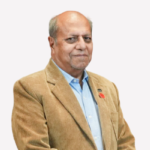
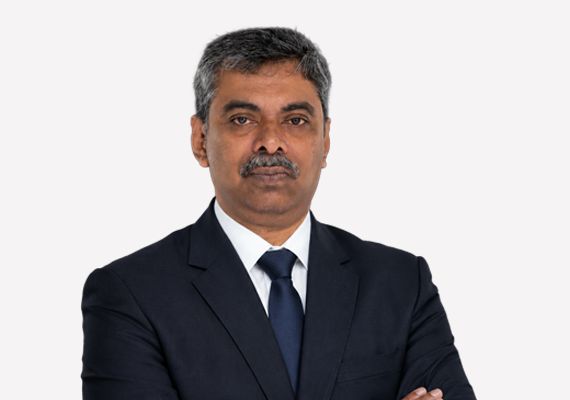
Snehanshu Saha
Dean, Centre for Artificial Intelligence & Supercomputing; Professor & Head, CS/AI
Snehanshu Saha is a Professor and Head of the Department of Computer Science and Engineering and Dean of the Centre for Artificial Intelligence at Mahindra University, Hyderabad, a position he holds on lien from BITS Pilani, K. K. Birla Goa Campus, where he is a Professor in the Department of Computer Science and Information Systems and headed the Anuradha and Prashant Palakurthi Centre for Artificial Intelligence Research (APPCAIR).
He earned his Ph.D. in Mathematical Sciences from the University of Texas at Arlington (2008), an MS in Computational Mathematics from Clemson University (2003), and a BE in Computer Science and Engineering (First Class with Distinction, 1999).
His work spans computational learning theory, the mathematics of data science, non-convex optimization, and astroinformatics, with contributions to the theory of machine and deep learning, meta-heuristics, interpretable deep learning, and anomaly detection for sparse and dense instances. He has authored more than 200 articles in top-ranked journals and conferences, including several IEEE and ACM Transactions, and holds three European patents. He designed and introduced a new course, Computational Learning Theory, for undergraduate and postgraduate students, and led the IEEE Computer Society Bangalore Chapter to the Best Global Chapter award in 2019. He is a Senior Member of IEEE and ACM, a Fellow of IETE, Editor of the Journal of Finance Research, and was Co-Founder and Director of Research at HappyMonk AI Labs.
- 2008: Ph.D., Mathematical Sciences, University of Texas at Arlington, USA
- Thesis: Shallow-water waves and partial differential equations
- 2003: MS, Computational Mathematics, Clemson University, South Carolina, USA
- 1999: BE, Computer Science and Engineering, Jawaharlal Nehru National College of Engineering, India (First Class with Distinction)
- Full list on Google Scholar (200+ publications; h-index 26; i10-index 64): scholar.google.com/citations?user=y2w9OqcAAAAJ]
Journal Publications
Machine Learning (Theory and Applications)
- Toward Accurate Breast Cancer Classification: A Review of Multi-Modal Machine Learning Approaches; A. Mathur, S. Roy Dey, AM D, S. Saha; Methods (Elsevier), 2026.
- K. Ghate, H. Nambiar, A. Sheikh, S. Banik, N. Ganguly, S. Ghosh, S. Saha; SLAB: A Self-supervised Label Generation Framework to Reduce Annotation Overhead; IEEE Transactions on Affective Computing, 2026.
- A. Challa, S. Danda, L. Najman and S. Saha; Quantile Activation: Correcting a Failure Mode of Traditional ML Models; Transactions on Machine Learning Research (TMLR-JMLR), 2025.
- R. Sahoo, S. Chaddha, N. Nagaraj, A. Mathur, S. Saha; To Prune or not to Prune: A Chaos-Causality Approach to Principled Pruning of Dense Neural Networks; Chaos Theory and Applications, Vol. 7, No. 2, pp. 154-165, 2025. DOI: 10.51537/chaos.1588198.
- A Hybrid AI Factor Framework for Longitudinal Analysis of Multidimensional Poverty Status; Ngong’ho Bujiku Sende, Snehanshu Saha, Leon Ruganzu Uwimbabazi; PeerJ Computer Science, 12, 2026.
- N. Arya, A. Mathur, K. Pasupa, Sriparna Saha, S. R. De and S. Saha; Breast Cancer Prognosis through the Use of Multi-Modal Classifiers: Current State of the Art and the Way Forward; Briefings in Functional Genomics (OUP), April 2024. DOI: 10.1093/bfgp/elae015.
- Aditi S, S. Saha, S. S. Chouhan and V. Raychoudhury; DiEvD-SF: Disruptive Event Detection using Continual Machine Learning with Selective Forgetting; IEEE Transactions on Computational Social Systems, 11(3), 4189-4201, June 2024. DOI: 10.1109/TCSS.2024.3364544.
- Snehanshu Saha, Jyotirmoy Sarkar, Soma Dhavala, Santonu Sarkar and Preyank Mota; quantile-Long Short-Term Memory (qLSTM): A Robust, Time Series Anomaly Detection Method; IEEE Transactions on Artificial Intelligence, 5(8), 3939-3950, January 2024. DOI: 10.1109/TAI.2024.3353163.
- G. Alavani, J. Desai, S. Sarkar and S. Saha; Program Analysis and Machine Learning-based Approach to Predict Power Consumption of CUDA Kernel; ACM Transactions on Modeling and Performance Evaluation of Computing Systems, 8(4), Article No. 10, pp. 1-24, June 2023. DOI: 10.1145/3603533.
- N. Arya, A. Mathur, Sriparna Saha, S. Saha; Improving the Robustness and Stability of a Machine Learning Model for Breast Cancer Prognosis through the use of Multi-Modal Classifiers; Scientific Reports (Nature), 13(1), March 2023. DOI: 10.1038/s41598-023-30143-8.
- N. Arya, A. Mathur, S. Saha, Sriparna Saha; Proposal of SVM Utility Kernel for Breast Cancer Survival Estimation; IEEE/ACM Transactions on Computational Biology and Bioinformatics, 20(2), 1372-1383, April 2023. PMID: 35994556.
- J. Sarkar, S. Saha, S. Sarkar; Efficient Anomaly Identification in Temporal and Non-Temporal Industrial Data using Tree-Based Approaches; Applied Intelligence (Springer Nature), 53(8), 8562-8595, March 2023.
- A. Tambewkar, A. Maiya, Soma S. Dhavala and S. Saha; Estimation and Applications of Quantiles in Deep Binary Classification; IEEE Transactions on Artificial Intelligence, 3(2), 275-286, April 2022. DOI: 10.1109/TAI.2021.3115078.
- Tejas Prashanth, Snehanshu Saha, Sumedh Basarkod, Suraj Aralihalli, Soma S. Dhavala, Sriparna Saha and Raviprasad Aduri; LipGene: Lipschitz Continuity Guided Adaptive Learning Rates for Fast Convergence on Microarray Expression Data Sets; IEEE/ACM Transactions on Computational Biology and Bioinformatics, Vol. 19, pp. 3553-3563, November 2022. DOI: 10.1109/TCBB.2021.3110516.
- R. Mohapatra, S. Saha, C. A. Coello Coello, A. Bhattacharya, S. S. Dhavala and S. Saha; AdaSwarm: Augmenting Gradient-Based Optimizers in Deep Learning with Swarm Intelligence; IEEE Transactions on Emerging Topics in Computational Intelligence, 6(2), 329-340, 2022.
- H. N. Balakrishnan, A. Kathpalia, S. Saha and N. Nagaraj; ChaosNet: A Chaos-Based Artificial Neural Network Architecture for Classification; Chaos: An Interdisciplinary Journal of Nonlinear Science, 29(11), 113125, 2019. DOI: 10.1063/1.5120831.
Transportation Systems
- Ashman Mehra, Divyanshu Singh, Vaskar Raychoudhury, Archana Mathur and Snehanshu Saha; Last Mile: A Novel, HotSpot Based Distributed Path-Sharing Network for Food Deliveries; IEEE Transactions on Intelligent Transportation Systems, 25(12), 20574-20587, December 2024. DOI: 10.1109/TITS.2024.3465217.
- Haoxiang Yu, Vaskar Raychoudhury, Snehanshu Saha, Janick Edinger, Roger O. Smith, Md Osman Gani; Automated Surface Classification System using Vibration Patterns — A Case Study with Wheelchairs; IEEE Transactions on Artificial Intelligence, 4(4), 884-895, 2022.
- Aishwarya M., V. Raychoudhury, S. Saha, S. Kar, Anusha K.; CARE-Share: A Cooperative and Adaptive Ride Strategy for Distributed Taxi Ride Sharing; IEEE Transactions on Intelligent Transportation Systems, 23(7), 7028-7044, 2022. DOI: 10.1109/TITS.2021.3066439.
Astroinformatics
- Y. Gondhalekar, R. F. Ederst, M. J. Graham, A. Kembhavi, M. Safonova, S. Saha, A. Mahabal; Deconvolution for Large Astronomical Surveys: A Study of the Scaled Gradient Projection Method on Zwicky Transient Facility Data; Publications of the Astronomical Society of the Pacific, 137(11), 114502, 2025.
- Nehal C. P., M. Das, S. Barway, F. Combes, P. Biswas, A. Bhattacharya, S. Saha; Investigating the Bulge Morphology of Dual AGN Host Galaxies from the GOTHIC Survey; MNRAS, 2025.
- Yash Gondhalekar, Snehanshu Saha, Margarita Safonova; β-SGP: Scaled Gradient Projection with β-divergence for Astronomical Image Restoration; Astronomy and Computing (Elsevier), 2024.
- Anwesh Bhattacharya, Nehal C. P., Mousumi Das, Abhishek Paswan, S. Saha, Françoise Combes; Automated Detection of Double Nuclei Galaxies using GOTHIC and the Discovery of a Large Sample of Dual AGN; Monthly Notices of the Royal Astronomical Society, July 2023. DOI: 10.1093/mnras/stad2117.
- Yash Gondhalekar, Eric Feigelson, Gabriel A. Caceres, Marco Montalto, Snehanshu Saha; A Study of Two Periodogram Algorithms for Improving Detection of Small Transiting Planets; Astrophysical Journal Letters, 959(2), November 2023. DOI: 10.3847/2041-8213/ad0844.
- Jyotirmoy Sarkar, Kartik Bhatia, S. Saha, Margarita Safonova and Santonu Sarkar; Postulating Exoplanetary Habitability via a Novel Anomaly Detection Method; Monthly Notices of the Royal Astronomical Society, 510(4), 6022-6032, March 2022. DOI: 10.1093/mnras/stab3556.
- Luckyson Khaidem, S. Saha, Saibal Kar, Archana Mathur, Sriparna Saha; Expert Habitat: A Colonization Conjecture for Exoplanetary Habitability via Penalized Multi-objective Optimization based Candidate Validation; European Physical Journal — Special Topics (Springer), 230, 2265-2283, 2021.
- Suryoday Basak, Snehanshu Saha, Archana Mathur, Kakoli Bora, Simran Makhija, Margarita Safonova, Surbhi Agrawal; CEESA Meets Machine Learning: From Earth Similarity to Habitability Classification of Exoplanets; Astronomy and Computing (Elsevier), 30, January 2020.
- Simran Makhija, S. Saha, Suryoday Basak, Mousumi Das; Separating Stars from Quasars: Machine Learning Investigation using Photometric Data; Astronomy and Computing (Elsevier), 29, September 2019. DOI: 10.1016/j.ascom.2019.100313.
- Snehanshu Saha, Suryoday Basak, Margarita Safonova, Kakoli Bora, Surbhi Agrawal, Poulami Sarkar and Jayant Murthy; Theoretical Validation of Potential Habitability via Analytical and Boosted Tree Methods: An Optimistic Study on Recently Discovered Exoplanets; Astronomy & Computing (Elsevier), Vol. 23, pp. 141-150, 2018. DOI: 10.1016/j.ascom.2018.03.003.
Conference Proceedings (CORE A*/A)
- Athira M. V., A. Challa, S. Danda, S. Saha; How Much Should the Agent See? A Disclosure Axis for LLM Agents; EMNLP, 2026.
- T. Desai, A. Challa, G. Prabhu, S. Saha, S. Sarkar; PowerQuant: Quantile-Based Cross-Architecture Transfer for GPU Power Prediction; HPDC, 2026.
- S. Saha, N. Mahmud, M. O. Gani, V. Raychoudhury; SurfaceEncoder: Semi-Supervised Representation Learning for Global Wheelchair Accessibility; European Conference on Machine Learning and Principles and Practice of Knowledge Discovery in Databases (ECML-PKDD), 2026.
- Tanish Desai, Jainam Shah, Gargi Prabhu, Snehanshu Saha, Santonu Sarkar; Adaptive GPU Power Capping: Balancing Energy Efficiency, Thermal Control and Performance; 34th ACM Symposium on High Performance and Distributed Computing (HPDC), 2025. (Best Poster Paper Award).
- Swarnali Banik, Surjya Ghosh, Sougata Sen and S. Saha; Influence of Demographics and Personality Traits on Physiological Responses to Improve Continuous Emotion Annotation in Video Applications; CHI Late Breaking Work, 2025.
- Swarnali Banik, Surjya Ghosh, Sougata Sen and S. Saha; Towards Reducing Continuous Emotion Annotation Effort during Video Consumption: A Physiological Response Profiling Approach; Proceedings of the ACM on Interactive, Mobile, Wearable and Ubiquitous Technologies / UbiComp, 8(3), Article No. 91, pp. 1-32, 2024. DOI: 10.1145/3678569.
- Alfiya Sheikh, Kshitish Ghate, Hrithik Nambiar, Swarnali Banik, S. Saha, Surjya Ghosh, Sougata Sen, Vaskar Raychoudhury and Niloy Ganguly; Self-SLAM: A Self Supervised Learning Based Annotation Method to Reduce Labelling Overhead; ECML-PKDD, 2024. DOI: 10.1007/978-3-031-70378-2_8.
- Aditya Challa, S. Saha, Soma Dhavala; QuantProb: Generalizing Probabilities along with Predictions for a Pre-trained Classifier; 40th Conference on Uncertainty in Artificial Intelligence (UAI), PMLR 244:585-602, 2024.9. M. Prajwal, A. Raj, S. Sen, S. Saha and S. Ghosh; Towards Efficient Emotion Self-report Collection using Human-AI Collaboration: A Case Study on Smartphone Keyboard Interaction; Proceedings of the ACM on Interactive, Mobile, Wearable and Ubiquitous Technologies, 7(2), 2023. DOI: 10.1145/3596269.
- Present: Professor & Head, Department of Computer Science and Engineering, and Dean, Centre for Artificial Intelligence, Mahindra University, Hyderabad
- 12/2019 – 08/2026: Professor, CSIS & Co-ordinator, APPCAIR, BITS Pilani, K. K. Birla Goa Campus (currently on lien)
- Present: Co-Founder & Director of Research, HappyMonk AI Labs, Bengaluru & Goa
- 2012 – 2019: Professor, Computer Science and Engineering, PES University / PESIT South, Bengaluru
- 2008 – 2012: Faculty, Department of Mathematical Sciences, University of Texas at El Paso, USA
Administrative Responsibilities: Chair, Scientometrics and Ranking Committee (2022–present); University Core Committees on Ranking and Website Revamp (2022–present); DRC member (2020–24); DAC member (2020–22); Member, Convocation Committee (2022); designed the Computational Economics programme (2022) — all at BITS Pilani, Goa Campus. Head, AI Research Centre and Head, Institute Knowledge Analysis (all campuses of BITS Pilani).
He develops methods in Computational Learning Theory (COLT) and the Mathematics of Data Science (MDS). Current interests include interpretable deep learning, acceleration in deep and wide neural networks, and the chaos–causality paradigm. Specific directions include pointwise smooth approximations of gradients, discovering activation functions from data, smoothness and convexity of loss functions, novel loss functions in backpropagation, chaos–causality in deep neural networks, and pruning and compression of deep networks. Recent interests include distribution-shift detection algorithms, shift-aligned test-time adaptation, and a unified theory of anomaly detection.
Tools: measure theory, non-linear optimization, functional analysis, econometrics, dynamical systems, parametric and non-parametric statistics, and algorithms.
Applications: healthcare, astroinformatics, transportation, and industrial systems and automation.Signature contributions: AdaSwarm (swarm-intelligence-based optimizer), ChaosNet (chaos-based neural architecture for classification), and LipschitzLR (adaptive learning-rate scheduling). He founded an astroinformatics focus group in collaboration with the Indian Institute of Astrophysics and the National Institute of Advanced Studies. Code: github.com/sahamath.
