










Home / Postgraduate / Page 2

Bachelor of Legislative Law (LLB)

A 3-year postgraduate law programme designed for graduates seeking a rigorous legal education with strong foundations in theory, practice, and research.

LLB programme overview 

This programme is designed for graduates from any discipline who wish to pursue legal education after completing an undergraduate degree. The programme follows a structured curriculum aligned with Bar Council of India requirements, combining core law subjects with electives, clinical courses, and research-based learning. Students experience

Strong legal foundations

Study core subjects such as constitutional law, criminal law, contract law, and civil procedure through a structured, semester-wise curriculum.

Applied legal learning

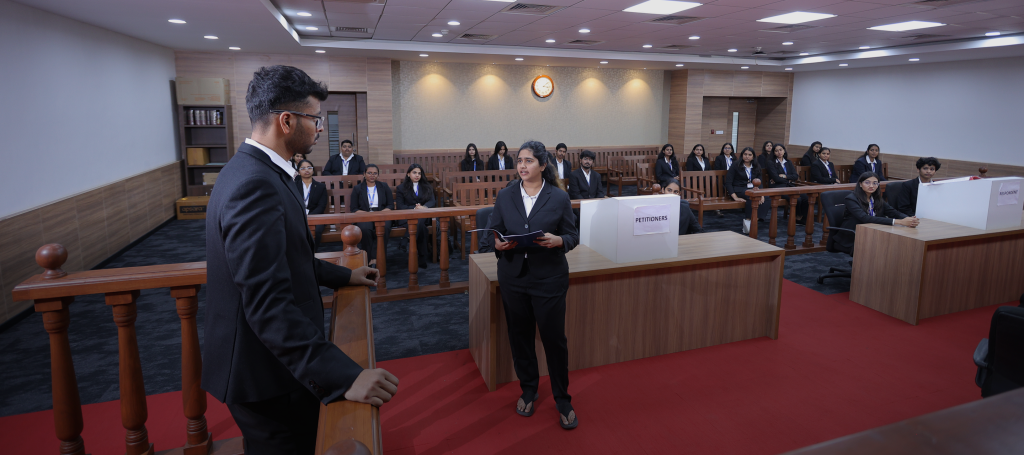
Engage with clinical courses, drafting exercises, moot courts, and internships that link classroom learning with legal practice.

Honours pathway

Pursue advanced coursework and research-oriented study in the final year through the Honours structure.

Academic rigour and ethics

Develop legal reasoning, writing, and professional ethics aligned with contemporary legal practice.

Programme details

Admission eligibility

  • Candidates should have graduated with a full-time degree from any recognized university/institute with a minimum aggregate of 60% or equivalent grade in any discipline/subject
  • Followed by Panel Interview for Shortlisted candidates
  • Duration: 3 years / 6 semesters (inclusive of internships)

MU-SOL-Edge

The School of Law at Mahindra University empowers an invincible professional edge, to each of its law candidate through universal as well as industry-specific skills to make them underline their individual presence in their chosen legal domain. A few of the distinguished facets of SOL-edge are:

  • Vibrant blend of industry and academics.
  • Research and experimental based pedagogy.
  • Exceptional interface with emerging technologies in legal domain.
  • Student exchange program with international universities/institutions.
  • Availability of wide domains in law.
  • Exclusive industry backed upskills and certifications.

Specialisation

The 3 year LLB programme gives its law professionals, a wide variety of domains to specialize from. A few of them are:

  • Public law
  • Corporate law
  • Business law
  • Criminal law
  • International law
  • Intellectual property law
  • Civil & private law

FAQs

Graduates from any recognised discipline may apply, subject to meeting the eligibility criteria specified by Mahindra University.

The programme follows the curriculum framework prescribed by the Bar Council of India.

Yes. Clinical courses, internships, and practical components are part of the curriculum.

The honours structure includes advanced coursework and research-oriented study in the final year.

Yes, subject to meeting completion and eligibility requirements as notified by the University.
Start your journey with us

Home / Postgraduate / Page 2

M.Tech in VLSI Design & Embedded Systems

A two-year postgraduate programme focused on chip design, embedded systems and design automation for the semiconductor and electronics industry.

M.Tech in VLSI design & embedded systems overview 

The programme prepares engineers to design, verify and integrate digital and analogue systems using industry-standard design flows and tools. Students experience:

Complete VLSI design flow

Working across architecture, logic design, synthesis, physical design and verification using industry-grade EDA tools.

Analogue and digital circuit design

Hands-on design, simulation and layout using Cadence Virtuoso across multiple technology nodes.

Embedded systems foundations

Learning embedded architectures, device modelling, fabrication concepts and hardware–software integration.

Advanced electives and research

Exploring areas such as low-power design, hardware security, testing, FPGA systems and machine learning for VLSI.

Programme details

Overview

Mahindra University offers a two-year M.Tech programme in VLSI Design and Embedded Systems, designed to develop advanced expertise in semiconductor design and embedded technologies. The curriculum covers key areas such as VLSI design, advanced computer architecture, algorithms for design automation, machine learning for VLSI design, low-power VLSI design, logic synthesis, design for testability, physical verification flows, and device and process simulation of semiconductor devices.

Advanced laboratory facilities

  • Mahindra University has established a state-of-the-art laboratory that provides students with access to the latest design automation tools from leading Electronic Design Automation (EDA) companies.
  • Students gain hands-on experience using the Synopsys tool suite, covering the complete design flow—from architectural design to physical verification. Tools available include Design Compiler, ICC2, PrimeTime, StarRCXT and Sentaurus TCAD, enabling device and process simulation, interconnect modelling and extraction.
  • Students also learn analogue and digital full-custom circuit design using Cadence Virtuoso, with technologies such as UMC 65nm, GPDK 45nm, 90nm and 180nm. Additional Cadence tools—including Assura, Innovus, Incisive and Genus—support training in circuit-level physical design and verification, gate-level design and functional simulation, synthesis and pre-layout timing analysis.
  • These facilities enable students to explore innovative design ideas and gain practical experience with industry-standard semiconductor design tools.

Career opportunities

Graduates of the programme can pursue careers with leading semiconductor design and manufacturing companies such as Intel, Qualcomm, Synopsys, Broadcom, AMD, NVIDIA, Apple, TSMC, GlobalFoundries and Samsung, among others.

Link: MU Test Syllabus

CourseL-T-PCredits
VLSI Design3-0-03
Semiconductor Device Modelling and Fabrication3-0-03
Embedded Systems3-0-03
Logic Synthesis and Verification2-0-02
Computer Organization and Architecture3-0-03
Embedded Systems Lab0-0-21
VLSI Design Lab0-0-21
Logic Synthesis and Verification Lab0-0-21
Semiconductor Device Modelling Lab0-0-21
Communication Skills2-0-02
CourseL-T-PCredits
VLSI Digital Signal Processing3-0-03
Low Power VLSI Design3-0-03
Physical Design Automation3-0-03
Hardware/Software Codesign3-0-03
Analog CMOS IC Design3-0-03
Physical Design Automation Lab0-0-21
Embedded Programming Lab0-0-21
Analog CMOS IC Design Lab0-0-21
Scripting Languages for Electronic Design Automation (EDA)0-0-21
CourseL-T-PCredits
Elective I3-0-03
Research Project and Seminar0-2-44
Elective II3-0-03
Elective III3-0-03
CourseL-T-PCredits
Masters’ Thesis0-0-2412
CourseL-T-PCredits
FPGA Based System Design3-0-03
Memory Design & Testing3-0-03
Semiconductor Devices for High Speed Applications3-0-03
Flexible & Wearable Sensors3-0-03
Fault Tolerant Systems3-0-03
MEMS & NEMS3-0-03
Hardware Security3-0-03
Pattern Recognition and Applications3-0-03
Digital Image Processing and Computer Vision3-0-03
High Performance Computing3-0-03
Internet of Things System Architecture and Design3-0-03
Cyber-Physical Systems3-0-03
Testing and Design for Testability3-0-03
Testing and Verification for Embedded Systems3-0-03
Electronics Systems Packaging3-0-03
Analog and Mixed-Signal Integrated Circuit Design3-0-03
High-Level Synthesis3-0-03
Analog Power Integrated Circuit Design3-0-03
Machine Learning3-0-03
Hardware Acceleration for ML Applications3-0-03
Embedded AI Applications3-0-03
Optoelectronic Devices3-0-03
Modeling of Nanoscale Devices3-0-03

Eligibility

  • Candidates must have completed a full-time bachelor’s degree from a recognised university or institute with a minimum aggregate of 60% marks or equivalent grade.
  • Eligible degrees include B.E./B.Tech. in Electrical Engineering, Electrical and Electronics Engineering, Electronics and Communication Engineering, Telecommunication Engineering, Communication and Information Systems, Instrumentation Engineering, Automobile Engineering, Mechatronics Engineering, Electronics and Biomedical Engineering or Electronics and Computer Engineering.
  • A valid GATE score in Electrical Engineering, Electronics and Communication Engineering or Instrumentation Engineering is mandatory.
  • Candidates appearing for their final semester examination in the current year are also eligible to apply.

Admission process

  • GATE-qualified candidates: Applicants with a valid GATE score and a percentile of 80 or above will be shortlisted for an interview.
  • Non-GATE candidates: Applicants without a valid GATE score, or with a percentile below 80, must appear for a written test conducted by ECSE–Mahindra University, followed by an interview for shortlisted candidates.

Fee structure

  • Tuition fee: ₹1,00,000 per annum
  • Hostel fee: Additional (hostel stay is not mandatory)

FAQs

It focuses specifically on VLSI design and embedded systems, aligning coursework and labs with industry design and verification practices.

Students train on professional EDA tools from Synopsys and Cadence across digital and analogue design flows.

Each core course is paired with laboratory work and design projects using industry-style methodologies.

Yes. The advanced coursework and thesis component provide a strong foundation for doctoral study.

The curriculum is tightly focused on integrated circuit design, design automation and embedded systems rather than broad electronics topics.

Start your journey with us

Home / Postgraduate / Page 2

M.Tech in Transportation Engineering

A two-year postgraduate programme preparing engineers for industry, government and research roles in transportation systems.

M.Tech in transportation engineering overview 

To develop future engineers equipped with advanced technologies and knowledge to design safe, efficient, inclusive and sustainable transportation systems.

Transport planning and traffic operations

Learning urban transport planning, traffic engineering and geometric design, with focus on safety, efficiency and network performance.

Pavements and highway materials

Hands-on work in testing, characterisation and design of pavements to support durable road infrastructure.

Simulation and data-driven analysis

Laboratory and software-based practice in highway design, transport systems planning, simulation and analysis of real mobility data.

Industry-linked projects and research

Internship and research thesis in the second year, applying classroom learning to live transportation and mobility challenges.

Programme details

About the programme

The M.Tech in Transportation Engineering, offered by the Department of Civil Engineering at Mahindra University, comprises 13 teaching course units worth 44 credits (including practical components) and a thesis worth 21 credits, making a total of 65 credits.

The curriculum covers both fundamental and advanced aspects of transportation engineering with a strong theoretical and practical orientation. Traditional course content has been updated to align with evolving industry requirements. Many courses include laboratory components, providing students with hands-on experience in solving real-world transportation challenges.

A key feature of the programme is the flexible internship duration, allowing students to undertake internships of 8–12 weeks, six months or up to one year, depending on industry requirements and student interests. This enables deeper exposure to practical transportation problems and professional work environments.

The programme emphasises transportation systems and modelling, supported by computational and experimental laboratories. Students also gain programming and software skills required for modern transportation analysis and planning. Training in widely used transportation software tools ensures graduates are industry-ready. Electives can be chosen from a range of disciplines across the university, enabling interdisciplinary learning.

Programme outcomes

Graduates of the programme will be able to:

  • Plan, analyse, design and execute transportation infrastructure projects.
  • Apply knowledge of science, engineering principles and optimisation techniques to solve transportation engineering problems.
  • Work effectively in interdisciplinary teams to deliver multidisciplinary infrastructure projects.
  • Apply transportation engineering and management principles to plan and manage projects.

Programme educational objectives (PEOs)

  • Provide comprehensive knowledge of transportation systems to address current and future infrastructure challenges.
  • Prepare graduates to work in interdisciplinary environments using advanced technologies to solve complex transportation problems.
  • Foster social responsibility, reflective learning and professional ethics throughout their careers.

Programme-specific outcomes (PSOs)

  • Apply fundamental transportation engineering principles in the planning, design, construction, operation and maintenance of sustainable infrastructure.
  • Use modern equipment and software tools to build successful careers in academia, industry and research.
  • Demonstrate leadership, ethical responsibility and a commitment to lifelong learning.

Course structure

The curriculum balances courses across transport planning, traffic engineering and pavement design. Students complete core courses during the first and second semesters, followed by a capstone project that integrates their learning.

Elective courses allow students to deepen their expertise in selected areas, while emerging topics such as intelligent transport systems are incorporated into the programme. The structure also allows students to undertake extended internships or research projects during the second year.

Admission process

Applications are shortlisted based on:

  • GATE percentile scores, or
  • Performance in the written test conducted by Mahindra University.
  • All shortlisted candidates must appear for a personal interview for final selection.

Link: MU test syllabus

Career roles

Graduates of the programme can pursue roles such as:

  • Highway engineer
  • Traffic analyst
  • Transportation planner
  • Researcher

These roles may be across sectors including:

  • Entrepreneurial ventures in transportation and infrastructure.
  • Consulting firms
  • Academic and research institutions
  • Government agencies

FAQs

It builds capability in planning, traffic operations, pavements and systems analysis, preparing graduates for roles in consulting, public agencies and research.

Students work in laboratories and software-based sessions covering materials testing, highway design, simulation and transportation data analysis.

Yes. Courses and electives introduce intelligent transportation systems, data-driven planning and sustainable mobility concepts.

Yes. The second year includes an industry internship and a research thesis often based on live projects or real datasets.

Graduates pursue roles as transportation or traffic engineers, highway and pavement specialists, mobility analysts or researchers, with the option to progress to doctoral studies.

Start your journey with us

Home / Postgraduate / Page 2

M.Tech in Systems Engineering

A two-year postgraduate programme focused on architecting, integrating and managing complex engineering systems across industries.

M.Tech in systems engineering overview 

The programme prepares graduates to design and manage complex systems by combining engineering depth with systems thinking, modelling and lifecycle approaches. Students experience:

Systems thinking and architecture

Learning how complex systems are structured, integrated and evolved across full product and service lifecycles.

Modelling, simulation and optimisation

Building strong analytical capability using system dynamics, simulation, optimisation and data-driven methods.

Interdisciplinary problem solving

Applying systems approaches to challenges spanning hardware, software, operations and management.

Research and industry readiness

Design projects and a substantial dissertation focused on real-world complex systems.

Programme details

Academic structure

Systems engineering is an engineering discipline that integrates and harmonises the various stages of a product’s lifecycle. It has been widely applied in industries such as aerospace, automotive, chemicals, electronics and advanced manufacturing to enable structured and efficient product development. By coordinating multiple subsystems concurrently, systems engineering reduces development time and cost while improving overall system performance.

The M.Tech in Systems Engineering is designed for students interested in advanced study and research in this interdisciplinary field. The programme focuses on the integration of engineering, systems thinking and lifecycle management, enabling students to understand how complex systems are designed, implemented, managed and evolved.

Students gain exposure to areas such as:

  • System architecture, design and integration
  • Lifecycle management and system sustainability
  • Evolutionary computation and operations research (OR)
  • Multidisciplinary design optimisation (MDO)
  • Data analytics and artificial intelligence
  • System reliability engineering
  • Energy and distribution management systems

The programme consists of more than 60 credits across four semesters. Approximately two-thirds of the credits are devoted to coursework, while the remaining credits are allocated to project work and research. Students undertake original research and complete a dissertation, with the potential to publish their work in academic journals.

The programme is flexible, allowing students to specialise in specific areas through elective courses and research projects. A design project in the first two semesters further strengthens practical and analytical skills.

Eligibility

  • B.E./B.Tech. in any engineering discipline, or
  • M.Sc. in Mathematics or Physics with first division or a minimum of 60% marks.
  • Desirable: Candidates with an M.Sc. background are encouraged to have 1–2 years of industry experience.

Admission process

Route 1 – GATE-qualified candidates
Shortlisted applicants with a valid GATE score and a percentile above 90% will be invited for a selection interview.

Route 2 – Non-GATE candidates
Applicants without a valid GATE score, or with a percentile below 90%, must appear for a written examination, followed by an interview for shortlisted candidates.

Programme outcomes

Graduates of the programme will be able to:

  • Understand the core principles and components of systems engineering.
  • Conceptualise, design, integrate and validate complex engineering systems.
  • Model and simulate complex system architectures.
  • Apply systems thinking and system dynamics to engineering challenges.
  • Manage and execute systems engineering projects effectively.

Graduates are also eligible to pursue the Associate Systems Engineering Professional (ASEP) certification offered by the International Council on Systems Engineering (INCOSE).

Courses

The curriculum includes courses across major areas such as:

  • Systems engineering principles
  • Systems modelling and simulation
  • Multidisciplinary design optimisation (MDO)
  • System reliability and integration
  • Systems engineering management

Elective courses enable specialisation in areas such as aerospace, automotive systems, renewable energy, control engineering, software systems and project management.

Potential career roles

Graduates may pursue careers in sectors such as:

  • Telecommunications
  • Aerospace and defence
  • Automotive and transportation
  • Renewable energy
  • Healthcare systems
  • Manufacturing and robotics

Opportunities are also available in software and technology companies working on complex engineering systems and digital infrastructure. engineering, software systems and project management.

FAQs

It focuses on integrating multiple disciplines rather than specialising in a single component or technology.

Graduates who enjoy connecting technical domains and working at the system or solution level.

Students work on modelling, simulation, optimisation projects and a major dissertation using real systems problems.

Systems engineer, solution architect, project engineer or technical consultant across multiple industries.

Yes. The emphasis on modelling, optimisation and dissertation work provides a strong base for doctoral study.

Start your journey with us

Home / Postgraduate / Page 2

M.Tech in Smart Grid & Energy Storage Technologies

A two-year postgraduate programme focused on smart grids, renewable integration and advanced energy storage for modern power systems.

Programme overview 

The programme prepares engineers to work with intelligent power networks that integrate renewables, storage and digital control for reliable and sustainable energy delivery. Students experience:

Smart grid fundamentals

Learning modern grid architectures, monitoring, control and communication for intelligent power systems.

Renewable integration and storage

Understanding how solar, wind and distributed generation are integrated, and how energy storage improves reliability and flexibility.

Power system analysis and resilience

Working with realistic grid data and tools to study power flow, stability, protection and network performance.

Research and industry exposure

Project-based learning, internships and interdisciplinary work linked to evolving energy and utility practices.

Programme details

About the programme

The M.Tech in Power Electronics and Renewable Energy Systems is designed for students who wish to build careers in the broad domain of power electronics, electric drives and renewable energy technologies. These technologies are widely used across industrial, commercial and automotive sectors. The programme also emphasises developments in the renewable energy sector, particularly in the context of future smart grids and sustainable energy systems.

The programme offers flexibility for students to specialise in specific areas through elective courses and research projects. A design project is incorporated in the first two semesters to strengthen practical and analytical skills.

The programme spans four semesters and requires more than 60 credits for completion. Approximately two-thirds of the credits are devoted to coursework, while the remaining credits are allocated to research and project work. Students undertake original research and submit a master’s thesis based on their findings.

Courses

The curriculum covers three major domains:

Power electronics

Courses focus on the design, implementation and control of power converters, including emerging technologies based on wide-bandgap semiconductor devices.

Electric drives

Courses examine electric drive systems, including their working principles, modelling, design and high-performance control. Topics include developments such as sensorless speed and position control, AI-assisted drive systems and advanced motor-drive topologies.

Renewable energy systems

Courses explore renewable energy resources, power conversion and grid integration. Students study microgrids in both standalone and grid-connected modes, including their design and control strategies.

Elective courses enable students to explore emerging areas such as the application of artificial intelligence and machine learning in power and energy systems.

Industry collaboration

Curriculum development

The programme curriculum is developed in consultation with industry partners to ensure alignment with evolving industry needs. Industry professionals may contribute to the delivery of selected core and elective courses.

Live projects and internships

Students may work on live industry projects during coursework and thesis work, strengthening real-world problem-solving skills. The final year may also include internships with companies in power electronics, electric vehicles, automation and renewable energy sectors.

Eligibility

  • Candidates must hold a full-time bachelor’s degree from a recognised university or institute with a minimum aggregate of 60% marks or equivalent grade.
  • Candidates appearing for their final semester examination in the current year are also eligible to apply.

Admission process

Route 1 – GATE-qualified candidates
Applicants with a valid GATE score and a percentile above 90% will be invited for an interview.

Route 2 – Non-GATE candidates
Applicants without a valid GATE score, or with a percentile below 90%, must appear for a written examination, followed by an interview for shortlisted candidates.

FAQs

It focuses on smart grids and energy storage, which are central to renewable integration and modern power systems.

Students work on issues such as renewable variability, storage placement, grid stability and system resilience.

Together they enable cleaner, more flexible and reliable electricity networks.

A fully residential, research-oriented setting with strong interdisciplinary and industry engagement.

Yes. The thesis and advanced coursework provide a strong foundation for doctoral study.

Start your journey with us

Home / Postgraduate / Page 2

M.Tech in Robotics

A two-year interdisciplinary postgraduate programme focused on the design, control and integration of intelligent robotic systems.

M.Tech in robotics overview 

The programme integrates mechanical design, electronics, control and computer science to prepare graduates for advanced roles in robotics and automation. Students experience:

Core robotics foundations

Learning dynamics, embedded systems, mathematics for robotics and robot control theory from a multidisciplinary perspective.

Hands-on robotics laboratories

Practical work with robotic hardware, embedded systems and automation through lab-intensive courses.

Robotic intelligence and autonomy

Exposure to robot modelling, AI for robotics and Robot Operating System, linking perception, planning and control.

Research and industry readiness

Advanced electives and a two-phase master’s thesis addressing real-world robotics challenges.

Programme details

Objective

This interdisciplinary programme is offered by the Department of Mechanical and Aerospace Engineering at the École Centrale School of Engineering, Mahindra University, in collaboration with the Departments of Electronics and Computer Science.

The two-year programme provides advanced engineering knowledge through courses in kinematics, dynamics, electronics, computer programming, mathematics and specialised electives. Students also gain exposure to emerging areas such as intelligent machines, healthcare technologies and automation systems.

The programme requires a minimum of 60 credits across four semesters. Approximately two-thirds of the credits are devoted to coursework, while the remaining credits are allocated to a master’s thesis based on original research. Most courses include practical components to ensure hands-on learning and application.

Expected programme outcomes

Graduates of the programme are expected to:

  • Design and implement analogue and digital electronic circuits within robotics and automation systems.
  • Understand fundamental and advanced engineering concepts with a strong theoretical foundation in robotics.
  • Apply principles of mechanical design, electronics design and control systems.
  • Use engineering tools and methodologies to design and develop mechanical components and robotic systems.
  • Develop robotic products and automation systems using integrated hardware and software approaches.

The curriculum includes courses across major areas such as:

  • Robotics and automation
  • Electronics and embedded systems
  • Programming and software–hardware interfaces
  • ROS (Robot Operating System)
  • Advanced robotics and automation technologies

In addition, students may choose specialised elective courses covering emerging topics in robotics and intelligent systems.

CourseL-T-PCredits
Multi‐body Dynamics2-0-24
Embedded Systems3-0-24
Plant Automation and Cyber-Physical Systems3-0-03
Mathematics for Robotics3-0-03
Robot Control Theory3-0-03
Robotics Lab-10-0-21
Robotics and Hardware Interfacing3-0-21
CourseL-T-PCredits
Advanced Robot Modelling and Analysis3-0-24
AI for Robotics3-0-03
Elective I3-0-03
Elective II3-0-03
Elective III3-0-03
Introduction to Robot Operating System (ROS)1-0-22
Robotics Lab-20-0-21
CourseL-T-PCredits
Master Thesis Phase-I0-0-2412
CourseL-T-PCredits
Master Thesis Phase-II0-0-2412

Mobile robots

  • Introduction to mobile robots (MAE)
  • Aerial robotics / UAVs (MAE)
  • Bio-inspired robots (MAE)

Medical robots

  • Medical robots (MAE)
  • Soft robotics (MAE)
  • Human–computer interaction (MAE)

Industrial robots

  • AI in industrial IoT (CSE)
  • Advanced grasping and actuation (MAE)
  • Machine vision and image processing (CSE)

Autonomous systems

  • Machine learning for automobiles (ECE)
  • Digital image processing and computer vision for self-driving cars (ECE)
  • State estimation and localisation of self-driving cars (ECE)
  • Motion planning for self-driving cars (ECE)
  • Safety and standards in autonomous electric vehicles (ECE)

Career roles

Graduates of the programme can pursue roles such as:

  • Project manager
  • Robotics engineer
  • Automation engineer
  • Industrial robotics manager
  • Automation and logistics manager

Robotics and hardware systems

  • Industrial robots, mobile robots, legged robots and drones
  • Haptics and exoskeleton (exo-suit) systems
  • Embedded systems and PLC platforms
  • Pneumatic and electro-pneumatic control systems
  • Measurement and instrumentation laboratory
  • Robotics and hardware interface laboratory

Software tools

  • ABB RobotStudio
  • ROS (Robot Operating System)
  • OpenCV
  • MATLAB
  • Simulink

Admission process

Route 1 – GATE-qualified candidates
Applicants with a valid GATE score and a percentile above 90% will be shortlisted for an interview.

Route 2 – Non-GATE candidates
Applicants without a valid GATE score, or with a percentile below 90%, must appear for a written examination, followed by an interview for shortlisted candidates.

FAQs

It integrates mechanical design, electronics, control and software within a single robotics-focused curriculum.

Students work with robotic hardware, embedded systems, automation tools and robotics software platforms.

Mechanical, mechatronics and electronics engineering graduates are eligible to apply.

The first year focuses on core robotics coursework, while the second year is dedicated to thesis and project work.

Yes. The strong thesis component and advanced coursework provide a solid foundation for doctoral study.

Start your journey with us

Home / Postgraduate / Page 2

M.Tech in Construction Project Management for Working Professionals

A two-year weekend postgraduate programme designed for working professionals in the construction and infrastructure sector.

M.Tech in construction project management overview 

The programme equips professionals with advanced project management capabilities across planning, execution, risk, quality and technology-enabled construction delivery. Students experience:

Project planning and control

Learning scheduling, contracts, procurement, risk and cost management for complex construction projects.

Technology-enabled construction management

Hands-on exposure to BIM, project management software, analytics and digital construction tools.

Focus on quality, safety and sustainability

Courses addressing construction quality, safety systems, lean construction and sustainable practices.

Applied learning for professionals

Project work and dissertation aligned with live construction and infrastructure challenges.

Programme details

Academic structure

Our academic structure is designed to establish robust foundations, followed by increasing specialization in later years.

  • Credit structure: Total of 62 credits
  • Duration: 2 years / 4 semesters
  • Coursework is covered in Semesters 1 and 2, with project, seminars, internship and thesis across Semesters 3 and 4.
CourseL-T-PCredits
Financial Management in Construction3-0-03
Project Procurement and Contracts Management3-0-03
Construction Quality and Safety Management3-0-03
Elective I3-0-03
Advanced Excel and Power BI3-0-03
CourseL-T-PCredits
Risk Analysis and Decision Making3-0-03
Project Planning and Control (Including BIM)3-0-03
LEAN Construction3-0-03
Elective II3-0-03
Project Management Software (Including BIM)3-0-03
CourseL-T-PCredits
Elective-III3-0-03
Elective-IV3-0-03
Project Phase-I0-0-?*?
CourseL-T-PCredits
Project Phase-II0-0-?*?

Eligibility:

To be considered for the programme:

  • B.Tech in civil engineering with a minimum of 60% aggregate
  • At least one year of work experience after completing the undergraduate degree
  • Applicants must be currently employed professionals

Application process

  • Apply through the Mahindra University admissions portal
  • Submit academic records and work experience details
  • Selection is based on eligibility and programme requirements

Fee structure (per annum):

  • ₹2,00,000 per annum

(Fee applicable for Civil Engineering weekend postgraduate programmes. Fees are subject to revision.)

Learning environment and facilities:

Participants benefit from access to our academic and research infrastructure, supporting applied learning in construction management.

Facilities include:

  • Design studio and BIM laboratories
  • AR/VR laboratory
  • Advanced concrete technology and structural health monitoring labs
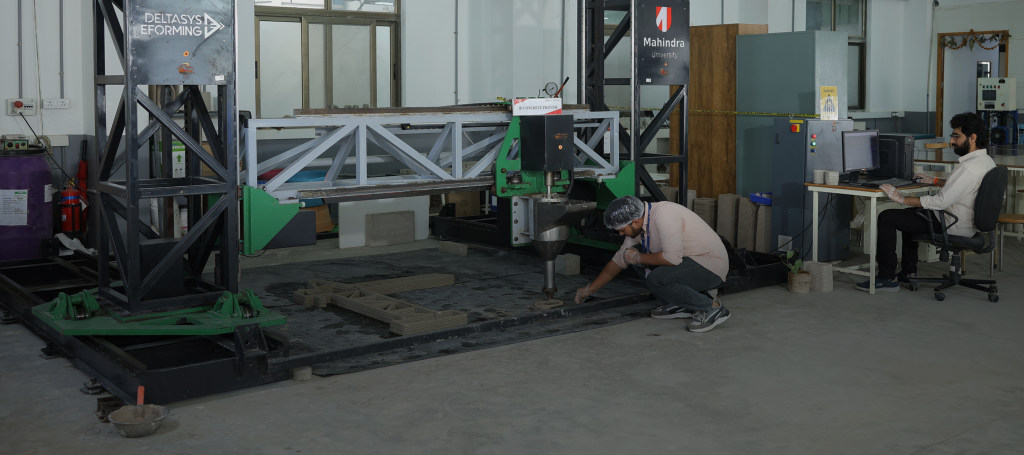
  • Research facilities such as smart materials labs, geo-pavement labs and 3D concrete printing
  • Access to industry-standard software and high-performance computing resources

Where global education meets real-world outcomes

From AI and biotechnology to aerospace and consulting, our graduates are shaping industries worldwide; many joining leading firms, founding start-ups, or pursuing advanced study at top universities

250+

Graduate acceptances

for advanced studies at premium universities across the world

100+

Recruiters

offering career-defining opportunities across industries

20+

Global academic partners

collaborating on exchanges, dual degrees, and joint research initiatives

FAQs

Working professionals in construction and infrastructure roles seeking formal project management training.

Yes. Classes are conducted on weekends to support working professionals.

Graduates move into roles such as project manager, planning engineer, contracts manager and construction management lead.

Yes. Project and dissertation components are aligned with real construction challenges.

The curriculum includes BIM, project management software, analytics tools and digital construction methods.

Start your journey with us

Home / Postgraduate / Page 2

M.Tech in Computer Science and Engineering

A two-year postgraduate programme focused on advanced computing, algorithms and system design.

M.Tech in computer science and engineering overview 

The programme prepares engineers to design, analyse and build advanced computing systems through strong foundations in computer science and applied problem solving. Students experience:

Core computer science foundations

Learning in algorithms, data structures, operating systems and computer networks.

Advanced computing domains

Exposure to areas such as machine learning, data systems, information security and distributed computing.

Hands-on systems and programming

Practical coursework and projects focused on building and evaluating real software and system-level solutions.

Research and industry exposure

Project-based learning, internships and thesis work aligned with contemporary computing challenges.

Programme details

Method of intake

  • Applicants must first qualify through GATE. Candidates are then shortlisted for an interview-based selection process. Applicants from non-CSE backgrounds may be assessed on core computer science subjects such as computer architecture, data structures and operating systems.
  • The first semester focuses on strengthening the foundational pillars of hardware and software systems, including computer architecture, high-performance computing (HPC), algorithms and data structures.
  • Students in the M.Tech programme may choose to specialise in one of four streams. The curriculum enables engineering graduates to build expertise in emerging areas such as machine learning, data science and related applications.
  • In Semester 2, students gain both theoretical and practical understanding of areas such as network softwarisation, advanced databases and modern operating systems. Each stream builds on foundational courses and progresses to specialised electives.
  • Students are required to undertake a two-month industry internship or contribute to an industry-sponsored project under faculty supervision.
  • In Semester 3, students identify a research problem and begin work on their research project and dissertation, alongside elective coursework.
  • The final semester is dedicated entirely to the research project and dissertation, which may lead to research publications.

Programme objectives

  • Enable B.Tech graduates from non-CSE branches to acquire essential computer science knowledge and develop deeper theoretical and practical expertise in specialised areas.
  • Provide B.Tech CSE and AI graduates an opportunity to pursue advanced study and gain greater depth in emerging computer science domains.
  • Develop technology specialists capable of adapting quickly to advances in computer science and contributing to technological innovation.
  • Strengthen collaboration between the university and industry experts engaged in advanced computer science research and development.

Programme outcomes

  • Graduates will develop the motivation and capability to apply their knowledge and skills to real-world technological challenges and contribute to innovation.
  • Some graduates may pursue research careers by advancing their expertise through doctoral studies in computer science or related fields.
  • During the programme, students are expected to make intellectual contributions through research publications, patents, or the development of software, hardware or theoretical tools.
S. No.Course nameCreditsRemarks
1Mathematics for computer science3Foundational mathematics for CS
2High-performance computing (HPC)3Current approaches to HPC
3Machine learning3Concepts in AI and deep learning
4Algorithm design techniques3Algorithmic approaches and data structures
5Advanced databases3Advances in DBMS and novel database systems
S. No.Course nameCreditsRemarks
1Network softwarisation: principles and foundations3Concepts such as software-defined networking (SDN)
2Big data analytics3Analytical challenges with large-scale data
3Modern operating systems3Concepts including embedded and real-time OS
4Elective 13
5Elective 23
S. No.Course nameCreditsRemarks
1Industry internship4Industry exposure and practical training
S. No.Course nameCreditsRemarks
1Elective 33
2Elective 43
3Dissertation project6Problem identification and initial research
S. No.Course nameCreditsRemarks
1Dissertation project16Final project and demonstration, with potential publication

Abbreviations:
HPC – High-performance computing
SDN – Software-defined networking
DBMS – Database management systems

Computer vision
Electives: 1, 2, 15

Networking and cyber security
Electives: 8, 16, 18

Data science
Electives: 3, 4, 6, 12

Advances in computing
Electives: 11, 14, 17

  • Digital image processing and analysis
  • Computer vision
  • Data mining and data warehousing
  • Bioinformatics
  • Natural language processing
  • Data analytics and visualisation
  • Classical and evolutionary optimisation: applications
  • Cyber-physical systems
  • Performance evaluation of computing-related systems
  • Robotics and autonomous systems
  • Quantum computing
  • Information retrieval and search engines
  • Software engineering
  • Human–computer interaction
  • Virtual and augmented reality
  • Internet of Things
  • Cloud and edge computing
  • Network and cyber security

FAQs

It combines core computer science theory with advanced systems and applied computing rather than focusing only on application development.

Students work on programming-intensive coursework, system-level projects and applied research problems.

Yes. The curriculum begins with core foundations before moving into advanced domains.

Graduates move into roles such as software engineer, systems engineer, data engineer, security specialist and research engineer.

Yes. The final-year thesis and research focus provide a strong base for doctoral study.

Start your journey with us

Home / Postgraduate / Page 2

M.Tech in Computer Aided Structural Engineering

A two-year postgraduate programme focused on advanced modelling, simulation and analysis of complex civil structures.

M.Tech in computer aided structural engineering overview 

To integrate the strengths of computer science with structural engineering to deliver robust, accurate, efficient and sustainable solutions for current and future infrastructure challenges.

Advanced structural modelling

Learning non-linear, static and dynamic analysis through computational and numerical methods.

Hands-on laboratory exposure

Practical work in structural engineering, structural dynamics and SHM laboratories to study real structural behaviour.

Large-scale simulation and computing

Exposure to high-performance computing for finite element simulations and advanced structural analysis.

Industry and research immersion

Capstone projects and internships addressing real structural engineering and infrastructure challenges.

Programme details

Why choose the Computer-Aided Structural Engineering programme at Mahindra University

The M.Tech in Computer-Aided Structural Engineering (CASE) programme provides in-depth training in mathematical modelling and computational methods for analysing complex structural systems. The curriculum covers areas such as non-linear analysis, static and dynamic structural analysis, and integrates analytical thinking with programming skills.

This interdisciplinary approach enables students to solve complex design and analysis problems involving various materials and structural systems.

Link : MU Test Syllabus

Convergence of AI and structural engineering

Emerging technologies are transforming the construction and infrastructure sectors. The programme introduces students to advanced applications such as:

  • AI-assisted construction, 3D-printed housing and prefabricated concrete structures.
  • Monitoring structural issues including moisture intrusion, corrosion, settlement and structural deficiencies.
  • Structural health monitoring (SHM) using image analysis to detect cracks and structural damage.
  • Building Information Modelling (BIM) for integrating data across the lifecycle of infrastructure—from design and construction to maintenance and demolition.
  • Use of AI, IoT and data analytics to optimise construction processes, reduce delays and improve infrastructure performance.

Core strengths

  • Faculty: Doctoral faculty trained at leading institutions across the world.
  • Research ecosystem: Research centres such as the Centre for Sustainable Infrastructure and Systems (CSIS) and the Centre for Artificial Intelligence.
  • Experimental facilities
    • Structural engineering laboratory
    • Structural health assessment and monitoring laboratory
    • Structural dynamics laboratory
  • Computing infrastructure: High-performance computing facilities, wireless innovations laboratories and a 5G design studio.
  • Collaborations: Active collaborations with industry partners and national and international universities.

Programme-specific outcomes

  • Develop analytical, computational and programming skills required to analyse and design sustainable solutions for infrastructure challenges in both new and ageing civil structures.
  • Equip students with the expertise needed to pursue careers as design consultants, entrepreneurs or researchers in structural engineering and related fields.
  • Provide exposure to advanced technologies such as AI, BIM, IoT and 3D printing for monitoring, repair, retrofitting and sustainable infrastructure development.
  • Develop analytical, computational and programming skills required to analyse and design sustainable solutions for infrastructure challenges in both new and ageing civil structures.
  • Equip students with the expertise needed to pursue careers as design consultants, entrepreneurs or researchers in structural engineering and related fields.
  • Provide exposure to advanced technologies such as AI, BIM, IoT and 3D printing for monitoring, repair, retrofitting and sustainable infrastructure development.

Programme educational objectives (PEOs)

  • Develop proficiency in fundamental and advanced principles of structural engineering to analyse and solve civil infrastructure problems for sustainable environments.
  • Expose students to emerging technologies and innovations that support research-driven applications in structural engineering.
  • Prepare graduates for professional leadership, teamwork, lifelong learning and successful careers in the structural engineering domain.

Eligibility

  1. Candidates must have completed a full-time bachelor’s degree from a recognised university or institute with a minimum aggregate of 60% marks or equivalent grade.
  2. B.E./B.Tech. in Civil Engineering is mandatory, along with a valid GATE score in Civil Engineering.
  3. Candidates appearing for their final semester examination are also eligible to apply.

Admission process

  • GATE-qualified candidates: Applicants with a valid GATE score and a percentile of 80 or above will be invited for an interview as part of the admission process.
  • Non-GATE candidates: Applicants without a valid GATE score, or with a percentile below 80, must appear for a written test conducted by ECSE–Mahindra University, followed by an interview for shortlisted candidates.

FAQs

It focuses on simulation-based analysis and design methods used in consulting, infrastructure and research roles.

Students work extensively in structural, dynamics and monitoring laboratories alongside computational simulation tools.

Yes. Programming is integrated into coursework, with structured support to build confidence alongside analysis skills.

Civil engineering graduates with a minimum of 60% aggregate and a valid GATE score.

Yes. The final year emphasises thesis and project work, providing a strong base for doctoral studies.

Start your journey with us

Home / Postgraduate / Page 2

M.Tech in Computational Mechanics

A two-year postgraduate programme focused on numerical methods, simulation and programming for advanced engineering analysis.

M.Tech in computational mechanics overview 

The programme prepares engineers to model and solve complex solid, fluid and dynamic problems using modern computational techniques. Students experience:

Core computational methods

Learning numerical methods, Python programming, finite element methods and computational fluid dynamics.

Solids, fluids and dynamics

Courses covering applied solid mechanics, fluid mechanics, vibrations and computational dynamics.

Multiphysics and advanced simulation

Exposure to coupled problems, data analysis and advanced applications such as non-linear FEM and turbulent flows.

Industry and research immersion

Extended project, internship or thesis work focused on real computational mechanics problems.

Programme details

About the programme

The two-year M.Tech in Computational Mechanics is offered by the Department of Mechanical and Aerospace Engineering, École Centrale School of Engineering, Mahindra University.

The programme focuses on three key areas:

  • Programming and computational modelling
  • Widely used computational methods such as FEM and CFD
  • Coupled problems and multiphysics analysis

A distinctive feature of the programme is the strong emphasis on practical training, with extended laboratory and project work designed to address real-world industry problems. The curriculum has been developed with input from industry experts across multiple sectors.

Students also gain exposure to advanced topics through core and open electives, including:

  • Turbulent flows
  • Non-linear finite element methods
  • Engineering optimisation

Approximately one-third of the total 62 programme credits are dedicated to extended industry internships or original research projects under faculty supervision. The second year provides an opportunity for a full-time industry internship, enabling students to gain hands-on experience and understand professional expectations in solving industry-relevant challenges.

Programme outcomes

Graduates of the programme will be able to:

  • Understand the product development lifecycle and adapt to modern engineering development processes.
  • Develop computational models by capturing the relevant physical phenomena of engineering problems.
  • Validate designs using appropriate experimental methods and data analysis techniques.
  • Develop additional computational models or programming frameworks for specialised engineering applications.

The curriculum balances coursework across solid mechanics, fluid mechanics, dynamics, programming and data analysis.

Students complete mandatory core courses in:

  • Programming fundamentals
  • Computational methods for solids, fluids and dynamics

Elective courses allow students to deepen expertise in selected areas, while emerging topics such as multiphysics modelling and data-driven analysis are integrated into the curriculum.

The programme structure enables students to undertake an extended internship or research project during the second year, strengthening both academic and industry exposure.

CourseL-T-PCredits
Numerical Methods3-0-03
Programming with Python0-0-31.5
Finite Element Methods and Lab3-0-24
Computational Fluid Dynamics and Programming3-0-24
Applied Solid Mechanics*3-0-01.5
Applied Fluid Mechanics*3-0-01.5
Introduction to Systems Engineering*3-0-01.5
CourseL-T-PCredits
Multiphysics2-0-12.5
Computational Dynamics and Vibrations3-0-24
Programming FEM0-0-21
CFD Lab0-0-21
Communication Skills and Technical Writing2-0-02
Experimental Methods and Statistics*3-0-01.5
Elective I3-0-03
CourseL-T-PCredits
Elective II*6-0-03
Elective III*6-0-03
Thesis / Internship / Project0-0-287
CourseL-T-PCredits
Thesis / Internship0-0-3015
CourseL-T-PCredits
Turbulent Flows3-0-03
Compressible Flows3-0-03
Reacting Flows3-0-03
Turbo Machinery3-0-03
Special Topics in Fluid Mechanics I3-0-03
Special Topics in Fluid Mechanics II3-0-03
Nonlinear FEM3-0-03
Materials Modelling3-0-03
Fracture and Fatigue3-0-03
Composite Materials3-0-03
Design Optimization3-0-03
Machine Learning3-0-03

Eligibility

  • Candidates must hold a full-time bachelor’s degree from a recognised university or institute with a minimum aggregate of 60% marks or equivalent grade.
  • B.E./B.Tech. in Mechanical, Aerospace, Civil or Chemical Engineering** with a valid GATE score is required.
  • Candidates appearing for their final semester examination are also eligible to apply.

Note: Candidates from Civil or Chemical Engineering backgrounds may be required to complete a bridge course before the start of the M.Tech programme.

Admission process

  • GATE-qualified candidates: Applicants with a valid GATE score and a percentile of 80 or above will be invited for an interview as part of the admission process.
  • Non-GATE candidates: Applicants without a valid GATE score, or with a percentile below 80, must appear for a written test conducted by ECSE–Mahindra University, followed by an interview for shortlisted candidates.

Note: Deserving candidates may receive a stipend in accordance with university policy.

Career opportunities

Graduates of the programme can pursue roles such as design engineer, mechanical engineer, analysis lead or research engineer across industries including:

  • Defence and aerospace
  • Automotive and electric vehicles
  • Materials processing and manufacturing
  • Energy and renewable technologies
  • Engineering services and consulting.

FAQs

It focuses on FEM, CFD and multi-physics methods used in design and analysis roles across industries.

Students work extensively with simulation tools through lab-linked courses and applied projects.

Yes. The curriculum begins with numerical methods and python programming before advancing to complex simulations.

Mechanical, aerospace, civil and chemical engineering graduates are eligible.

Graduates move into design, analysis and research roles in aerospace, automotive, energy, manufacturing and consulting.

Start your journey with us

Make an enquiry Chat with a student