













M.Tech in Autonomous Electric Vehicles
A two-year postgraduate programme focused on electric vehicles and intelligent mobility systems.
M.Tech in autonomous electric vehicles overview
The programme prepares engineers to work across electric vehicles and intelligent mobility by integrating powertrain systems with embedded intelligence, connectivity and autonomous technologies. Students experience:

EV powertrain fundamentals
Core learning in power electronics, electric drives, batteries and powertrain systems.

Embedded and vehicular systems
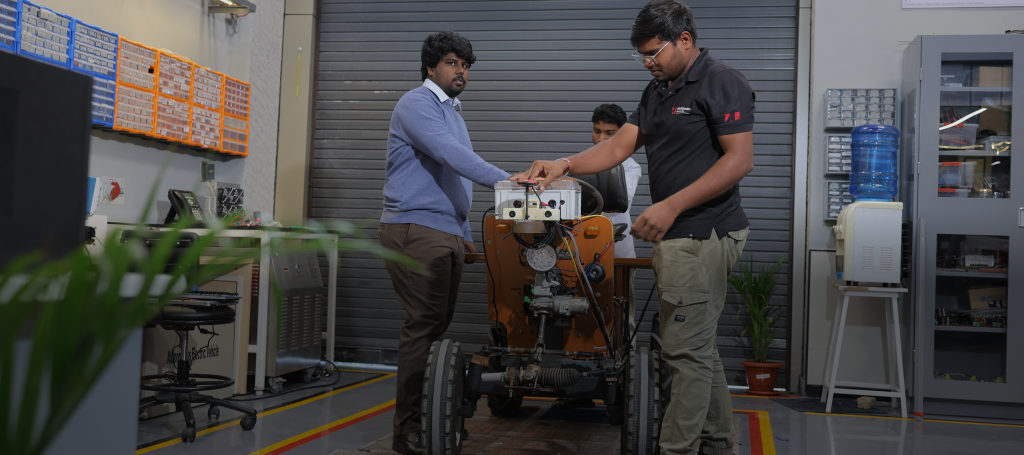
Hands-on work with embedded automotive platforms and vehicular communication technologies.

Vehicle intelligence and autonomy
Application of sensors, connectivity and AI algorithms to autonomous driving problems.

Industry exposure
Internships and industry interaction embedded into the programme structure.
Programme details
Expected programme outcomes
Graduates of this programme will be able to:
- Understand the various components of an electric vehicle and their integrated functioning.
- Conceptualise, design and implement electric drive systems for automobiles along with the associated electronic circuitry.
- Analyse and design battery management systems (BMS) for electric vehicles.
- Understand the role of intelligent systems in modern automobiles.
- Develop intelligent mechanisms to improve vehicle performance and operation.
- Design and implement intelligent transport systems (ITS) with vehicular and infrastructure-based communication.
- Conceptualise and analyse autonomous vehicle systems.
Programme highlights
100% internship opportunities for admitted students
Highest stipend offered: ₹60,000 per month






Eligibility
- A full-time bachelor’s degree from a recognised university or institute with a minimum aggregate of 60% marks or equivalent grade.
- Candidates appearing for their final semester examination are also eligible to apply.
- B.E./B.Tech. in Electrical Engineering, Electrical and Electronics Engineering, Electronics and Communication Engineering, Instrumentation Engineering, Mechanical Engineering, Automobile Engineering or Mechatronics***
And
- A valid GATE score in Electrical Engineering, Electronics and Communication Engineering, Instrumentation Engineering or Mechanical Engineering is mandatory.
*Applicants with degrees in Mechanical Engineering, Automobile Engineering or Mechatronics may be required to complete a bridge course before the start of the programme.
Admission process
- GATE-qualified candidates: Applicants with a valid GATE score and a percentile of 80 or above will be shortlisted for an interview.
- Non-GATE candidates: Applicants without a valid GATE score, or with a percentile below 80, must appear for a written test conducted by ECSE–MU, followed by an interview for shortlisted candidates.
Fee structure
Tuition fee: ₹1,00,000 per annum
Hostel stay: Not mandatory
Curriculum
| Course | L | T | P | Credits |
|---|---|---|---|---|
| Power Electronics and EV Drives | 3 | 0 | 0 | 3 |
| Powertrain Architecture and Control Systems | 3 | 0 | 0 | 3 |
| Embedded Systems | 3 | 0 | 0 | 3 |
| Algorithms for Machine Learning | 2 | 0 | 2 | 3 |
| Power Electronics and Control Architecture Lab | 0 | 0 | 4 | 2 |
| Embedded Systems Lab | 0 | 0 | 2 | 1 |
| Design Project – 1 | 0 | 0 | 6 | 3 |
| Semester 1 Total | 18 |
| Course | L | T | P | Credits |
|---|---|---|---|---|
| Battery Management System | 3 | 0 | 0 | 3 |
| Digital Image Processing and Computer Vision | 3 | 0 | 0 | 3 |
| Vehicular Communication Networks | 3 | 0 | 0 | 3 |
| Elective – 1 | 3 | 0 | 0 | 3 |
| BMS and Controls Lab | 0 | 0 | 4 | 2 |
| Vehicular Communication Networks Lab | 0 | 0 | 2 | 1 |
| Design Project – 2 | 0 | 0 | 4 | 3 |
| Elective – 2 | 3 | 0 | 0 | 3 |
| Semester 2 Total | 21 |
| Course | L | T | P | Credits |
|---|---|---|---|---|
| Safety and Standards in Autonomous Electric Vehicles | 2 | 0 | 0 | 2 |
| Master’s Thesis (Part I) | 0 | 0 | 6 | 3 |
| Capstone Project (EV/AV Applications) | 0 | 0 | 12 | 6 |
| Semester 3 Total | 11 |
| Course | L | T | P | Credits |
|---|---|---|---|---|
| Master’s Thesis | 0 | 0 | 24 | 12 |
| Semester 4 Total | 12 |
| S. No. | Course Title | L | T | P | Credits |
|---|---|---|---|---|---|
| 1 | Sensors and Controls in EVs | 3 | 0 | 0 | 3 |
| 2 | Systems Engineering | 3 | 0 | 0 | 3 |
| 3 | Deep Learning Applications for Self-Driving Cars ★ (Compulsory Elective) | 3 | 0 | 0 | 3 |
| 4 | Charging Infrastructure and Protocols | 3 | 0 | 0 | 3 |
| 5 | Intelligent Transport Systems | 3 | 0 | 0 | 3 |
| 6 | Communication Systems in Automobiles (Physical Layer Design) | 3 | 0 | 0 | 3 |
| 7 | Design of Solar Photovoltaic Systems | 3 | 0 | 0 | 3 |
| 8 | Introduction to Self-Driving Cars | 3 | 0 | 0 | 3 |
| 9 | State Estimation and Localization for Self-Driving Cars | 3 | 0 | 0 | 3 |
| 10 | Visual Perception for Self-Driving Cars | 3 | 0 | 0 | 3 |
| 11 | Motion Planning for Self-Driving Cars | 3 | 0 | 0 | 3 |
| 12 | Fundamentals of Cyber Security | 3 | 0 | 0 | 3 |
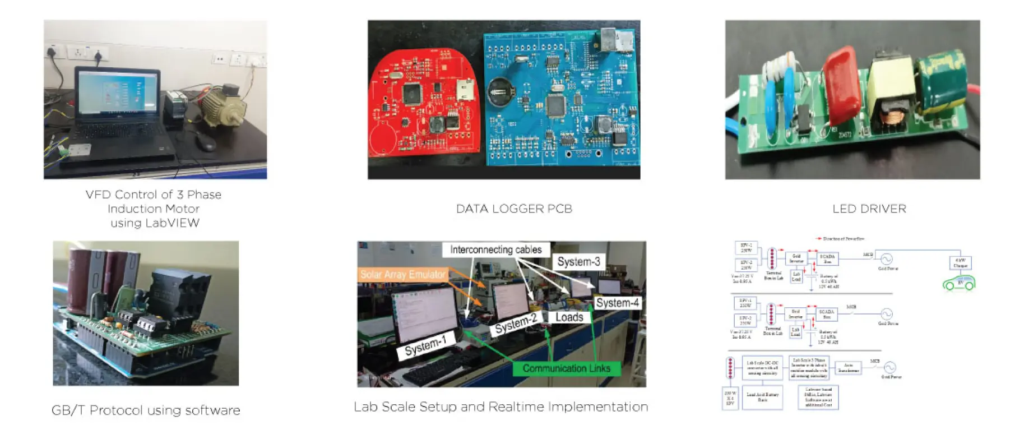
Laboratory facilities
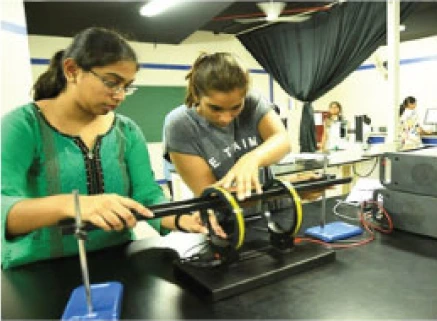
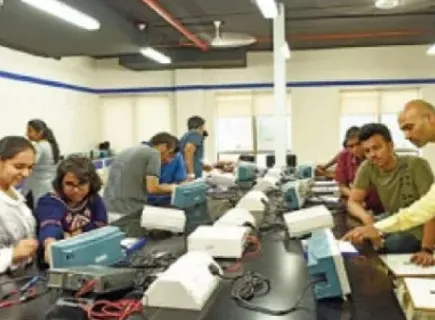
- Power electronics and machines laboratory
- Embedded systems for automobiles laboratory
- Vehicular communication networks laboratory
- Battery management systems and controls laboratory

FAQs
It integrates electric powertrains, embedded systems, connectivity and autonomy within a single curriculum.
Students work with EV power electronics, embedded automotive systems and vehicular communication platforms.
Yes. Bridge support is provided to strengthen electrical and electronics fundamentals where required.
Through internships, industry interaction and applied project work aligned to current mobility technologies.
Yes. Advanced coursework and a strong thesis component prepare students for doctoral study and R&D roles.
