






Quick facts
Dr. Rashmi Kumari is an Assistant Professor in the Indira Mahindra School of Education at Mahindra University, Hyderabad, teaching Sociology of Education, Society, Culture and Education, Children and Childhood, and Youth culture and society. She holds a Ph.D. in Childhood Studies from Rutgers University (2025) with a focus on indigenous youth, education in violence contexts, and digital cultures, plus prior roles as Research Manager at Rutgers' Center for Urban Research and Education and Postdoctoral Fellow at UCL.
Publications
No publications added yet.
Research
No Research Interests added yet.
Rashmi Kumari
Assistant Professor
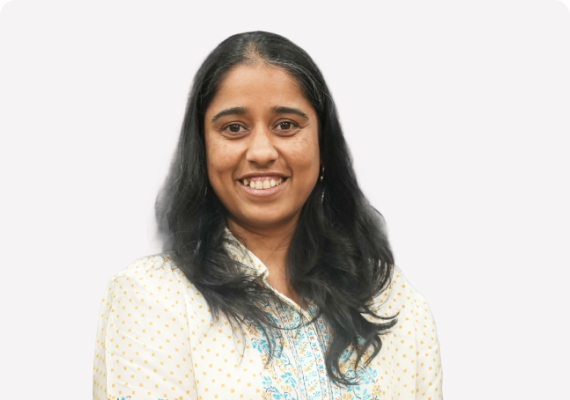
Dr. Rashmi Kumari is an assistant professor in the Indira Mahindra School of Education, Mahindra University, Hyderabad.
She teaches Sociology of Education, Society, Culture and Education, Children and Childhood, and Youth culture and society for Ph.D. and MA students.
Her research interests are at the intersection of childhood, gender, indigeneity, education, and digital culture in conflict and crises. Currently, she is working on a collaborative project titled Mediated Lifeworlds: Digital Cultures in a Context of Technological Scarcity.
Dr. Rashmi is an ethnographer with extensive experience of conducting fieldwork and research projects in the USA and India.
- Ph.D. Department of Childhood Studies. Rutgers, State University of New Jersey. Graduate Certificate in Women and Gender Studies. Rutgers, State University of New Jersey – 2025
- M.Phil. (Sociology of Education), Tata Institute of Social Sciences, Mumbai – 2017
- M.A. (Sociology), Department of Sociology, Delhi School of Economics. Delhi. – 2014
- B.Sc. Mount Carmel College, Bangalore University. – 2009
Peer-Reviewed Article(s)
Peer-Reviewed Article(s)
- Kumari, Rashmi. ‘Please let us live’ –childhoods and the politics of life. Accepted for publication January 2026. Deportate Esuli Profughe: Rivista Telematica di Studi sulla Memoria Femminile.
- Kumari, Rashmi. “Indigenous Youth and Emerging Educated Subjectivities: A Decolonial Approach to Researching Childhood.” (November 2025). TheCanadian Journal of Children’s Rights. https://ojs.library.carleton.ca/index.php/cjcr/article/view/5317.
- Kumari, Rashmi and Peggy Froerer. Indigenous Childhoods in South Asia. Oxford Bibliographies Online. (May 2025): 1-17. DOI: 10.1093/OBO/9780199791231-0297.
- Kumari, Rashmi. “Constructions and Contestations of Indigenous Girlhoods in Residential Schools in Central India.” Children’s Geographies. (2022): 1–13. DOI: 1080/14733285.2022.2071601
- Kumari, Rashmi. Menstruating Women and Celibate gods: a discourse analysis of women’s entry into Sabarimala temple in Kerala, India, Third World Thematics: A Third World Quarterly Journal, 4:4-5, 288-305. DOI: 10.1080/23802014.2019.1682946.
Book Chapters
Book Chapters
- Kumari, Rashmi. “WhatsApp ‘Status’: Indigenous Storytelling Through Digital Mediums,” In Planet Digital: A Global Media Reader, edited by Aswin Punathambekar, Adrienne Shaw, and Jonathan Gray. Accepted for publication in 2025.
- Birla, Swati and Rashmi Kumari. “In Excess of Nation: The Cartographies of Decolonization” in Handbook on Anticolonial, Decolonial, and Postcolonial Sociologies, edited by Jyoti Puri and Vrushali Patil. Edward Elgar Publishing. Under Review (2025)
- Kumari, Rashmi “Navigating Medical Neglect and Care: Covid-19 Management and Adivasi Societies” In Governing the Crisis: Covid and Narratives from the Margins edited by Rahul Ranjan. Routledge India Publications, 2025. Doi: 4324/9781003591641-7
- Kumari, Rashmi. “Constructions and Contestations of Indigenous Girlhoods in Residential Schools in Central India.” in Modern Schooling and Trajectories of Exclusion: Childhoods in India edited by Divya Kannan and R. Mathreyi. Routledge, 2023. Doi: 4324/9781003431527-8
- Kumari, Rashmi. “Production of ‘Safe’ Spaces for Adivasi Children and the Armed Conflict of Bastar, India.” In Childhoods in Peace and Conflict, 203–22. Cham: Springer International Publishing, 2021.
Book Reviews
Book Reviews
- Kumari, Rashmi Book Review: Ain’t No Makin’ It: Aspirations and Attainment in a Low-income Neighborhood. Contemporary Education Dialogue, (2016), 13(1), 150–156.
OTHER PUBLICATIONS
OTHER PUBLICATIONS
- Rashmi Kumari. What Keeps Bastar’s Young Adivasi Women Away from Higher Education. Behanbox. November 2023.
- Rashmi Kumari. Relational Aspirations in Keyword Entries of Sociological and Anthropological Studies of Education in India. July 2023. url: https://saseindia.com/encyclopedia/relational-aspiration/
- Rashmi Kumari. Gender Based Violence Among Adivasis Comes From Long Years Of Paternalist, Upper Caste Administration. Behanbox. August 2023. url: https://behanbox.com/2023/08/11/gender-based-violence-among-adivasis-comes-from-long-years-of-paternalist-upper-caste-administration/
- Nemmani Sreedhar and Rashmi Kumari. The Role of Communication Technologies in Adivasi Protest at Silinger. The Hub for the Study of Hybrid Communication in Peacebuilding (HCPB). August 2022.
- Rashmi Kumari, interview by Chloe Bozak. NEOS Issue 14, Volume 1, Spring 2022.
- Kannan Smruthi. and Rashmi Kumari. Collaborations Across Global North-South: Considering Opportunities and Challenges. NEOS (2020). 12 (1). https://acyig.americananthro.org/neos-current-issue/kannanand-kumari_neos_12-1_april-2020/
- Birla Swati, Ragini Jha, and Rashmi Kumari. A War with No Measure: The Indian State Agains Its People. Antipode Online (2020). url: https://antipodeonline.org/2020/01/30/the-indian-state-against-its-people
- Kumari, Rashmi. “Life in a Girl’s Porta-Cabin: A Residential School for Girls”, for a 16 days’ campaign blog symposium on Education, Gender and Violence. (2016). https://gritprajnya.wordpress.com/
- Manjrekar, Nandini. Kumari. Rashmi. and Murali, Sreejith. Schooling in a Zone of Conflict: A Situation Assessment of UNICEF’s Educational Interventions in Partnership with NGOs in Southern Chhattisgarh. (2015).
- Assistant professor of sociology of education, childhood studies, IMSE, MU.
- Research Manager- Center for Urban Research and Education, Rutgers University – Camden
- Postdoctoral Fellow, Critical Childhood Studies Centre, University College London
- Adjunct Faculty of childhood studies. Rutgers University – Camden
Dr Rashmi Kumari’s research is focused on the children’s and youth’s everyday experiences of interdependent forms of violence and the role of education in their lives. Her Ph.D. research locates childhood as a crucial site for witnessing and discerning the rhetoric of development and ensuing violence in national imaginaries.
As part of her work at CURE, Rutgers Camden, Rashmi worked on two youth participatory action research (Y-PAR) – First one examined the role of youth leadership in community health initiatives across 11 countries in New Jersey. The second project focused on Y-PLAN (Youth – Plan, Learn, Act, Now), which was another youth-centered program intended to foster awareness and participation in the development of a local food cooperative in Camden.
Further, Rashmi is also interested in understanding the use of digital technologies by Indigenous children and youth. She is currently working on a collaborative research project titled, Mediated Lifeworlds: Digital Cultures in a Context of Technological Scarcity, which is funded by Dean (R&D) Mahindra University.
