
















M.Tech in Advanced Wireless Communication
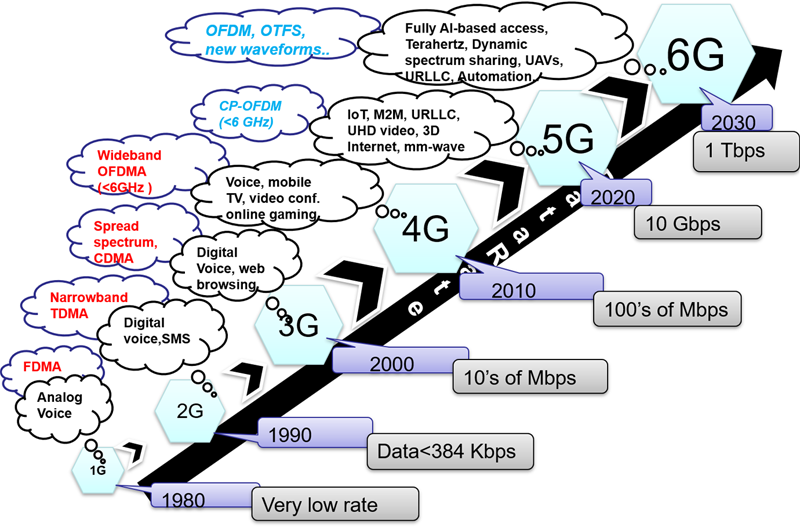
A two-year postgraduate programme focused on advanced wireless systems, enabling engineers to design, simulate and optimise 4G, 5G and emerging 6G communication technologies.
M.Tech in advanced wireless communication overview
The programme prepares students to work across modern and next-generation wireless communication systems, covering physical and MAC layers, networks and optimisation. It combines strong theoretical foundations with hands-on system design, simulation and experimentation aligned with international wireless standards. Students experience:

Foundation in next-generation wireless
4G, 5G and emerging 6G concepts through digital and wireless communication, RF and microwave engineering.

Hands-on communication labs
Industry-relevant labs using USRPs, MATLAB simulators, and AI/ML platforms for link- and system-level implementation.

AI-driven and secure networks
Courses in AI/ML for communications and wireless security focused on intelligent, resilient network design.

Advanced specialisation and research
Electives in MIMO, ISAC, vehicular networks, IoT, antennas and coding, culminating in a research-led thesis.
Programme details
Academic structure
Our academic structure is designed to establish robust foundations, followed by increasing specialization in later years.
- Credit structure: Total of 62 credits
- Duration: 2 years / 4 semesters
- Coursework is covered in semesters 1 and 2, with project, seminars, internship and thesis across Semesters 3 and 4.
Programme outcomes
Graduates of the programme will be able to:
- Understand the principles of next-generation telecommunications systems based on evolving user requirements.
- Design, model and implement energy-efficient wireless communication systems and modern telecommunication standards.
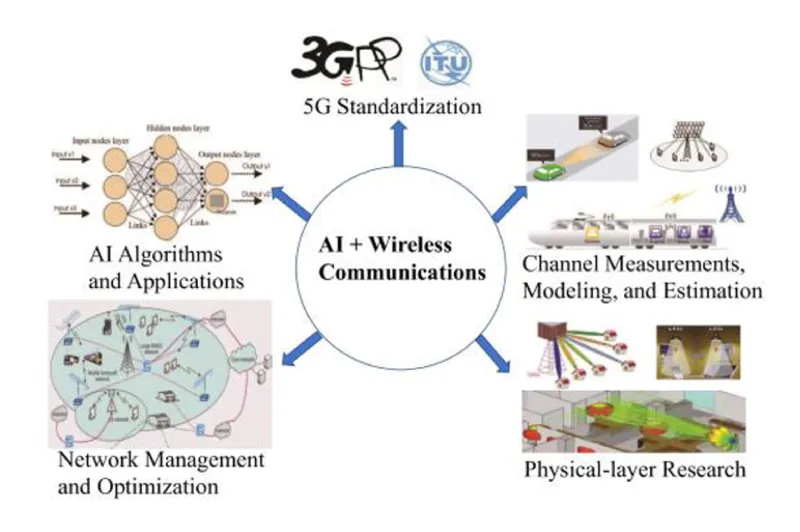
- Integrate artificial intelligence and machine learning techniques with wireless communication systems.
- Apply advanced communication technologies to develop multi-protocol network architectures.
- Design and analyse communication links and systems for next-generation networks.
| Course | L-T-P | Credits |
|---|---|---|
| EC 5151 – Foundations of Mathematical Communication Theory | 3-0-0 | 3 |
| EC 5152 – Digital Communications | 3-0-0 | 3 |
| EC 5153 – Wireless Communications | 3-0-0 | 3 |
| EC 5154 – RF and Microwave Engineering | 3-0-0 | 3 |
| EC 5155 – Machine Learning | 2-0-2 | 3 |
| EC 5156 – Wireless Communications lab | 0-0-2 | 1 |
| Total Credits | 16 |
| Course | L-T-P | Credits |
|---|---|---|
| EC 5251 – Optical Wireless Communication | 3-0-0 | 3 |
| EC 5252 – Deep Learning for Communications | 3-0-0 | 3 |
| EC 5253 – Security for Wireless Communication Systems | 3-0-0 | 3 |
| EC 5254 – Communication Networks | 3-0-0 | 3 |
| EC5255 – Optimization Techniques for Communications | 3-0-0 | 3 |
| EC5256 – MIMO Wireless Communication | 3-0-0 | 3 |
| EC 5257 – AI/ML for Communication Lab | 0-0-2 | 1 |
| EC5258 – Communication Networks Lab | 0-0-2 | 1 |
| Total Credits | 20 |
| Course | L-T-P | Credits |
|---|---|---|
| EC 53XX – Elective I | 3-0-0 | 3 |
| EC 53XX – Elective II | 3-0-0 | 3 |
| EC53XX – Elective III | 3-0-0 | 3 |
| EC 5350 – Thesis Phase I | 0-0-12 | 6 |
| EC5365 – Special Topics in Communication | 1-0-0 | 1 |
| Total Credits | 16 |
| Course | L-T-P | Credits |
|---|---|---|
| EC 5401 – Master’s Thesis | 0-0-24 | 12 |
| Total Credits | 12 |
| Course | L-T-P | Credits |
|---|---|---|
| EC 5351 – Air Interface Evolution towards 6G | 3-0-0 | 3 |
| EC 5352 – Integrated Sensing and Communication | 3-0-0 | 3 |
| EC 5353 – Vehicular Communication Networks | 3-0-0 | 3 |
| EC 5354 – Internet of Things | 3-0-0 | 3 |
| EC 5355 – Queueing Theory | 3-0-0 | 3 |
| EC 5356 – Antennas for Wireless Communication | 3-0-0 | 3 |
| EC 5357 – Information Theory and Coding | 3-0-0 | 3 |
| EC 5358 – Cognitive Radio | 3-0-0 | 3 |
| EC 5359 – RF Communication Electronics | 3-0-0 | 3 |
| EC5360 – Error Correction Codes | 3-0-0 | 3 |
| EC5361 – Detection and Estimation | 3-0-0 | 3 |
Eligibility
- B.E./B.Tech. in Electrical Engineering, Electrical and Electronics Engineering, Electronics and Communication Engineering, Telecommunication Engineering, Communication and Information Systems, Computer Science and Engineering, Instrumentation Engineering, Electronics and Biomedical Engineering, or Electronics and Computer Engineering.
- A valid GATE score in Electrical Engineering, Electronics and Communication Engineering or Instrumentation Engineering is mandatory.
- Candidates appearing for their final semester examination in the current year are also eligible to apply, provided they submit a valid GATE score.
Admission process
- GATE-qualified candidates: Applicants with a valid GATE score and a percentile of 70 or above will be invited for an interview as part of the admission process.
- Non-GATE candidates: Applicants without a valid GATE score, or with a percentile below 70, must appear for a written test conducted by the École Centrale School of Engineering, Mahindra University, followed by an interview for shortlisted candidates.
FAQs
This programme focuses specifically on advanced wireless systems aligned with 4G, 5G and emerging 6G standards, rather than broad analogue or mixed communication themes.
Students work with USRPs, MATLAB wireless toolchains and AI-based communication labs to design, simulate and validate link-level and system-level models.
It is suited for graduates in Electrical, Electronics, Communication, Telecommunication, Computer Science, Instrumentation or related disciplines with an interest in wireless systems and networks.
Yes. The curriculum and tools are aligned with industry expectations of major telecom vendors, chipset companies and network operators.
Yes. The strong theoretical foundation, advanced electives and substantial thesis prepare students well for doctoral research and advanced research roles.
