








International Conference on Contemporary Communication and Secure Networks (CCSN)

About conference
The International Conference CCSN, to be held at Mahindra University (MU), Hyderabad, India, from 26–28 November 2026. The conference provides an international forum for researchers, academicians and industry professionals to showcase their recent research findings in communication, networking security, digital forensics and cyberlaw. The five most prominent conference tracks are Contemporary Networking, which covers SDN, ICN, CRN, and AI/ML-enabled networking paradigms; the Network and Cyber Security track, which emphasizes secure communication architectures and information security; and the Distributed Computing track, which covers findings in parallel and high-performance computing. The Digital Forensics and Cyber Law track focusing on forensic analysis of drones, systems, and IoT devices and finally the Data Protection along with legal, regulatory, and technical aspects of data protection and cyber governance. The conference invites original, unpublished research contributions including theoretical models, algorithms, system architectures, experimental evaluations, and real-world case studies. All submissions will undergo a rigorous peer review process in accordance with Springer publication standards and accepted papers are planned to be published in an edited Springer volume (approval under consideration).
Conference details
Topics for paper submission
Track 1. Contemporary Networking: SDN, ICN, CRN, AIML in networking.
Track 2. Network and Cyber Security: Communications and Information Security.
Track 3. Distributed Computing: Sequential, Parallel, High Performance Computing
Track 4. Digital Forensic: Drone Analysis, System Analysis, IOT device analysis.
Track 5. Data Protection and Cyber Law: Modeling, analysis, protocols.
(For details see the Call for Papers)
Submission, Review and Publications
Manuscripts must be written in English and prepared strictly according to Springer’s book chapter guidelines to ensure uniformity and publication quality. Submissions are solicited exclusively through the designated Microsoft CMT portal. Submissions in any other form will not be considered under any circumstances. All submissions will be reviewed by at least two independent reviewers following a rigorous peer-review process. Accepted papers must be presented at the conference to be included in the proceedings. Accepted and presented papers will be included in the proceedings published in a Springer book series (approval pending). One of the authors must be registered with full registration for each selected paper.
The Microsoft CMT service was used for managing the peer-reviewing process for this conference. This service was provided for free by Microsoft and they bore all expenses, including costs for Azure cloud services as well as for software development and support.
Paper submission Click here
Important dates
Paper submission starts. 15th April, 2026
Paper submission ends. 25th Sep 2026
Acceptance notification. 30th September 2026
CRC submission. 30th October 2026
Registration. 10th November 2026
Call For Paper
Call for Paper CCSN 2026
Submission and Review Process Manuscripts must be written in English and submissions are solicited exclusively through the designated Microsoft CMT portal (link provided at the end). Submissions in any other form will not be considered under any circumstances. All submissions will be reviewed by at least two independent reviewers following a rigorous peer-review process. Accepted papers must be presented at the conference to be included in the proceedings.
Publication Accepted and presented papers will be published by a reputed publisher. One of the authors must be registered with full registration for each selected paper
Patron
Dr. Yajulu Medury, Vice Chancellor, Mahindra University
General Chair
Dr. Dhruba Kr. Bhattacharya, Tezpur University
Dr. Rajendra Singh Jadeja, Marwadi University
Programme Chair
Dr. Nitul Dutta, Mahindra University, Hyderabad
Dr. Manju Khari, JNU, Delhi
Dr. Kanubhai K Patel, Charotar University, Gujarat
Dr. Gheorghita Ghinea, Brunel University, UK
Dr. Hiren Kumar Deva Sarma
Committees
Advisory Committee
Dr. Arun K Pujari, Mahindra University
Dr. Gautam Barua, IIIT Guwahati
General Chairs
Dr. Dhruba Kr. Bhattacharya, Tezpur University
Dr. Rajendra Singh Jadeja, Marwadi University
Programme Chair
Dr. Nitul Dutta, Mahindra University
Dr. Manju Khari, JNU
Dr. Kanubhai K Patel, Charotar University
Dr. Gheorghita Ghinea, Brunel University
Track Chairs
Dr. Chirag Modi, NIT Goa
Dr. Sambit K. Mishra, SRM AP
Dr. Jay Teraiya, National Forensic University
Dr. Hiren KD Sarma, Guwahati University
Dr. Sebastian Zander, Murdoch University, Australia
Finance Chair
Dr. Vijay Rao, Mahindra University
Dr. Shabnam Samima, Mahindra University
Dr. Abinash Puahari, Mahindra University
Publicity Chair
Dr. Sunil Pathak, Amity University
Dr. Rajesh Mahadeva, MAHE Manipal
Dr. Yayati Gupta, Mahindra University
Dr. Surya Samantha Beri, IFCAI University
Technical Committee members
Technical Programme Committee (more members will be added)
- Dr. Zdzislaw Polkowski, UJW, Poland
- Dr. Emil Pricop, Petroleum and Gas University, Romania
- Dr. Mariam Ibrahim, Jor. German University, Jordan
- Dr. Johar Fatehi, Deff. Lab, Canada
- Dr. SR Biradar, SDM College of Engineering., Karnataka
- Dr. Nishant Doshi, PDPU, Gujarat
- Dr. Chintan Patel, Gujarat
- Dr. Trupil Limbasiys
- Dr. Madhu Shukla, Marwadi University., Gujarat,
- Dr. Krunal Waghela, Marwadi University., Gujarat
- Dr. Krishna Delvadia, Gujarat
- Dr. Satish Anamalamudi, SRM University, AP
- Dr. Kushal Pokhrel, SMIT, Sikkim
- Dr. Anubhav Goel, The Netherlands
- Dr. Joy Dutta, Khalifa University, UAE
- Dr. Mahendra Kumar, NIT Jalandhar
- Dr. Ramesh Kumar, Chitkara University
- Dr. Anuj Sharma, OP Jindal Global University
- Dr. Hiten Choudhury, Cotton University, Assam
- Dr. Manoj Kumar Deka, Assam Skill University, Assam
- Dr. Mousum Handique, Assam University, Assam
- Dr. Lalhmingliana, Mizoram University, Mizoram
- Dr. Anindya Halder, Tripura University, Tripura
- Dr. Prasant Pradhan, SMIT, Sikkim
Invited speakers
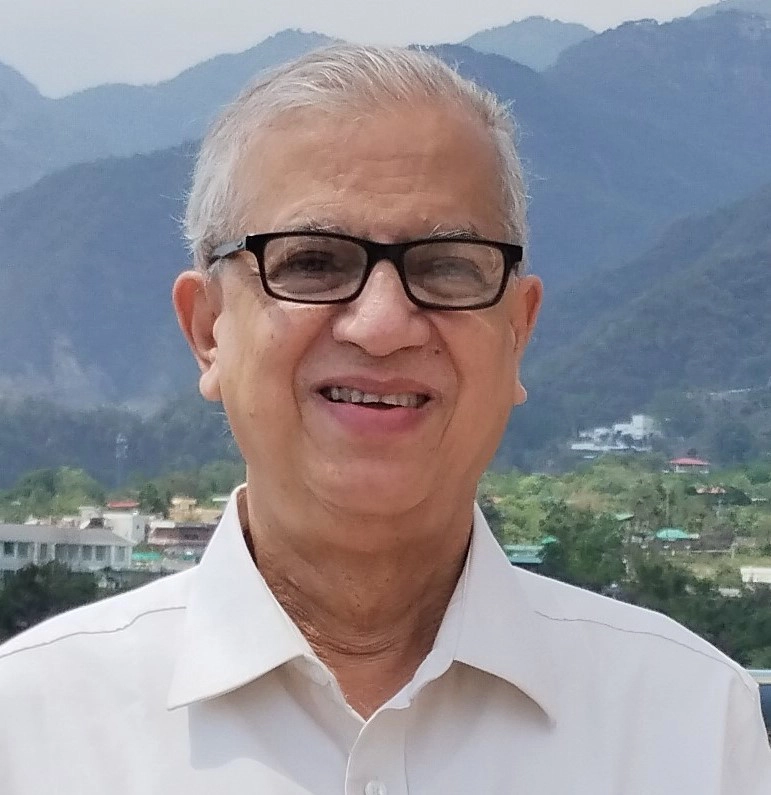
Gautam Barua
Bio: Gautam Barua is currently a Professor Emeritus at Indian Institute of Information Technology Guwahati. He was the Director IIT Guwahati from 2003 till 2013 and of IIIT Guwha∆ti from 2013 till 2024. He started his career at IIT Kanpur in 1982 and moved to IIT Guwahati in 1995. He shifted to IIIT Guwahati in 2013. He graduated from IIT Bombay with B.Tech and M.Tech degrees in Electrical Engineering, and obtained a PhD degree in Computer Engineering from the University of California, Santa Barbara, USA. His areas of research are in Operating Systems, Databases, and Networks. He is an IT consultant to a number of public enterprises.
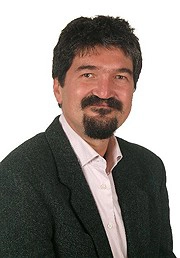
Dr. Gheorghita (George) Ghinea
Bio: Dr. Gheorghita (George) Ghinea is a Professor in Mulsemedia Computing in the Department of Computer Science, at Brunel University London. Dr. Ghinea’s research activities lie at the confluence of Computer Science, Media and Psychology. In particular, his work focuses on the area of perceptual multimedia quality and how one builds end-to-end communication systems incorporating user perceptual requirements. In the Stanford list of top 2% cited scientists in the world, Dr Ghinea’s research has been funded by both national and international organisations, consulting regularly for both public and private institutions in his areas of expertise.
Registration
| Sr. | Type of Registration | Registration Fee (INR) | Foreign Delegate Fee (USD) |
|---|---|---|---|
| 1 | Academia / Industry | 8500 | 140 |
| 2 | Student | 4500 | 100 |
| 3 | Attendees | 2000 | 30 |
Full Registration Fee includes Conference Kit, Breakfast, Lunch, Dinner and Refreshments, Opportunity to attend Tutorials, Keynote Speeches and parallel paper presentations.
Mode of payments: To be announced later.
