









Ph.D in Design Innovation
A full time doctoral programme of approximately four years in Design Innovation that prepares scholars to conduct implementation driven, interdisciplinary design research with meaningful real world impact.
Ph.D in design innovation overview
This programme offers a dynamic platform for scholars to explore and advance design as a driver of change. With design thinking labs, media innovation spaces and collaborative research hubs, the programme encourages work in areas such as design pedagogy, design thinking, online and scalable design education, sustainable design and empathy led human–computer interaction. Students experience:

Work with expert design mentors
on pedagogy, design thinking, online education, sustainability and empathy driven HCI, building a research portfolio grounded in professional design practice.

Use dedicated design facilities
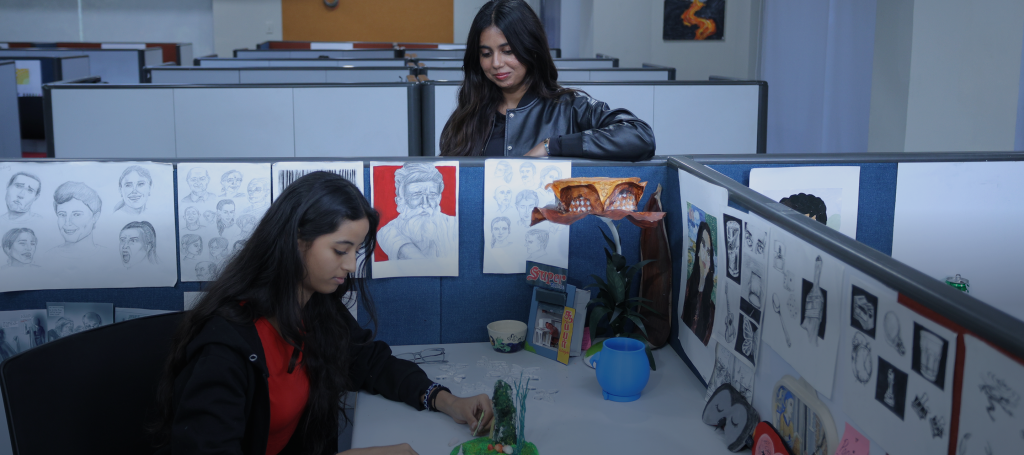
such as design thinking labs, media innovation spaces and collaborative studios, experimenting with immersive technologies and methods for real world challenges.

Interdisciplinary design research
combining traditional approaches with AI, immersive media and data, guided by supervisors supporting implementation driven, socially responsive design outcomes.

Foster a design career
over four years, progressing from exploratory projects to a defended dissertation that can influence education, sustainability, innovation and human centred technologies.
Programme details
Academic structure
Over a period of approximately four years, scholars navigate through phases of ideation, experimentation, challenges, and achievements, culminating in the ultimate milestone: a successfully defended dissertation. With its interdisciplinary focus and emphasis on meaningful impact, the Ph.D. program in design innovation equips scholars to redefine the future of design and leave a legacy in both academia and industry.
| S. No. | Course Title |
|---|---|
| 1 | Research Methods in Design |
| 2 | Research in Design Innovation Pedagogy |
| 3 | Academic Writing and Presentation Skills |
| 4 | Research Practices in Sustainable Design |
| 5 | Exploratory Design Research Project 1 |
| 6 | Exploratory Design Research Project 2 |
- Design Education pedagogy for Innovation
- Human–Computer Interaction and User Experience Design
- Immersive and Interactive Technologies (XR/AR/VR)
- Game Design and Gamified Experiences
- Artificial Intelligence for Design and Innovation
- User-Centered and Contextual Design
- Aesthetics and Perception
- Design for Sustainability and Social Impact
- A master’s degree in design, architecture or allied fields. Also, bachelor’s degree is eligible with exceptional grades and achievements from reputed national or international institutions along with a substantial work experience.
- Ph.D. entrance test held within Mahindra University campus.
- Mandatory in-person interview
- Submit the online application via the Mahindra University admissions portal.
- Shortlisting based on academic record, research proposal and other credentials.
- Entrance interview/assessment with faculty and research supervisors.
- Offers issued subject to eligibility and research proposal evaluation.
| Last Date for submission of applications | 27th May 2026 |
| Shortlisting of candidates for interview | 3rd June 2026 |
| Ph.D. Entrance Test / Interview | 20th June 2026 |
| Announcement of Results | 30th June 2026 |
| Commencement of the Fall 2026 Semester Teaching | 6th August 2026 |
Fee structure:
| Fee Component | Amount (per annum) |
|---|---|
| Academic fees | ₹ 75,000 |
| Security deposit (one-time) | ₹ 20,000 |
Fees are subject to revision as per University norms.
Ph.D. Assistantship
Selected full-time Ph.D. scholars will receive an assistantship worth Rs. 56,000 per month, comprising:
- Monthly Stipend: A stipend of Rs. 35,000 per month will be credited directly to the student’s registered bank account.
- On-campus accommodation and meals provided, valued at approximately Rs. 21,000
The assistantship includes mandatory Teaching Assistantship (TA) duties of 8 hours per week.
FAQs
Specialised areas include design pedagogy, design innovation, human–computer interaction design, game design and development, sustainable design and related themes that connect design with technology, society and emerging media.
The school of design innovation highlights implementation driven research that combines traditional and contemporary approaches. Scholars are encouraged to prototype, test and refine ideas in real contexts so that their work leads to tangible design interventions, not only theoretical contributions.
Graduates are positioned to shape design education, lead innovation in organisations, advance sustainable and human centred design practices and contribute to emerging areas such as immersive, AI mediated and data informed design, leaving a long term imprint on both academia and industry.
