





Quick facts
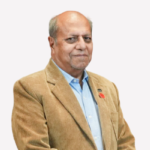
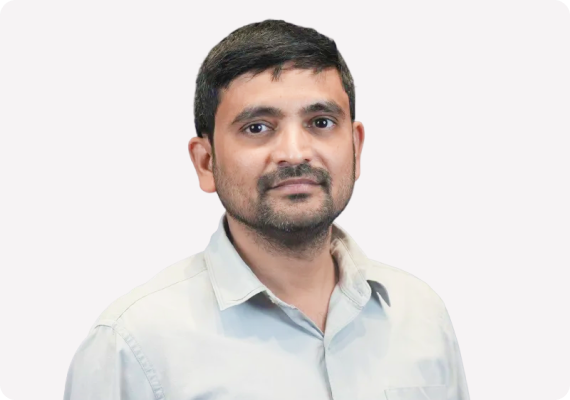
Dr. Bhogeswara Rao Angara is an Assistant Professor in Electrical and Computer Engineering at Mahindra University École Centrale School of Engineering, with a Ph.D. in Electrical and Ocean Engineering from IIT Madras, M.Tech in Control and Instrumentation from DTU, and B.E. in ECE from SRKR Engineering College, previously working at TCS and SRKR. His research and publications focus on underwater optical wireless communication, satellite–subsea optical links, ocean optics, optical remote sensing, and bubble/particle scattering, with multiple recent IEEE Access, Optics and Laser Technology, and JQSRT papers on sea surface waves, bubbles, solar noise, and channel modeling for underwater‑to‑air optical communication systems.
Publications
No publications added yet.
Research
No Research Interests added yet.
Bhogeswara Rao Angara
Assistant Professor
Dr. Bhogeswara Rao Angara is an Assistant Professor in the Electrical and Computer Engineering Department at Mahindra University École Centrale School of Engineering. He completed his Ph.D. at IIT Madras. Before pursuing his Ph.D., he worked as an Assistant Professor in the Department of Electronics and Communication Engineering at SRKR Engineering College, Andhra Pradesh.
- Ph.D. in Electrical Engineering and Ocean Engineering, IIT-Madras from 2018 to 2023
- M.Tech. (EEE Department), Control and Instrumentation, Delhi Technological University, 2015.
- B.E. (Electronics and Communication Engineering), S.R.K.R Engineering College (Andhra University), Bhimavaram, 2011.
International Journals
- Angara, B. R., Shanmugam, P., & Sandhani, C. G. (2025). “Evaluation of underwater optical wireless communication in the visible spectral domain.” Journal of Quantitative Spectroscopy and Radiative Transfer, 345, 109562. https://doi.org/10.1016/j.jqsrt.2025.109562
- Angara, B. R., Shanmugam, P., He, X., & Chavapati, G. (2024). “Impact of sea surface waves and bubbles on water-leaving reflectance using Monte Carlo simulations.” Optics Express, 32, 46677–46697. https://doi.org/10.1364/OE.539199
- Angara, B. R., Shanmugam, P., & Ramachandran, H. (2024). “Influence of sea surface waves and bubbles on the performance of underwater-to-air optical wireless communication system.” Optics and Laser Technology, 174, 110652. https://doi.org/10.1016/j.optlastec.2024.110652
- Angara, B. R., Shanmugam, P., Ramachandran, H., & Sandhani, C. G. (2024). “Performance Assessment of Underwater-to-Air Optical Wireless Communication System With the Effect of Solar Noise and Sea Surface Conditions.” IEEE Access, 12, 79652–79666. https://doi.org/10.1109/ACCESS.2024.3409424
- Angara, B. R., Shanmugam, P., & Ramachandran, H. (2023). “Underwater Wireless Optical Communication System Channel Modelling With Oceanic Bubbles and Water Constituents Under Different Wind Conditions.” IEEE Photonics Journal, 15(2), 1–11. https://doi.org/10.1109/JPHOT.2023.3258500
- Angara, B. R., Shanmugam, P., & Ramachandran, H. (2021). “Inversion of volume scattering function for estimation of bubble size distribution in ocean waters.” IEEE Access, 9, 135069–135078. https://doi.org/10.1109/ACCESS.2021.3115253
- Angara, B. R., & Banerjee, S. “A theoretical study on the impact of microplastics in seawater on water-leaving reflectance using Monte Carlo simulations.” Journal of Quantitative Spectroscopy and Radiative Transfer (Elsevier) (Under Review).
Conferences / Presentations
- B. R. Angara, P. Shanmugam, & H. Ramachandran (2023). “Modelling the Light Scattering Properties of an Air Bubble Near the Critical Scattering Angle Region.” 6th International Conference in Ocean Engineering, RWTH University, Germany (Accepted)
- V. G. Hariharasudhan, Bhogeswara Rao A., & Palanisamy Shanmugam (2018). “Experimental study of critical angle peak shift in bubble volume scattering function for different sizes.” 6th Biennial Conference, Particles in Europe (PiE-2018), Lisbon, Portugal, pp. 79–84.
- B. R. Angara & M. M. Tripathi (2015). “Design of Single-Phase Multilevel Cascade Inverter Using GPI Controller.” Second International Conference on Advances in Computing and Communication Engineering (ICACCE), Dehradun, India, pp. 427–431. https://doi.org/10.1109/ICACCE.2015.146
- B. R. Angara & M. M. Tripathi (2015). “Novel design of cascaded multilevel inverter with reduced number of components.” Annual IEEE India Conference (INDICON), New Delhi, India, pp. 1–5. https://doi.org/10.1109/INDICON.2015.7443636
- B. R. Angara & M. M. Tripathi (2016). “Design of GPI controller for current feedback multilevel cascaded inverter.” Biennial International Conference on Power and Energy Systems: Towards Sustainable Energy (PESTSE), pp. 1–5. https://doi.org/10.1109/PESTSE.2016.7516467
Google Scholar Profile: https://scholar.google.com/citations?user=Wodh5EUAAAAJ&hl=en
- Assistant Professor in the Electrical and Computer Engineering Department at École Centrale School of Engineering, Mahindra University. (October 2023 – Present)
- Assistant Professor, Electronics and Communication Engineering, S.R.K.R Engineering college, Bhimavaram (July. 2015 – Dec 2017)
- Assistant System Engineer-Trainee, Tata consultancy Services, Hyderabad (Oct. 2011 – Aug. 2012)
Areas of Interest:
- Channel model for Underwater and free space wireless optical communications
- Satellite –subsea optical wireless communications
- Underwater target detection using laser beams
- Visible light communications
- Modelling the Atmospheric and Oceanic turbulence spectrum
- Investigating marine particle scattering with Orbital Angular Momentum (OAM) Beams
- Optical properties of seawater particulates
- Detection of micro plastics in seawater using optical techniques and Machine- learning algorithms
- Investigating the effects of high spatial resolution of sea surface roughness on remote sensing applications.
