


Home / School of Digital Media and Communication

Ph.D. in Media and Communication

A fully funded, research-focused doctoral programme designed to develop scholars and thought leaders who explore critical questions in media, communication, culture, technology and related social practices.

Ph.D. in media and communication overview 

The M.A. in Education is designed for graduates who want to think deeply about education and its role in society. Students develop strong analytical, reflective and practical capabilities that support careers across education, research, policy and allied fields. Students experience:

Discussion-led learning

Small, interactive classes that examine education through social, cultural and theoretical perspectives.

Project-based engagement

Coursework and group projects that connect academic ideas with real educational questions and contexts.

Academic exposure beyond the classroom

Participation in seminars, workshops and outreach activities that deepen understanding of learners, schools and systems.

Individual mentoring

Ongoing faculty guidance to strengthen research skills, academic writing and professional communication.

Programme details

Fields of area

The fields within mediated communication offer a wide and diverse range of research opportunities, including:

  • Journalism studies
  • Media studies
  • Mass communication
  • Film and television studies
  • Strategic communication
  • Media and communication management
  • History, technology and systems of media and communication
  • Ethics, policy and law in mediated communication
  • Human–machine interface communication

Research in these areas may extend across broader domains, including pedagogy, technology and international policy. Doctoral research may also be pursued in related interdisciplinary fields aligned with the School of Digital Media & Communication’s academic focus.

Course
Research in Journalism, Media Studies and Communication Management
Applied Theories and Models
Data Management for Media Research
Course
Ethical Integrity in Research
History and Philosophy of Communication and Inquiry
Media Research Methodology
Course
Media Appreciation
Research Writing and Presentation
Landscape of Media and Communication Education

Important dates

Admission milestoneDate
Last date for submission of applicationsTo be announced
Shortlisting of candidates for interviewTo be announced
Ph.D. entrance test / interviewTo be announced
Announcement of resultsTo be announced
Commencement of Fall 2025 semester teachingTo be announced

ademic focus.

FAQs

It is for motivated researchers seeking to pursue substantial, original research in media, communication and related fields, including journalism, culture, technology and policy.

Yes, applicants may seek either full-time or part-time enrolment, depending on approval and supervisory availability.

Yes, a well-defined research proposal that outlines your area of interest and its scholarly significance strengthens your application and suitability for supervision.

The programme is inherently interdisciplinary, covering humanities and social science perspectives on media, communication theory, ethics, policy, technology and cultural studies. 

Graduates can enter academic, research and policy-oriented careers globally, including university faculty roles, research leadership positions, media think-tanks and strategic communication consultancies.
Start your journey with us

Home / School of Digital Media and Communication

M.A in Journalism and Mass Communication

A 2-year postgraduate programme that builds strong conceptual foundations and practical expertise in journalism, media production and strategic communication in a digital age.

M.A in journalism and mass communication overview

The M.A. in Journalism and Mass Communication equips students with critical and practical skills across journalism, media, digital communication and strategic storytelling. Designed by the School of Digital Media and Communication, the programme combines theory with hands-on media practice to prepare graduates for responsible and informed roles in the evolving media landscape. Students experience:

Broader subject coverage

Including media ethics, digital journalism, media theory and practical reporting, to build strong conceptual and technical grounding.

Hands-on experience

through media projects, content creation and digital media training that mirror real-world newsroom demands.

Academic exposure beyond the classroom

Engage regularly with seminars, workshops and collaborative assignments that connect academic knowledge with evolving media trends.

Individual mentoring

Ongoing faculty guidance to refine communication, research and critical thinking skills that prepare students for the media industry or academic work.

Programme details

Strands of study

The MJMC programme offers students the opportunity to explore specialised areas within media and communication that share common competencies while requiring distinct skill sets. All degree programmes begin with a set of foundational courses that include several practice-based modules.

During this phase, students engage with diverse learning methods such as lectures, laboratory sessions, fieldwork, independent study, library research, guest lectures and guided self-learning. The curriculum helps students understand the practical complexities of the field while strengthening their conceptual grounding in journalism, filmmaking and communication management. This integrated approach prepares graduates who are technologically proficient, ethically grounded and equipped with both conceptual and practical skills.

The curriculum includes the following strands of study:

  • News media and journalism
  • Filmmaking and media
  • Digital media and communication management

The academic experience is further strengthened through exposure to industry and societal practices. Practitioners and faculty guide students through simulations and real-world scenarios common to the media industry. These experiences include:

  • Social sensitisation internship
  • Industry internship within one of the programme strands
  • Programme-end internship in a specialised domain
  • Field visits and industry reports
  • Guest lectures by industry professionals
  • Workshops and masterclasses in specialised areas (for example, gaming and AI in media production)
  • Iterative independent projects and practice-based work.

Assessment

Assessment is designed to track each student’s evolving understanding throughout the programme. Continuous evaluation helps measure learning progress while providing constructive feedback. These assessments contribute to the final grade and are based on clearly defined, measurable outcomes.

Regular class participation and attendance are important components of learning, as they enable students to engage actively with concepts and discussions. While examinations are conducted, the programme places greater emphasis on continuous learning and practical engagement.

Course instructors, in consultation with the Dean, determine the syllabus and grading structure. Each assessment component contributes to the final grade to encourage consistent student engagement throughout the semester.

Typical grading distribution

  • Research / role-play / debate / presentations / flipped classes – 20%
  • Class quizzes / in-class tests / assignments – 25%
  • Midterm examination – 15%
  • Semester-end examination or final project – 30%
  • Class participation – 10%

Assessment methods may vary depending on the course and instructor. Participation is an essential component of evaluation, and attendance may be used as an indicator of active engagement in class discussions.

The programme uses percentage-based evaluation rather than fixed score points. Each graded component—such as assignments, presentations or examinations—is evaluated initially as if it were out of 100 and later weighted according to its assigned percentage.

This approach encourages balanced responses and avoids unnecessary emphasis on answer length or scoring structure. It also allows instructors flexibility in designing meaningful assessments that prioritise learning outcomes rather than rigid grading formats.

With the increasing availability of AI-generated content, the programme emphasises assessment formats that reflect genuine student understanding. Greater focus is placed on in-class evaluations, including presentations, discussions, tests and examinations.

While plagiarism detection tools are available, the primary objective of assessment is to understand each student’s individual learning progress. Faculty members are encouraged to design innovative evaluation methods that prioritise original thinking and authentic student work.

The pedagogical and investigative framework of the programme is guided by five overarching goals. While these goals apply across undergraduate and postgraduate offerings at the School of Media and Communication (SDMC), their depth and application vary according to the academic level.

1. Building competencies
Develop professionals with strong critical thinking, ethical grounding and rigorous practice. The programme emphasises competency beyond technical skills, enabling students to analyse problems, question established practices and develop innovative solutions.

2. Understanding contemporary media practices
Adopt a student-centred approach that connects academic learning with real-world media environments. Engagement with industry practitioners, internships and applied learning activities help students bridge the gap between theory and professional practice.

3. Nurturing communicative societies
Prepare students to understand social realities and the rapidly evolving communication ecosystem. Social sensitisation initiatives expose students to diverse communities and perspectives, encouraging responsible and socially aware communication practices.

4. Practising interdisciplinarity
Integrate media and communication studies with insights from social sciences, humanities and technology. This interdisciplinary perspective equips students to address complex challenges in modern communication environments.

5. Progressive learning approach
Adopt a structured learning model that moves from broad foundational concepts to specialised knowledge. This progressive approach enables students to develop deeper understanding and practical expertise over time.

Aligned with the broader programme philosophy, the MJMC programme aims to achieve the following outcomes:

1. Critical thinking: Develop professionals and researchers who challenge conventional approaches and explore innovative solutions.

2. Understanding change: Equip students to navigate evolving technological, social, cultural and policy environments within the media ecosystem.

3. Interdisciplinary learning: Encourage broad-based knowledge combined with specialised expertise across communication domains.

4. Enabling emerging media societies: Leverage new technologies to support interactive, personalised and diverse communication systems.

5. Diverse learning methods: Promote experiential learning through classroom engagement, fieldwork and student-led projects.

The MJMC programme combines structured academic learning with professional exploration. Over four semesters, students progress from foundational coursework to specialised and output-driven learning.

  • Semesters 1 and 2: Broad foundational courses across media and communication domains.
  • Semesters 3 and 4: Specialised learning with increasing emphasis on independent or collaborative projects that demonstrate analytical and creative competencies.

Internships form an essential component of the programme and help bridge academic learning with professional practice. Students gain hands-on experience through structured industry and social engagements.

The programme includes:

  • Social sector internship or initiative (4–6 weeks) at the end of the first semester
  • Mandatory industry internship (10–12 weeks) at the end of the second semester
  • Optional industry internship during or after the final semester

The social sensitisation internship provides students with exposure to diverse social environments, enabling them to understand broader societal contexts and responsibilities as communication professionals.

Internship performance is assessed through organisational feedback and student presentations reflecting their learning and professional experience.

The school supports students in transitioning to professional careers through structured placement assistance. A dedicated placement committee facilitates industry connections and recruitment opportunities. While placements are not guaranteed, students receive guidance to prepare for careers in the communication industry.

Course TitleCredits
History and Growth of Communication2
Contemporary Media Business2
Communication Research I2
Visual Literacy3
Media Psychology2
Journalism and News3
Audiovisual Communication2
Brands, Advertising, and Strategic Communication3
Course TitleCredits
Social Sensitization Internship5
Communication Research II3
Writing for Media I3
Project Management in Mediated Communication3
Social Media3
Media Theory3
Media Policy, Law2
Media Ethics2
Course TitleCredits
Industry Internship I (8 weeks)9
Writing for Media II3
Media Production I5
Documentary Film Production5
Integrated Strategic Communication I5
Specialized Communication3
Course TitleCredits
Media Production II5
Media, Society and Culture2
Integrated Strategic Communication II5
Media Entrepreneurship3
Final Project9

Eligibility:

  • Graduate in a 3 or 4-year degree programme from Indian (CGPA 6/10) or foreign university (GPA 3.5/4) with 60% marks in core subjects and 60% in language subjects.
  • Degree should be in an area that is core: Journalism, Mass communication, Media studies, Advertising, Public relations, Communication management, Digital media, Computational media.Or a related domain:
    • Any subject in Arts, Humanities or Social Sciences
    Or other domain:
    • Such as sciences, engineering, etc.
    • Some work experience is welcome but not necessary.

Admission process: 

Admission test followed by interview where a statement of purpose and other documents will be required for final evaluation.

Fee structure (per annum):

ComponentAmount
Academic fees₹ 2,00,000
Hostel charges (optional)₹ 2,10,000
Caution deposit*₹ 20,000

*Refundable at the end of study or graduation. All fees are subject to revision each year. 

Important dates:

EventDate
Last date to apply for 1st round of admissions3 May 2025
1st round of personal interviews9 May 2025
Last date for receipt of applications9 July 2025

*Dates and schedules are subject to change. 

The MJMC programme prepares graduates for three broad pathways: industry practice, research careers and entrepreneurship.

Many careers in media and communication involve project-based work. Whether in journalism, filmmaking, advertising, public relations or digital communication, professionals are expected to manage projects from ideation to execution. As a result, graduates develop strong skills in coordination, storytelling, analysis and production.

Research training is an integral component of the programme. Students develop the ability to investigate problems systematically, apply analytical methods and generate new insights. This research-oriented approach encourages independent thinking and prepares students for both professional practice and advanced academic pursuits.

Graduates may pursue roles across a wide range of organisations and sectors, including:

News and media organisations

  • Digital and multimedia news desks
  • Investigative and data journalism teams
  • Social media desks at news platforms
  • Business, sports, culture, health and environment reporting teams
  • AI-enabled newsrooms

Digital and content industries

  • Digital content and marketing agencies
  • Web content and SEO development firms
  • Podcast production studios
  • AR/VR/XR storytelling and immersive media agencies

Film, entertainment and creative industries

  • Entertainment production houses and OTT platforms
  • Documentary and commercial film production
  • Visual effects (VFX) and animation studios
  • Game design studios

Communication and corporate sectors

  • Advertising agencies (creative, production and media teams)
  • Public relations consultancies
  • Corporate communication and brand communication divisions
  • Corporate filmmaking and CSR divisions

Research and development

  • Research foundations and think tanks
  • Non-governmental organisations (NGOs)
  • Publishing houses

Higher education

  • Ph.D. programmes in journalism studies, media studies, communication studies and related disciplines.

FAQs

Graduates with a recognised bachelor’s degree (3 or 4 years) in core media fields or related domains such as arts, humanities, social sciences, digital media and communication can apply, provided they meet the 60% entry requirement. 

Yes. The curriculum blends theoretical study with practical media work in digital, broadcast and multimedia formats to ensure industry-relevant skills.

Graduates may work in journalism, media production, digital communication, public relations, content strategy, media research and allied communication roles.

Yes. Merit-based and need-based scholarships and financial aid options are offered; details are provided in the official admission notifications.

Start your journey with us

Home / School of Digital Media and Communication

Bachelor in Arts in Journalism & Mass Communication

3- and 4-year undergraduate programmes that build capability to analyse, create and lead communication, grounded in ethical practice and real-world production.

BJMC and BJMC (Hons.) Overview 

The programme equips you with core journalistic skills alongside a deep understanding of media systems, culture, and communication theory. You learn to craft compelling stories, produce content across platforms, and respond to the demands of contemporary media environments, balancing theory with practical application. Students experience:

Media fundamentals and storytelling

Learn reporting, editing, media law, media ethics, and communication research, forming the foundation of professional practice. 

Multiplatform production training

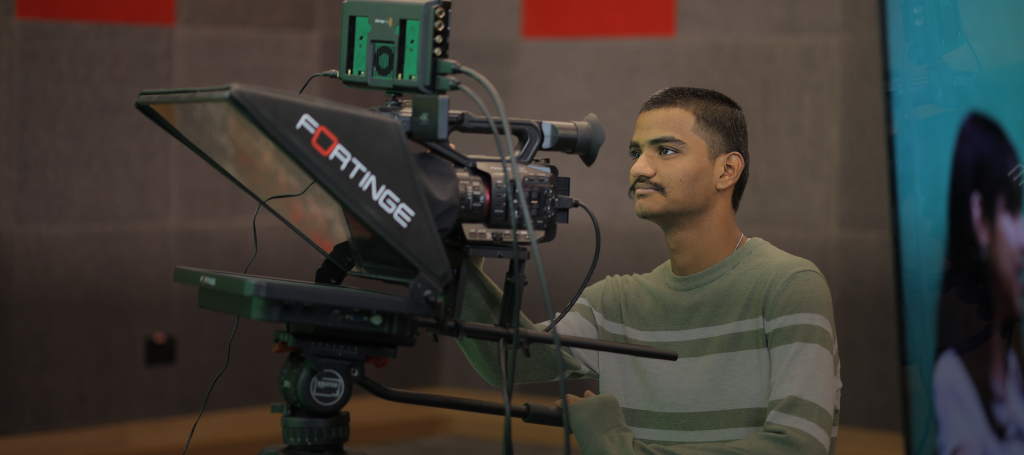
Train in camera labs, editing suites, and digital production spaces to work across video journalism, print, online storytelling, and multimedia formats. 

Practical labs and live projects

Engage in broadcast production, documentary making, social media campaigns, and specialised media coverage exercises that reflect real industry workflows. 

Industry exposure and internships

Translate classroom learning into practice with live projects, internships, and workshops with media professionals, preparing you for fast-moving media careers.

Academic structure

The BJMC programme is delivered over 3 years (6 semesters), and the BJMC (Hons.) programme is delivered over 4 years (8 semesters). A course entails classroom and/or laboratory instruction and may commonly include fieldwork, guest interactions, demonstrations, workshops, and open discussions. Over subsequent semesters, core or even specialised courses are offered across emphases. Some of these may cross-reference and be offered jointly across emphases: ready examples include courses in research methods and writing.

Key academic components include:

  • Media theory and cultural studies: media ethics, law, and global media systems
  • Journalism practice: reporting and editing across platforms
  • Production labs: broadcast and digital production, photography, and editing tools
  • Advanced media courses: specialised courses in documentary, advertising, PR, and digital storytelling
  • Capstone/portfolio: final-year project demonstrating professional competence and creativity

Course outcomes

Industry workshop

  • Digital
  • Print
  • Broadcast
  • Film and television
  • Specialised media
  • Animation and gaming
  • Advertising
  • Public relations

Internship

Social sector internship: A social sector internship or initiative of two to three months at the end of the first year.

Industry internships: Two specialised industry internships of three months each. The University’s placement cell will make every effort to place students in these internships, which may lead to full-time employment opportunities.

Industry areas include: newspapers, digital news, television news, television show production, digital production, OTT platforms, advertising, public relations and corporate communication, event management, digital agencies, animation and gaming production, and editing and VFX studios.

Optional post-course internship or project: An optional six-month internship in the industry or social sector may be undertaken after completion of the programme. Alternatively, students may develop and implement a media entrepreneurship project as a capstone initiative.

Entrepreneurship

An entrepreneurship course in media- or communication-related domains is offered in lieu of any one of the internships. Under this, innovative projects will be incubated, presented to industry experts and to potential investors. Students may opt for domains that may be different from their core specialization.

Eligibility

To apply for the BJMC programme at Mahindra University:

  • Completion of 10+2 or equivalent from a recognised board with a minimum 80% aggregate or equivalent grade. 
  • SAT or CUET scores may be considered, but are not mandatory. 
  • Shortlisted applicants are typically invited for a panel interview/media aptitude test as part of the selection process. 
  • Applicants who completed 10+2 under international systems (IB, Cambridge) must submit a UGC equivalence certificate by the published deadline. 

Application process:

  1. Submit the online application via the MU admissions portal.
  2. Upload academic transcripts, test scores (if applicable), and supporting documents.
  3. Attend the aptitude test/interview (if applicable).
  4. Offers are issued on a rolling basis.
CourseClassesLab / Field / ActivityTotal HoursCredits
Learning to Learn1030402
Data Communication and Basic Software (MS Office)756633
Professional Communication1030402
Literature, Art, Storytelling2550753
Photography I: Still and Moving Camera2060803
News Analysis I01051055
Introduction to Media and Communication3232632
Media, Gender, Human Rights1530452
Total11939351122
CourseClassesLab / Field / ActivityTotal HoursCredits
Photography II: Visual Communication & Graphic Design10901005
News Analysis II084844
Writing Across Platforms1664803
The Indian Constitution2020401
Media and Information Literacy1020301
History and Functions of Media and Journalism2448723
Fundamentals of Business and Entrepreneurship824321
Introduction to Advertising, PR & Communication Management2448723
Total11239851022
CategoryCourse CodeCourseCreditsLecturesTutorialsPracticals
CoreJM2101Knowing India: Economy, Society, Culture and Politics5312
CoreJM2102Video Editing and Packaging4114
CoreJM2103Marketing Communication3300
CoreJM2105News Analysis III3300
CoreJM2106Publishing Technology: Print, Digital and Web5222
CoreJM2107Media Consumer Behaviour3300
ElectiveJM2109Media Production II4008
CategoryCourse CodeCourseCreditsLecturesTutorialsPracticals
CoreJM2203Communication Research3300
CoreJM2204Social Media3102
CoreJM2205News Analysis IV3300
CoreJM2208Environmental Studies2200
Journalism ElectiveJM2211Reporting Across Media3022
Journalism ElectiveJM2212Writing and Editing News and Features3022
Media Production ElectiveJM2221Television Production3022
Media Production ElectiveJM2222Film Appreciation3120
Communication Management ElectiveJM2231Digital Marketing3112
Communication Management ElectiveJM2232Integrated Marketing Communication3202
ElectiveJM2298Capstone Project9000
ElectiveJM2299Industry Internship9000
CategoryCourse CodeCourseCreditsLecturesTutorialsPracticals
CoreJM3107Business and Organization of Media3300
CoreJM3108Media Law and Ethics3300
Journalism ElectiveJM3111Specialized Journalism: Business2200
Journalism ElectiveJM3112Specialized Journalism: Sports2200
Journalism ElectiveJM3113Specialized Journalism: Health, Science, Environment, Technology2200
Journalism ElectiveJM3114Specialized Journalism: Politics, Geopolitics2200
Advanced JournalismJM3115News Studio Systems (Production)3022
Advanced JournalismJM3116News Anchoring3022
Advanced JournalismJM3117News Pipeline Project I3022
TrackCourse CodeCourseCreditsLecturesTutorialsPracticals
Journalism CoreJM3217News Pipeline II100510
Media Production CoreJM3227Production Pipeline II100510
Communication Mgmt CoreJM3237Internal Communication Pipeline II100510
Course CodeCourseCreditsLecturesTutorialsPracticals
JM4101Research Methodology4310
JM4102Media Entrepreneurship3112
JM4103Advanced Media Theories3210
JM4104Advanced Storytelling Techniques3202
JM4105Media and Brand Management Techniques3210
JM4106Research Proposal Writing Workshops2110
JM4107Special Topics (Independent Study)2012
Course CodeCourseCreditsLecturesTutorialsPracticals
JM4298Research / Project120612
Course CodeCourse Name
JM1101Learning to Learn
JM1102Photography I: Still and Moving Images
JM1103Introduction to Media and Communication
JM1104Literature, Art, Storytelling
JM1105News Analysis I
JM1106Data Communication and Basic Software
JM1107Professional Communication
JM1108Media, Gender, Human Rights
JM1201History of Media
JM1202Visual Communication and Graphic Design
JM1203Introduction to Advertising, PR and Communication Management
JM1204Fundamentals of Writing and Editing
JM1205News Analysis II
JM1206Media Technologies
JM1207Professional Ethics in Media
JM1208The Indian Constitution
JM1299Social Sensitization Internship / Guided Project
JM2101Knowing India: Economy, Society, Culture and Politics
JM2102Video Editing and Packaging
JM2103Marketing Communication
JM2105News Analysis III
JM2106Publishing Technology: Print, Digital and Web
JM2107Media Consumer Behaviour
JM2203Communication Research
JM2204Social Media
JM2205News Analysis IV
JM2208Environmental Studies
JM3107Business and Organization of Media
JM3108Media Law and Ethics
JM3115News Studio Systems (Production)
JM3116News Anchoring
JM3117News Pipeline Project I
JM3217News Pipeline II
JM3227Production Pipeline II
JM3237Internal Communication Pipeline II
JM4101Research Methodology
JM4102Media Entrepreneurship
JM4103Advanced Media Theories
JM4104Advanced Storytelling Techniques
JM4105Media and Brand Management Techniques
JM4106Research Proposal Writing Workshops
JM4107Special Topics (Independent Study)
JM4298Research / Project
Course CodeCourse Name
JM2211Reporting Across Media
JM2212Writing and Editing News and Features
JM3111Specialized Journalism: Business
JM3112Specialized Journalism: Sports
JM3113Specialized Journalism: Health, Science, Environment, Technology
JM3114Specialized Journalism: Politics and Geopolitics
JM3212Development Communication and Long-Form Journalism
JM3213Photojournalism
JM3214Copy Editing
JM3215Independent Journalism
JM3216Writing for Emerging Media Technology
Course CodeCourse Name
JM2109Media Production II
JM2221Television Production
JM2222Film Appreciation
JM3121Film Marketing
JM3122Exploring Indian and World Cinema
JM3123Audiovisual Studio Systems (Production)
JM3124Advanced Audiovisual Technology
JM3127Production Pipeline Project I
JM3222Development Communication and Documentary
JM3223Ad Film / Corporate Film Making (Workshops)
JM3224Storytelling Through Animation
JM3226Writing for Emerging Media Technology
Course CodeCourse Name
JM2231Digital Marketing
JM2232Integrated Marketing Communication
JM3131Film Marketing
JM3132Creative Strategy
JM3133Writing for Communication Management
JM3134Corporate Communication
JM3137Internal Communication Pipeline I
JM3232Account and Media Planning
JM3233Ad Film / Corporate Film Making (Workshops)
JM3234Functions of PR
JM3235Experiential Marketing, Planning and Management
JM3236Writing for Emerging Media Technology

Fee structure:

CategoryAcademic feesHostel chargesCaution deposit*
Indian students₹4,00,000₹1,70,000 (optional)₹20,000
PIO/NRI studentsUSD 7,000USD 3,000 (optional)USD 400

*Refundable at the end of study or graduation. Hostel stay is mandatory for B.Tech students. Fees are subject to revision each year.

FAQs

The BJMC is a three-year full-time undergraduate degree, typically structured across six semesters with an optional honours extension.

Applicants may be required to sit a panel interview or media aptitude assessment. Standardised tests such as SAT or CUET may be considered, but are not mandatory. 

No. Hostel accommodation is optional for BJMC students.

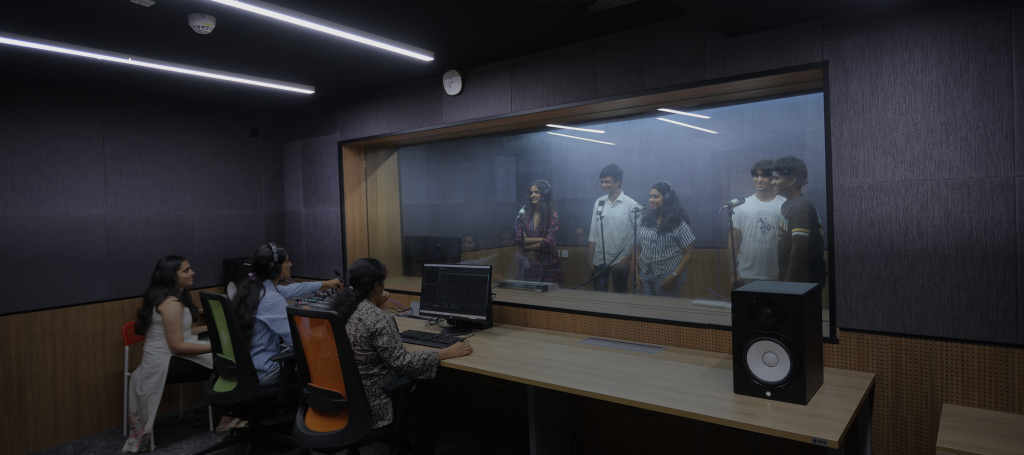
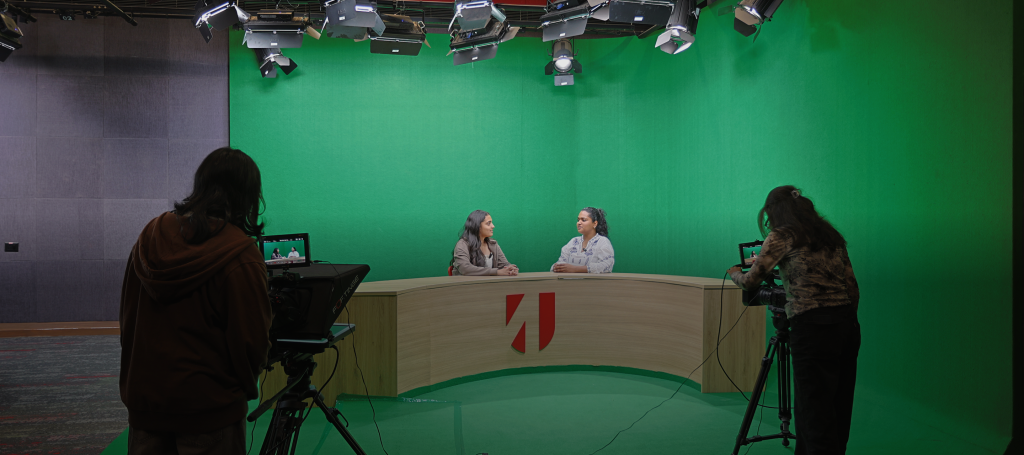
Students train in broadcast studios, editing suites, camera labs, and digital media workshops aligned with contemporary media practice. 

Graduates work as journalists, content creators, producers, digital media strategists, public relations specialists, and communication consultants across media, corporate, and creative sectors. 

Start your journey with us

Make an enquiry Chat with a student