










Quick facts
Dr. Sebastian Uppapalli specializes in thermo-fluid sciences, addressing both fundamental and applied engineering challenges through multiphysics simulations. His research spans Newtonian and complex fluid behavior in microfluidics, electrohydrodynamics, and biofluid dynamics. His work includes electro- and magneto-phoresis, supercritical flows, and thermal systems. His industry contributions include the design and development of low-GWP refrigeration systems for tropical climates and an underwater autonomous vehicle platform as a versatile test bed. His current focus is on microfluidic cooling, lab-on-chip platforms, and drug delivery in microscale flows.
Publications
No publications added yet.
Research
No Research Interests added yet.
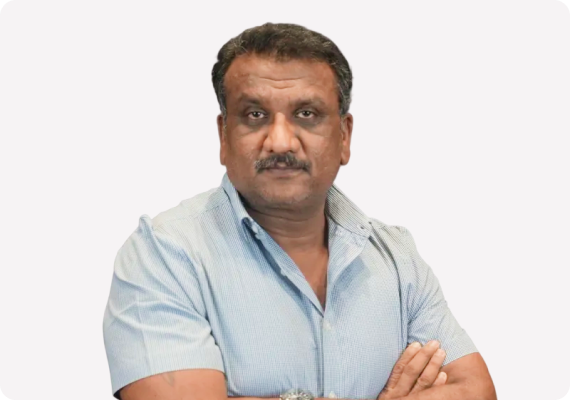
Sebastian Uppapalli
Associate Professor, Faculty Member, Fluidics and Heat Transfer Laboratory
Dr. Sebastian Uppapalli works in Thermo-Fluid sciences, focusing on both fundamental and applied engineering problems. He applies multiphysics simulations to study the flow behavior of Newtonian, non-Newtonian, and complex fluids in microfluidics, electrohydrodynamics, and biofluid dynamics. He has contributed to air quality studies and development of modular power systems in his previous positions.
- Ph.D. –University of Nevada, Las Vegas (2014)
- M.S. – UNR (2003)
- Effects of Gas Embolism on Pulsatile Flow Characteristics Within a Human Carotid Artery, Journal of Biomechanical Engineering, 2022, DOI: 10.1115/1.4054679.
- Systems Engineering V-Cycle Approach for Design and Development of Autonomous Underwater Vehicle, Oceans Conference Record (IEEE), 2021, DOI: 10.23919/OCEANS44145.2021.9705756.
- Low-Head In-Stream Hydroelectric Power System, Earth and Space 2018: Engineering for Extreme Environments – Proceedings of the 16th Biennial International Conference on Engineering, Science, Construction, and Operations in Challenging Environments, 2018, DOI: 10.1061/9780784481899.114.
- The Influence of Particle Size and Residual Charge on Electrostatic Interactions Between Charged Colloidal Particles at an Oil-Water Interface, Soft Matter, 2014, DOI: 10.1039/c4sm00527a.
- Polarization of a Diffuse Soft Particle Subjected to an Alternating Current Field, Langmuir, 2012, DOI: 10.1021/la301889e.
- Dust Emissions Created by Low-Level Rotary-Winged Aircraft Flight Over Desert Surfaces, Atmospheric Environment, 2010, DOI: 10.1016/j.atmosenv.2009.12.018.
- Effect of Soil Type and Momentum on Unpaved Road Particulate Matter Emissions from Wheeled and Tracked Vehicles, Aerosol Science and Technology, 2010, DOI: 10.1080/02786820903516844.
- In-Plume Emission Test Stand 2: Emission Factors for 10- to 100-kW U.S. Military Generators, Journal of the Air and Waste Management Association, 2009, DOI: 10.3155/1047-3289.59.12.1446.
- Particulate Emissions from U.S. Department of Defense Artillery Backblast Testing, Journal of the Air and Waste Management Association, 2007, DOI: 10.3155/1047-3289.57.5.551.
- Renewable Hydrogen Based Off-Grid Power System Control System, Proceedings of the Solar World Congress 2005: Bringing Water to the World, Including Proceedings of 34th ASES Annual Conference and Proceedings of 30th National Passive Solar Conference, 2005.
- Associate Professor, Department of Mechanical and Aerospace Engineering, Mahindra University – August 2022 to Present
- Assistant Professor, Department of Mechanical and Aerospace Engineering, Mahindra University – July 2017 to August 2022
- Sr. Mechanical Engineer, Ion Power Group, US – January 2016 – December 2021
- Research Associate, Energy Systems Lab (2009–2010)
- Application Engineer, STS LLC (2008–2009)
- Research Engineer, Desert Research Institute (2004–2008)
Dr. Sebastian Uppapalli has been involved in basic and applied research, in the broad areas of thermal-fluid sciences. His work covers a wide range of domains related to fluid dynamics, microfluidics, and thermal systems, from investigating electro-and-magneto-phoresis in microchannels to studying convective flows of supercritical fluids, as well as designing lab-on-chip systems and developing low GWP refrigeration systems.
His areas of research interest are Microfluidics and Lab-on-Chip Systems; Bio-fluid Dynamics & Complex Fluids; Electrohydrodynamics & Electrokinetic Phenomena; Computational Fluid Dynamics (CFD) and Multiphysics Simulation
