



Human and Digital Mutualism: Code, Culture and Communication 2025
About conference
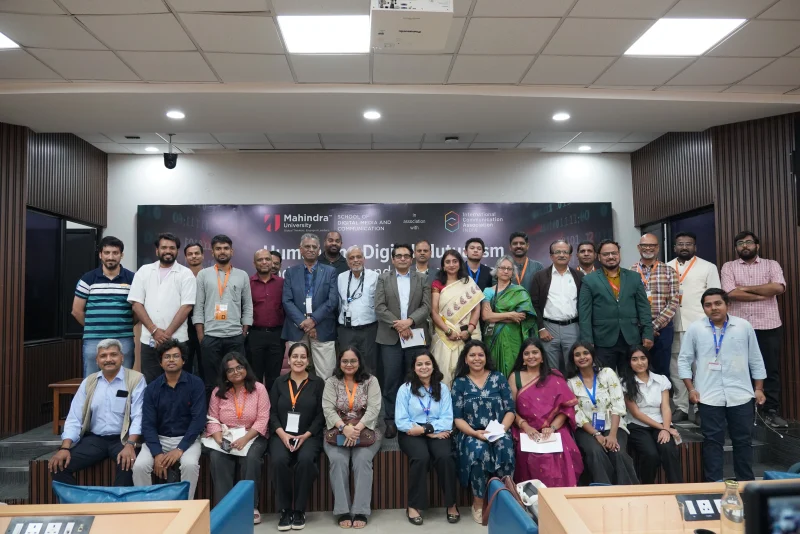
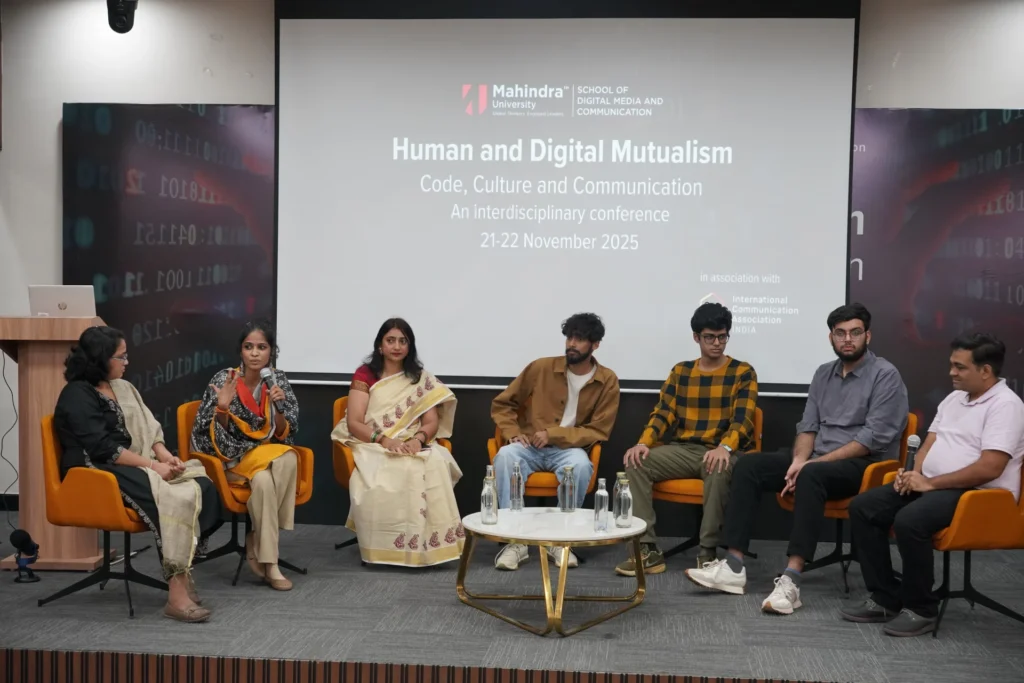
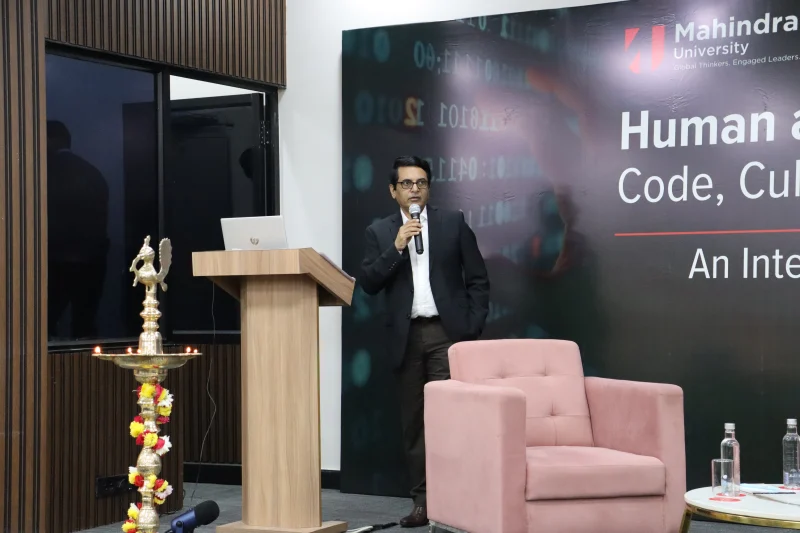
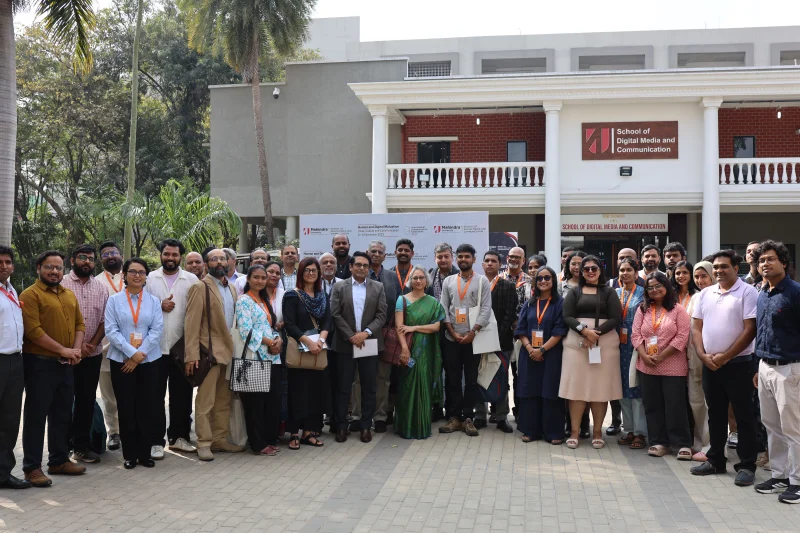
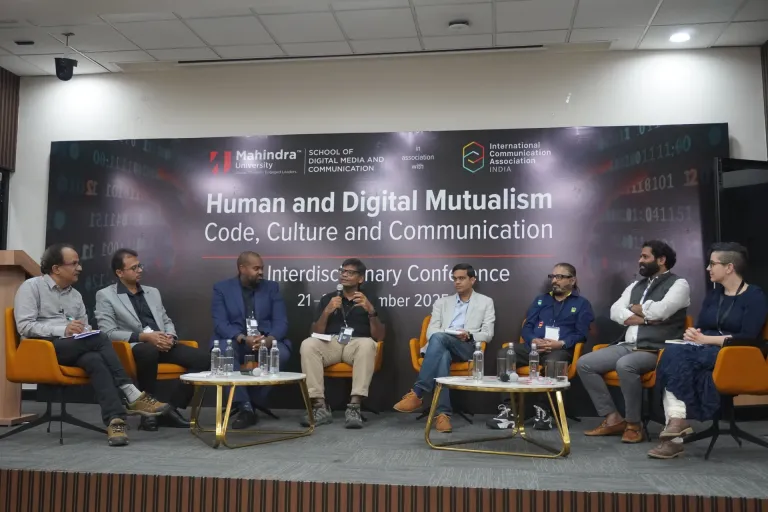
Mahindra University’s School of Digital Media and Communication, in collaboration with the International Communication Association (ICA) Regional Chapter – India, hosted its inaugural international conference titled Human and Digital Mutualism: Code, Culture and Communication on 21–22 November 2025 at the Mahindra University campus, Hyderabad.
Across the sessions, speakers converged on three key ideas:
- Human decision-making must remain central as automation rapidly expands.
- Understanding stages of technological acceptance is essential for responsible and ethical adoption.
- Universities must recognise students as primary stakeholders as AI reshapes pedagogy, assessment, and learning environments.
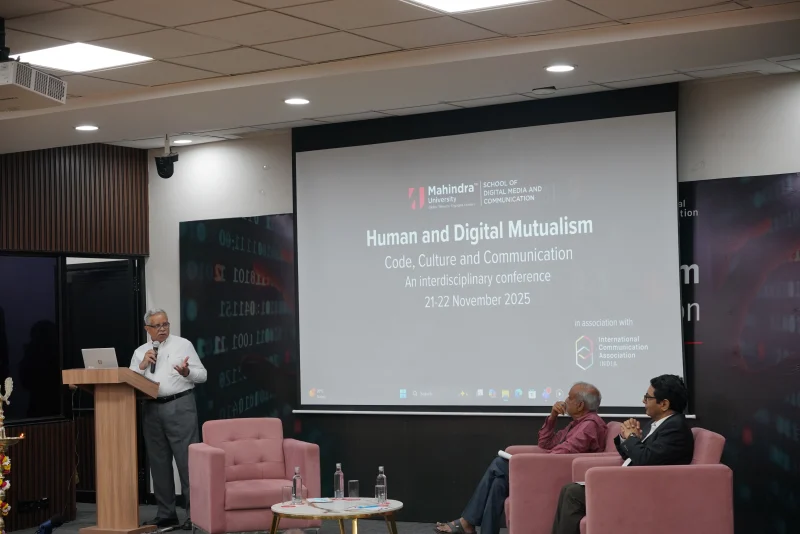
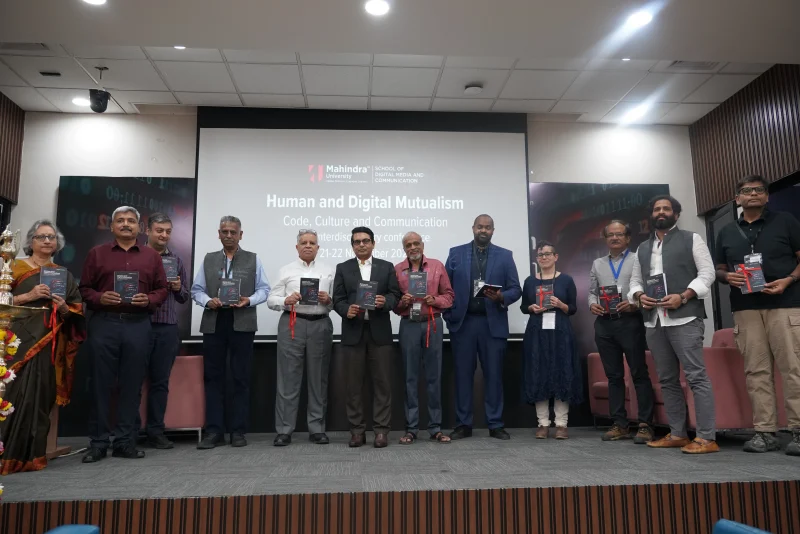
During the inaugural session, Dr. Yajulu Medury, Vice Chancellor, Mahindra University; Dr. Sanjay Bharthur, ICA India Head and Senior Professor at Manipal Institute of Communication; and Dr. Shashidhar Nanjundaiah, Conference Chair and Dean, SDMC, Mahindra University, jointly unveiled the Book of Abstracts. This volume reflects the collective intellectual contributions of scholars, researchers, and practitioners who participated in the conference.
Find the full: Conference Brochure | Conference Report
For the MU–ICA Book of Abstracts
Conference details
Conference tracks
Overview
Around the world, technologies driven by AI, machine learning, and datafication are redefining what it means to be human. They shape how we interact, create, govern, work, learn, and even empathize. However, as Herbert Simon (1971) observed, “a wealth of information creates a poverty of attention,” and the rapid evolution of digital systems often outpaces critical understanding, ethical foresight, and inclusive participation (Williams, 2018).
This scenario calls out for a need of a global dialogue that brings technologists, media scholars, cultural theorists, artists, educators, and policy thinkers together to critically engage in quintessential and pressing questions such as:
- Can we design technologies that genuinely respect and reflect the diversity of human values?
- How do today’s communication systems, as discussed by Hallin and Mancini (2004), act as mediators of trust, memory, and power in an increasingly digital-first world?
- And in an era saturated by synthetic media and algorithmic influence, in what ways can ‘code’ become culture—and culture, in turn, shape code (Katzenbach & Pentzold, 2024)?
These questions lie at the heart of the inquiry into human and digital mutualism.
In the Global South, the stakes of digital transformation are uniquely complex. With vast linguistic diversity, deep socio-economic inequalities, and histories of techno-colonialism, countries in this region face both unprecedented opportunities and profound risks. Platform-driven technological adaptation is often shaped by dynamics of surveillance capitalism (Zuboff, 2019) and external influences, but this has also spurred innovative resistance—from community-led data governance to new storytelling forms that reclaim agency (Holtzhausen & Zerfass, 2014).
To deliberate and discuss on these pressing issues and scenarios, Mahindra University, Hyderabad’s School of Digital Media and Communication, in collaboration with the International Communication Association (ICA) Regional Chapter – India, invites you to the first-ever edition of our collaborative international conference.
You may submit abstracts of research projects. Abstracts will be blind reviewed. Please read guidelines for the submission and review the guidelines carefully before submission. Submissions may emerge from, but are not limited to, the following:
| Advertising Studies AI in MediaAI Literacy Attention Economy Automated Communication Communication Laws Communication Policies Communication Theory Computational Media Creator Economy Critical Pedagogy Cultural Production Environment Communication Ethics in the AI EraFilm Studies Healthcare Communication | History of Communication Influencer Culture Journalism Studies Media Aesthetics Media Economics Media Literacy Media Psychology Memetic and AI Marketing Para-Social Relationship Political Economy Storytelling in Media Strategic Communication Synthetic Media Trust in Modern Institutions Visual Communication Documentary Films (Audio visual-based Presentations) * |
*Documentary Films/Pitch AVs: We invite non-fiction films and/or pitch AVs for documentary films to showcase under a competitive category.
References
- Hallin, D. C. & Mancini, P. (2004). Comparing media systems: Three models of media and politics. Cambridge University Press.
- Holtzhausen, D. R. & Zerfass, A. (Eds.). (2014). The Routledge handbook of strategic communication. Routledge.
- Katzenbach, C. & Pentzold, C. (2024). Automating communication in the digital society: Editorial to the special issue. New Media & Society, 26(9), 4925–4937. https://doi.org/10.1177/14614448241265655
- Simon, H. A. (1971). Designing organizations for an information-rich world. In M. Greenberger (Ed.), Computers, communication, and the public interest (pp. 37–72). The Johns Hopkins Press.
- Williams, J. (2018). Stand out of our light: Freedom and resistance in the attention economy. Cambridge University Press.
- Zuboff, S. (2019). The age of surveillance capitalism: The fight for a human future at the new frontier of power. PublicAffairs.
For further information, email us at sdmc.conferences@mahindrauniversity.edu.in.
Gallery
Call for abstract
We invite scholars, researchers, and practitioners to submit abstracts for paper presentations at the inaugural Mahindra University-International Communication Association (India Chapter) conference on the broad theme:
Human and Digital Mutualism: Code, Culture and Communication
Abstract submission deadline: 15 October 2025
Paper presentations:
All abstracts must be submitted electronically via the official conference portal.
Documentary films:
Documentary films must be submitted electronically as follows: Private online link (Vimeo or YouTube) with a password must be submitted along with the director’s bio and synopsis (100 words) of the film, including a description of the motivation, central idea, and treatment.
Submissions are now closed.
| For the MU–ICA Book of Abstracts |
General Guidelines for Paper Presentations
- Submission of abstract is open to academics, researchers, doctoral and postgraduate students, and professionals working in media and communication.
- Submission must be original, unpublished, and not under review elsewhere.
- Joint submissions (up to 3 authors) are allowed.
- Each participant may submit up to two abstracts (either as sole or co-author).
- All submission must be in English and carry a title and 5-7 keywords.
- Length of the abstract should not exceed 800 words (excluding title, keywords, and references).
- Abstract must include the research question, theoretical framework, methodology, discussion, and any findings/conclusions if available.
- “Best Paper” prizes will be awarded. A more detailed paper of up to 3,000 to 6,000 words will be required for the submission to be considered for the awards.
General Guidelines for Documentary Film-Based Submissions
Documentary Format
Submissions must be non-fiction films, including observational, reflexive, investigative, essay, archival, and experimental formats.
Presentations must not exceed 15 minutes, including relevant clippings or showreel from the film not exceeding 5 minutes.
Runtime
Feature-length: 41 minutes and above.
Short Documentary: Under 40 minutes
Language
Non-English films must include English subtitles.
Technical Specifications
- Terms
By submitting, you grant permission to screen your film. The film may be used for promotional purposes. - The submitter must have the legal authority to submit the film and must hold all rights pertaining to the film.
- Submission does not guarantee selection and screening.
- The full documentary films will be screened separately.
- Films will be judged by a jury of professionals. Decision of the jury will be final, binding, and cannot be challenged.
For further information, email us at sdmc.conferences@mahindrauniversity.edu.in.
Publishing opportunity
- Edited volume with a reputed international publisher. (Editors will invite chapters from selected papers presented at this conference.)
- Book of Abstracts.
Agenda
Find the full conference schedule here
| Day One: 21 November 2025 | |||
|---|---|---|---|
| Time | Session | Speakers | Location |
| 8:00 am – 5:00 pm | Registration | SDMC | |
| 9:00 – 11:00 am | Inaugural | Yajulu Medury, Vice Chancellor, Mahindra University Shashidhar Nanjundaiah, Conference chair; Dean, SDMC, Mahindra University Sanjay Bharthur, ICA India chapter lead; Senior Professor of Communication, Manipal Institute of Communication, MAHE, Karnataka Noshir Contractor, former ICA president; Jane S. & William J. White Professor of Behavioral Sciences, Northwestern University, Evanston, Illinois, USA | IMSE auditorium |
| 11:00 – 11:15 am | Break | SDMC | |
| 11:15 am – 1:15 pm | Industry panel Humans and algorithms: Epistemic challenges for the industry and academia to achieve mutualism | Darryl Vaz, Senior Director, Product and Program Management, Broadcast Studio OTT, LTIMindtree Derek Ham, Director of Entertainment Technology Center, Carnegie Mellon University Jay Barchas-Lichtenstein, Senior Research Manager, Center for News, Technology & Innovation, USA Khalid Viqar, Managing Director, gTools, Automation and Infrastructure, Google Manish Bhide, Distinguished Engineer & CTO – watsonx.governance, IBM Data & AI Nikhil Malhotra, Chief Innovation Officer and Global Head of AI and Emerging Technologies, Tech Mahindra Rajat Ojha, CEO and Co-Founder, Gamitronics Rudra Kasturi, Founder, AI Vidhyarthi | AI Strategy & Growth, Times Internet KV Kurmanath (Moderator), Associate Editor, The Hindu Business Line | IMSE auditorium |
| 1:15 – 2:15 pm | Lunch | International Guest House | |
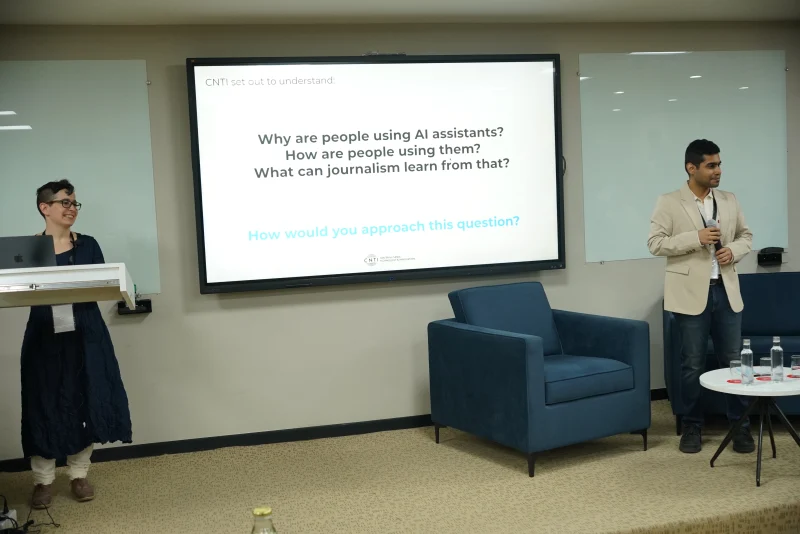
| 2:15 – 3:15 pm | Masterclass “@AI, is it true?”: Changing Informational Needs and Practices | Jay Barchas-Lichtenstein, Senior Research Manager, Center for News, Technology & Innovation, USA Prabhat Mishra, Senior Fellow, Center for News, Technology & Innovation, USA | Vivekananda |
| 3:15 – 3:30 pm | Break | ||
| 3:30 – 4:15 pm | Plenary 1 Innovation through play | Derek Ham, Director of Entertainment Technology Center, Carnegie Mellon University | Vivekananda |
| 4:15 – 5:00 pm | Plenary 2 Computational media and empathy: The science of immersive storytelling | Sri Kalyanraman, Senior Associate Dean for Research, Michigan State University | Vivekananda |
| 5:00 – 6:30 pm | Technical session 1 Who am I, IRL? Coding identities and subjectivities | Entangled realties: Code, culture and the communication of the digital self. Priya Goel, Jamia Millia Islamia Counterpublics on digital platforms: A study of Instagram influencers from Kumaon. Simran Singh, O.P. Jindal Global University Cultivating indigeneity and resilience on new media: (Re)construction of the Kurukh past. Keshav Vivek, SRM University AP Media advocacy and empowerment through digital mutualism: A survey of LGBTQ voices in central Mumbai. Priti Saroj, Guru Nanak College of Arts, Science and Commerce; Amrin Moger, Guru Nanak College of Arts, Science & Commerce; PJ Mathew Martin, University of Mumbai From ritual to reel: Reimagining Kerala’s folk characters in contemporary Malayalam cinema. Soumya P, SDMC, Mahindra University Moderator: Sunder Bukya, Department of Humanities & Social Sciences, Mahindra University | Tagore |
| 5:00 – 6:30 pm | Technical session 2 Who’s weaving the tangled web? Emerging complexities in digital media | Disability and digital platform inclusivity: A case study of Indian women working from home. Riddhi Basu, Nirmala MN, Christ University Understanding malleable computational media platforms for participatory development communication: A case study of MyGov, Gram Vaani, Devdiscourse, and Ushahidi India. Y Sravan Kumar, Indira Gandhi National Open University A communication model of technology hype cycles in platform capitalism. Allan Harold Rex, SDMC, Mahindra University The AI and communicative ecology nexus: Foundations of a symbiotic evolution. Abhishek Kumar, IIM Indore Too close for comfort: How hyper-personalized advertising redefines the relationship between people and algorithms. Tanya Bhutani, IILM University Moderator: Sreedhar Nemmani, SDMC, Mahindra University | Vivekananda |
| 5:00 – 6:30 pm | Technical session 3 Who’s the generative generation, really? Platforms, cultures and ecology | Algorithmic publics and generative AI: Navigating ethical communication in platformized cultures. PV Satya Prasad, Nitte University; Archan Mitra, Amity School of CommunicationParasocial policing and the female public: Gendered visibility, widowhood, and moral economies in Kerala’s digital culture. Anjitha Gopi, Ashraf Pulikkamat, VIT-AP University Scroll, like, share, and influence: How Instagram reels are shaping political communication in India. Akash K, Mochish K, FLAME University Understanding social media usage preferences of senior citizens-types of content, platform choices, and device utilization. Glen D’Silva, SDMC, Mahindra University; Gurminder Pal Singh, St. Joseph’s Degree & PG CollegeModerator: Anuja Premika, SDMC, Mahindra University | Ramanujam |
| 7:00 – 8:15 pm | Cultural programme | Abdul Kalam auditorium | |
| 8:15 – 10:00 pm | Dinner | International Guest House | |
| Day Two: 22 November 2025 | |||
| Time | Session | Speakers | Location |
| 8:15 – 10:00 am | Technical session 4 Documentary screenings | Kitchen Films (Telugu). Lavanya Ramaiah, O.P. Jindal Global University Ti Nadi Hoti (She Was a River) (Marathi). Shashank Gadilkar, SP Pune University Bhram Nagri: The Land of Pushkar (Hindi/English). Danish Khan, Janvi Singh, Bennett University Beyond the Binary: Voices of Trans Lives (English/Kannada). Bhargavi D Hemmige, Jain University Mahashamshana: Jahan Mrityu Amar Hai (Hindi). Krish Gaba, Diti Menghani, Bennett University Moderator: Gunjan Sharma, SDMC, Mahindra University | IMSE auditorium |
| 10:00 – 10:45 am | Plenary 3 Mutualistic media? Rethinking human–digital relations in hybrid publics | Sundeep R Muppidi, Professor of Digital Media & Communication, University of Hartford | IMSE auditorium |
| 10:45 – 11:30 am | Plenary 4 The First Line of Defense: Digital Care making within Technology Facilitated Gender and Sexual Violence (TFGSV) | Nishant Shah, Associate Professor of Global Media & Culture, The Chinese University of Hong Kong | IMSE auditorium |
| 11:30 am – 11:45 am | Break | ||
| 11:45 am – 12:30 pm | Plenary 5 Governing dislocations in the platform economy | Vibodh Parthasarathi, Associate Professor, Jamia Millia Islamia | IMSE auditorium |
| 12:30 – 1:15 pm | Plenary 6 Regions of attention: Human–AI mutualism in the platformized world | Harsh Taneja, Associate Professor of New and Emerging Media, University of Illinois Urbana-Champaign | IMSE auditorium |
| 1:15 – 2:15 pm | Lunch | International Guest House | |
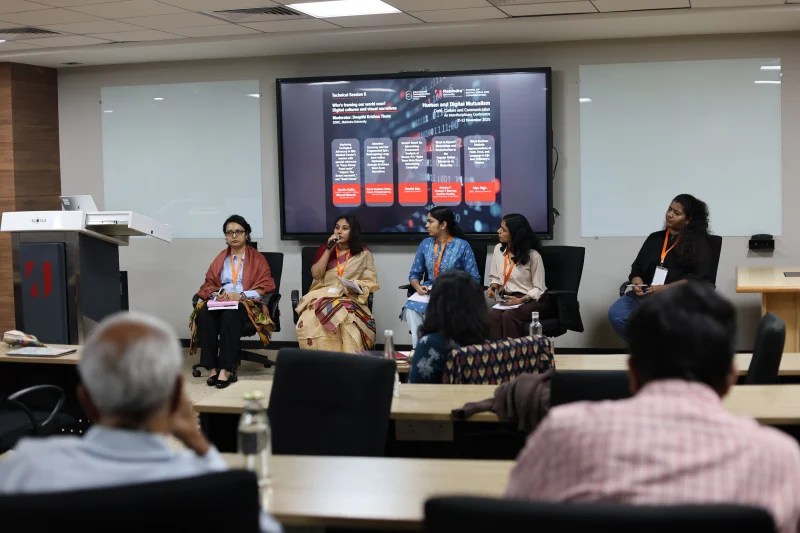
| 2:15 – 3:45 pm | Technical session 5 Who’s framing our world now? Digital cultures and visual narratives | What to expect? Materialism and consumerism in the popular online discourse on maternity. Rinisha P,Francis P Barclay, Haritha Harilal, Central University of Tamil Nadu Attention economy and the fragmented epic: Reimagining long-form Indian mythology through AI-driven short-form narratives. Harsh Vardhan Sinha, Gauri D Chakraborty, Bennett University Dream team? An advertising framework analysis of Dream 11’s “apke team mein kaun” advertising campaign. Susmita Das, Independent Scholar Exploring ecological advocacy in Nila Madhab Panda’s movies with special reference to “Kaun Kitney Paani Mein,” “Jalpari: The Desert Mermaid,” and “Kadvi Hawa.” Ajanita Kalita, Dakshin Kamrup Girls’ College; Bharati Bharali, Gauhati UniversityHuman–digital mutualism in malayalam cinema: semiotic reflections on lijo jose pellissery’s visual language. Alga Albin, SDMC, Mahindra University. Moderator: Deepthi Krishna Thota, SDMC, Mahindra University | Vivekananda |
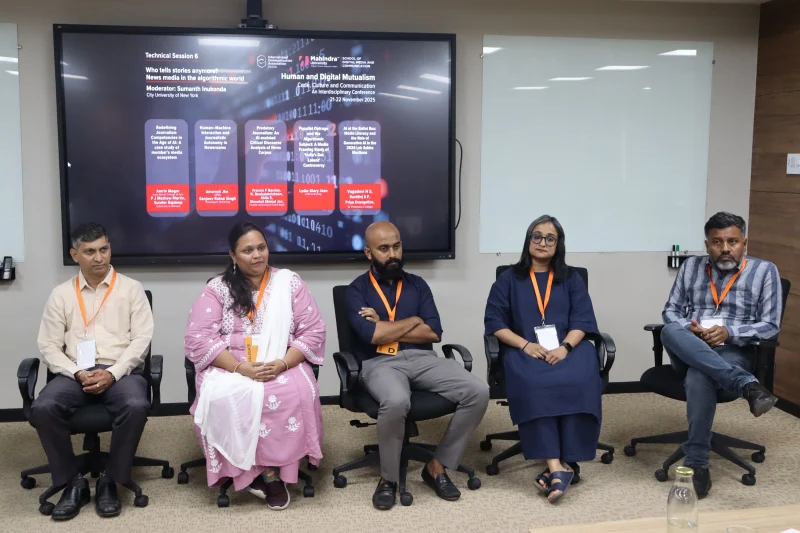
| 2:15 – 3:45 pm | Technical session 6 Who tells stories anymore? News media in the algorithmic world | Redefining journalism competencies in the age of AI: A case study of Mumbai’s media ecosystem. Amrin Moger, Guru Nanak College of Arts, Science & Commerce; PJ Mathew Martin, University of Mumbai; Sunder Rajdeep, University of Mumbai Predatory journalism: An AI-assisted critical discourse analysis of news corpus. Francis P Barclay, N Boobalakrishnan, Akila S, Showkat Ahmad Jan, Central University of Tamil NaduPopulist outrage and the algorithmic subject: A media framing study of ‘India’s Got Latent’ controversy. Lydia Glory Jose, IILM University Human–machine interaction and journalistic autonomy in newsrooms. Amaresh Jha, UPES; Sanjeev Ratna Singh, Chandigarh University AI at the ballot box: Media literacy and the role of generative AI in the 2024 Lok Sabha elections. Vagdevi HS, Ravithej SP, Priya Evangeline, St. Philomena’s CollegeModerator: Sumanth Inukonda, City University of New York | Tagore |
| 3:45 – 4:00 pm | Break | ||
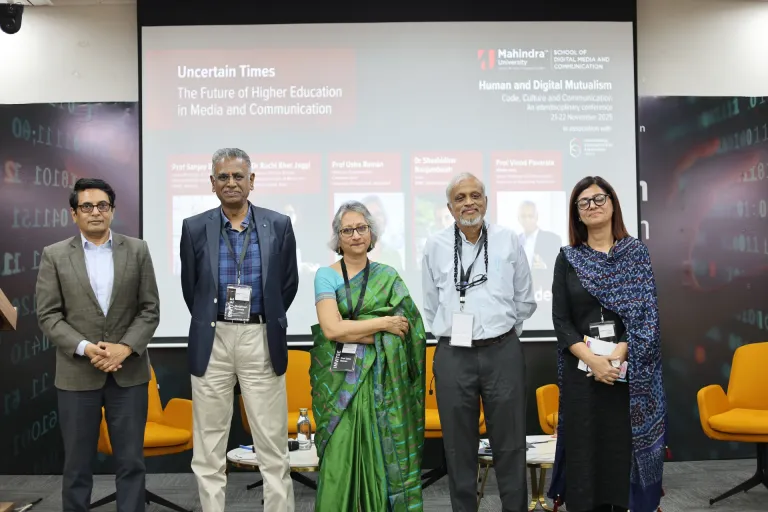
| 4:00 – 5:00 pm | Academic panel Uncertain Times: The Future of Higher Education in Media and Communicaiton | Ruchi Kher Jaggi, Professor, Director & Dean, Symbiosis Institute of Media and Communication Sanjay Bharthur,Senior Professor of Communication, Manipal Institute of Communication, MAHE Shashidhar Nanjundaiah, Dean and Professor, SDMC, Mahindra University Usha Raman,Professor, University of Hyderabad, Telangana Vinod Pavarala (Moderator), Senior Professor, University of Hyderabad | IMSE auditorium |
| 5:00 – 5:30 pm | Valedictory and closing remarks | IMSE auditorium | |
For further information, email us at sdmc.conferences@mahindrauniversity.edu.in.
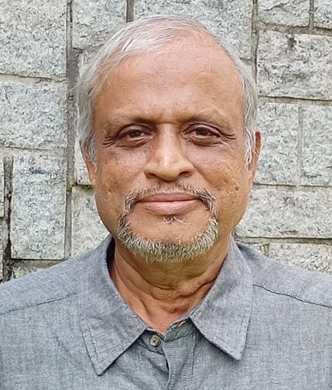
Prof. Sanjay BP
Senior Professor of Communication, Manipal Institute of Communication, MAHE, Karnataka
Bio : This reputed academic administrator has held several top positions, including at IIMC and the University of Hyderabad, and has made significant contributions to the political economy of communication and journalism education.
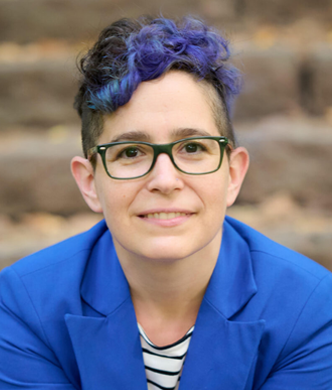
Dr. Jay Barchas-Lichtenstein
Senior Research Manager Center for News, Technology & Innovation, Washington, DC, USA
Bio : A linguistic anthropologist by training, Dr. Barchas-Lichenstein’s international field-based research focuses on the changing role of media institutions in a time of rapid technological and social change, and especially on the online safety of journalists.

Dr. Marcus Bingenheimer
Associate Professor, Temple University, Philadelphia, USA
Bio : Educated in Germany and Japan with extensive experience across East Asia, Dr. Bingenheimer explores digital humanities. Using AI tools, he investigates how LLMs and sLLMs can help research Buddhist history.
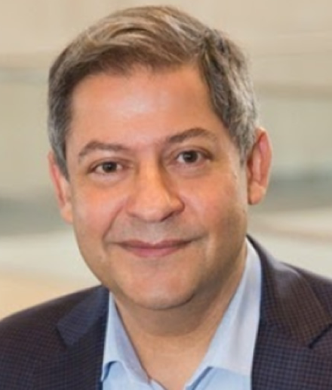
Dr. Noshir Contractor
Jane S. & William J. White Professor of Behavioral Sciences, Northwestern University, Evanston, Illinois, USA
Bio : A pioneer whose work is at the forefront of three emerging interdisciplines: network science, computational social science and web science, Dr.Contractor investigates how social and knowledge networks form–and perform–in various contexts.
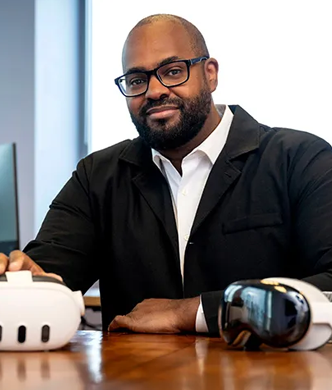
Dr. Derek Ham
Director of Entertainment Technology Center,Carnegie Mellon University’s, Pittsburgh, USA
Bio : An experienced Design Educator with a PhD from M.I.T. in Design Computation, Derek Ham’s “undisciplined” design approach breaks disciplinary boundaries and brings together Virtual/Augmented Reality, Game Design, Film, Animation, Robotics, Computer Science, and Engineering.
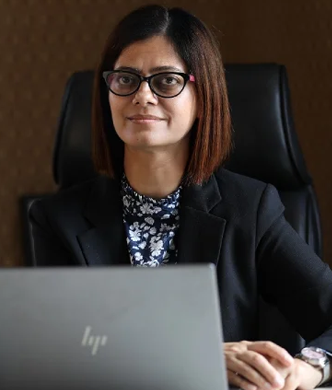
Dr. Ruchi Kher Jaggi
Professor, Director & Dean, Symbiosis Institute of Media and Communication, Pune
Bio : Dr. Jaggi is a reputed scholar whose ongoing research on streaming as soft power received the prestigious SPARC 2023 research grant. Her work explores media, technology, and culture, including women and children in media.
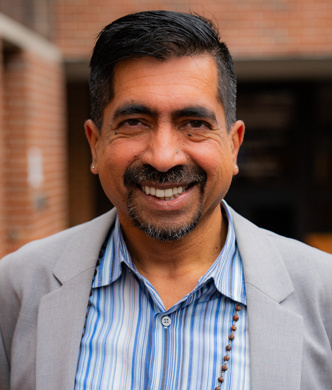
Dr. Sri Kalyanaraman
Senior Associate Dean for Research, Michigan State University, Michigan, USA
Bio : An accomplished scholar, researcher, and mentor, Dr. Kalyanaraman is an expert in computational media. His research focuses on the psychology of new immersive technologies through the lenses of persuasion and attitude change.
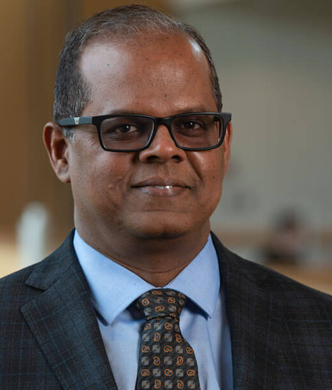
Dr. Sundeep Muppidi
Professor of Digital Media & Communication, University of Hartford, Connecticut, USA
Bio : A distinguished scholar, author, and administrator with more than three-decades of teaching and research experience, Dr. Muppidi’s research focuses on international communication, complexity, and communication for social change and empowerment.
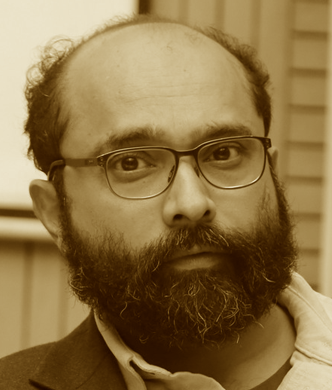
Dr. Vibodh Parthasarathi
Associate Professor, Jamia Millia Islamia, New Delhi
Bio : With a multidisciplinary interest in media policy, the business of creative industries and governance of media infrastructure, Dr. Parthasarathi received several research grants from prestigious national and international foundations and organizations. Dr. Parthasarathi’s current research attention is directed at the policy, business & users of digital TV distribution.
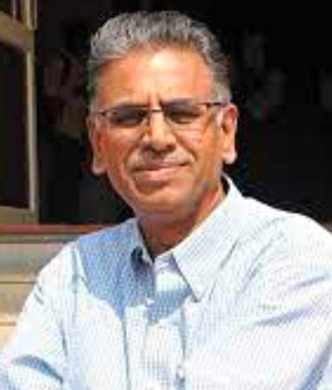
Prof. Vinod Pavarala
Senior Professor of Communication, University of Hyderabad, Telangana
Bio : A leading scholar in the fields of community media and media democratization, Dr. Pavarala is internationally recognized for his teaching, mentorship, and research. He has held the UNESCO Chair on Community Media since 2011.
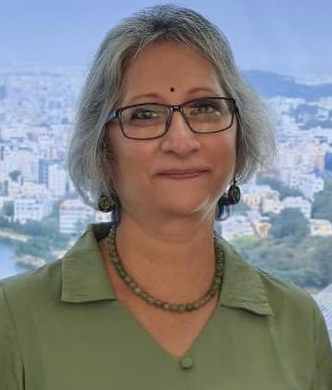
Prof. Usha Raman
Professor, University of Hyderabad, Telangana
Bio : A highly reputed communication scholar, practitioner, and academic, Dr. Raman’s research interests span several fields, including journalism pedagogy, cultural studies of science, health communication, children’s media, feminist media studies, and digital cultures.
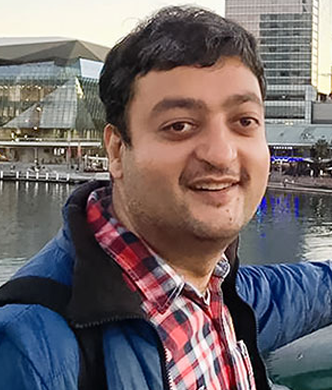
Dr. Harsh Taneja
Associate Professor of New and Emerging Media, University of Illinois Urbana-Champaign, Illinois, USA
Bio : Dr. Taneja studies media audiences and industries, examining how today’s infrastructures and platform architectures—encompassing more than just programs or content—shape our consumption, choices, and attention.
Registration details
| Registration | Mandatory registration for all presenters and early-bird option for non-presenters (on or before 5 November 2025) | Regular registration (6 November – 20 November 2025) | On-location registration |
|---|---|---|---|
| Students/PhD scholars | INR 1500 | INR 2000 | INR 2500 |
| Faculty/Professionals (presenters) | INR 2500 | INR 3000 | INR 3500 |
| Delegates (non-presenters) | INR 3500 | INR 5000 | INR 5500 |
Early-bird registrations are closed.
On campus accommodation is closed
| Registration Click Here |
Venue
Event venue Address: Mahindra University, Survey: 62/1A, Bahadurpally (Near Tech Mahindra), Jeedimetla, Hyderabad, Telangana, India, Pin: 500043.
Access from Major Transport Hubs:
- Mahindra University is approximately 30–35 kilometers away from Rajiv Gandhi International Airport (RGIA) in Hyderabad, depending on the specific route you take. The drive usually takes around 40-60 minutes, depending on traffic conditions.
- It is about 20–25 kilometers away from Secunderabad Railway Station. The travel time can vary, but it generally takes around 30–45 minutes by car, depending on traffic conditions.
- It is around 25–30 kilometers away from the main bus stations in Hyderabad, such as the MGBS (Mahatma Gandhi Bus Station) or Jubilee Bus Station.
