












B.Tech in Electrical & Computer Engineering
A 4-year undergraduate programme merging electrical engineering and computer science to equip students for smart systems and future mobility.
B.Tech in electrical & computer engineering overview
We prepare students with a broad-based, practical-oriented curriculum in electrical engineering with special emphasis on electric mobility, smart grids, renewable energy, IoT and integrated computer systems. Fundamental courses cover signals, systems, digital/analogue circuits, microcomputers and machines. Students experience:

Solid foundation
in basic sciences and fundamental electrical engineering courses including signals, digital & analogue circuits, and microcomputers.

Immersive laboratory
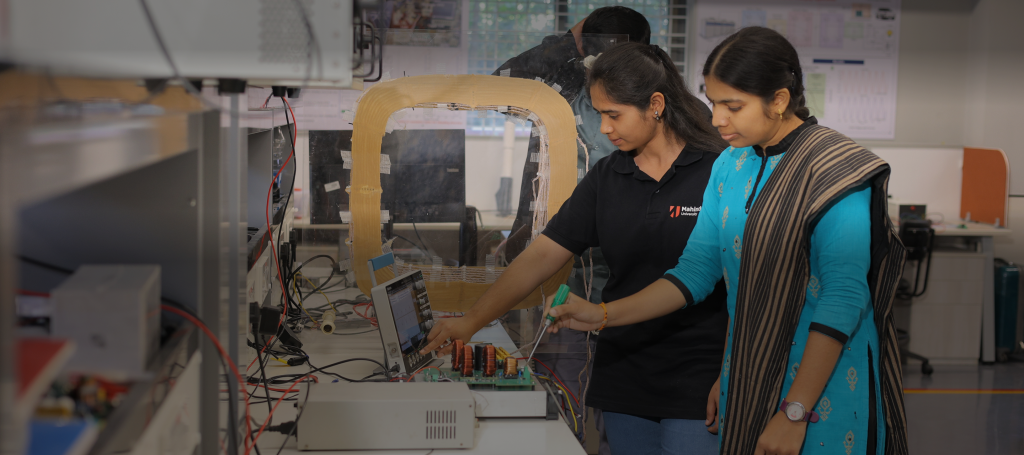
and project courses in building circuits, systems for power converters, drives and electric mobility platforms.

Specialised modules
addressing smart cities, smart grid systems, energy storage, battery management and electric vehicles, tying engineering to real-world societal challenges.

Preparation for careers
in sustainable infrastructure, mobility, renewables and integrated electrical-computer systems, bridging domains for future innovations.
Programme details
Academic structure
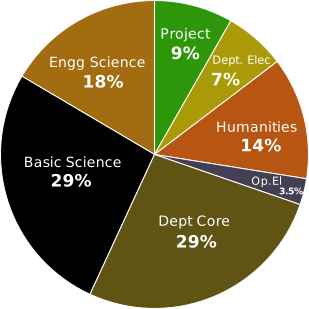
Our academic structure is designed to establish robust foundations, followed by increasing specialization in later years.
- Total credits & degree requirement: The programme requires not less than 165 credits to be awarded a B.Tech degree.
- Duration: 4 years / 8 semesters
Programme outcomes
- Railways and mobility infrastructure: Indian Railways, metro rail corporations, Hitachi, ABB, Schneider Electric, GE and Siemens.
- Electric two- and three-wheeler manufacturers: Ather Energy, Hero Electric, TVS Motor, Ola Electric, Okinawa, Revolt Motors, Honda, Vida, Rissala Electric, Bajaj Auto, Sunrun Motors, Mahindra Electric and Piaggio.
- Electric car and bus manufacturers: Tata Motors, Mahindra & Mahindra, Hyundai, Ashok Leyland, Olectra, Eicher and MRV.
- EV component and feeder industries: Lucas–TVS, Bosch, Automotive Axles, Hella, Lumax Auto, Schaeffler, Valeo, Shakti Pumps, Electra EV and Dana TM4.
- Battery manufacturers: HBL, Panasonic, Amara Raja, Exide and Eveready.
- EV charging and power infrastructure companies: Delta Electronics, Eaton and Statiq.
FAQs
The curriculum integrates core electrical engineering with computer systems and smart-mobility modules, equipping students for the evolving domain of smart infrastructure and mobility.
Absolutely. The programme emphasises laboratory and project work in power converters, drives, smart grid and battery systems, giving students hands-on experience in cutting-edge domains.
With modules in renewable energy, smart cities and electric mobility, the programme aligns with global technological trends and societal needs.
Graduates are well placed for careers in electric mobility, smart grid and infrastructure systems, renewable energy, integrated hardware-software design and advanced research.
The curriculum is designed for practicality and relevance, emphasising real-world systems, lab work, and societal engineering problems, thereby nurturing adaptable, future-ready engineers.
