








Home / Centre for Life Sciences

Ph.D. in Computational Biology

An interdisciplinary doctoral research programme that blends biological inquiry with computational and data-driven approaches to address complex scientific challenges. 

Programme overview

The Ph.D. in Computational Biology at Mahindra University is offered through the Centre for Life Sciences and was launched in Fall 2023 as a research-driven programme integrating biology with computational technologies. The specialisation prepares candidates to design and conduct independent research that applies quantitative, algorithmic and analytical methods to biological problems and datasets.

Interdisciplinary research training

that melds life science foundations with computational modelling and analysis.

Rigorous coursework and research methodology

preparing candidates for advanced data-oriented investigation. 

Original thesis work

that contributes new insights or tools at the intersection of biology, computation and data science. 

Exposure to real-world scientific problems

in domains such as genomics, systems biology and biomedical data analysis.

Programme details

Expected outcomes

Graduates of the program will:

  • Advanced knowledge: Develop deep expertise in areas such as artificial intelligence, machine learning, and their applications in biology and healthcare.
  • Research methods: Gain hands-on training in advanced computational tools and data analysis techniques, including high-performance computing, computational modelling and analytical pipelines.
  • Original research: Conduct independent and collaborative research projects that contribute new knowledge and may lead to the development of software tools, R packages, Python libraries or innovative technology solutions.
  • Pedagogy: Gain teaching experience and mentorship skills through teaching assistantships in relevant courses and academic activities.
  • Communication: Develop the ability to effectively communicate research outcomes through journal publications, conference presentations and academic seminars.
  • Professionalism: Understand and apply scientific, professional and ethical standards essential for successful careers in academia, research and industry.

Key differentiators

  • World-class research infrastructure – Access to over 11,000 sq. ft. of dedicated research laboratory space, NVIDIA supercomputing clusters (20 CPUs and 40,960 CUDA cores, with planned expansion), along with facilities for biosensors, 3D printing and robotics research.
  • Strong industry connections – Collaborations with Hyderabad’s leading biotech and MedTech ecosystem, comprising 800+ companies and 20+ incubators.
  • Globally trained faculty – Faculty members trained at leading international institutions provide opportunities for joint supervision, collaborative research and academic exchange.
  • Interdisciplinary research focus – Emphasis on translational research at the intersection of artificial intelligence, healthcare technologies, clinical decision systems and bio-inspired innovation.
  • Entrepreneurship support – Scholars with commercially viable research ideas receive guidance through the Centre for Innovation and Entrepreneurship.
  • Competitive fellowship – A fellowship of ₹30,000 per month, along with campus accommodation and meals provided at no cost.

Specialisations
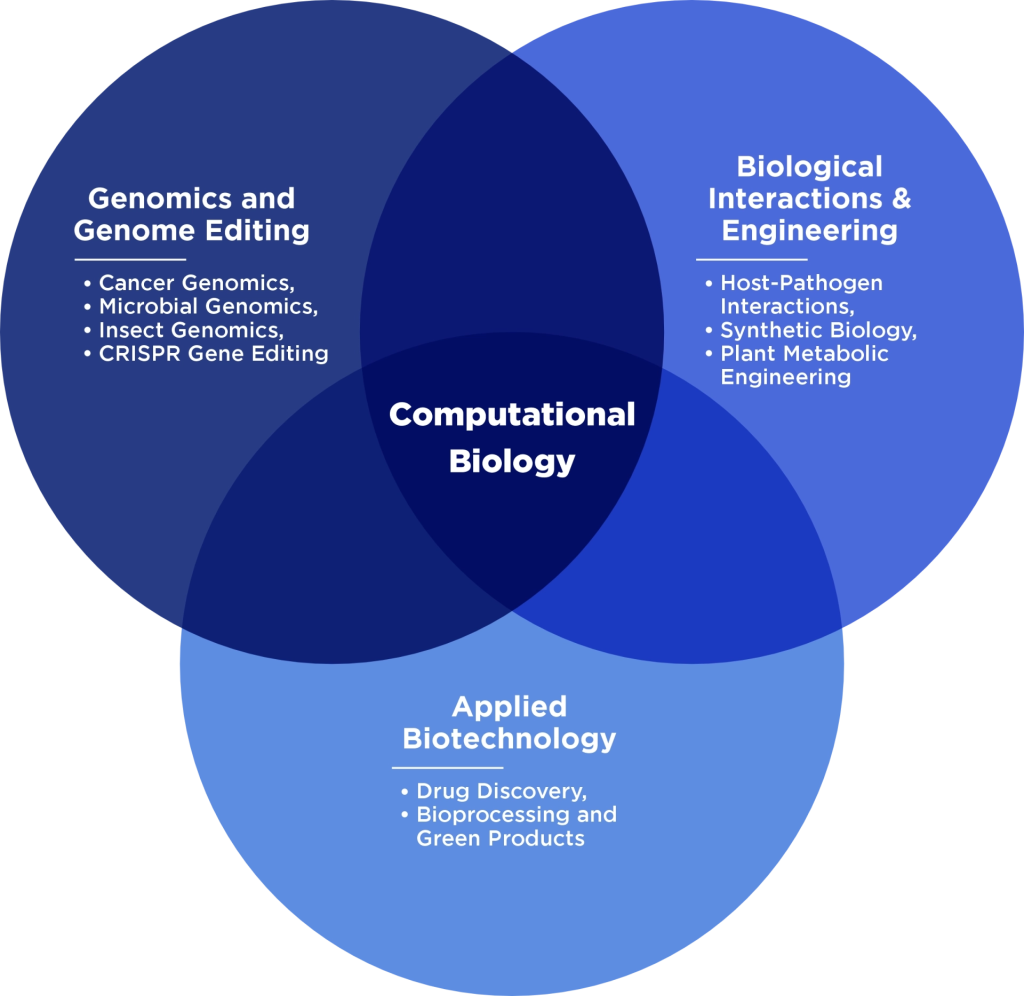
Core themes

  • AI in healthcare
  • Computational drug discovery
  • Biomedical image analytics
  • Disease modelling
  • Computational genomics
  • Computational biosciences
  • Clinical informatics

FAQs

It is a research degree that prepares scholars to conduct independent original research in life science disciplines, culminating in a doctoral thesis. 

Duration varies but is typically structured to be completed within six years, depending on research progress and requirements.

Yes. The programme includes a set of prescribed coursework to build research foundations before dissertation work. 

The programme includes areas such as biotechnology, computational biology and other life science subfields as defined by faculty expertise and research priorities at the Centre for Life Sciences.

Doctoral research is expected to lead to publication in peer-reviewed journals or equivalent scholarly venues. 

Start your journey with us

Home / Centre for Life Sciences

Ph.D. in Biotechnology

A doctoral research programme focused on advancing life science innovation through interdisciplinary biotechnological inquiry.

Ph.D in biotechnology overview

The Ph.D. in Biotechnology at Mahindra University, offered through the Centre for Life Sciences, is designed to nurture independent researchers capable of addressing global challenges in health, agriculture, environment and industry through cutting-edge biotechnological solutions. The programme combines structured coursework, comprehensive assessment and original research culminating in an independent doctoral dissertation.

Research-centred training

that blends laboratory work with conceptual and analytical depth to tackle complex biological questions.

Advanced methods in biotechnology

including molecular biology, bioinformatics, synthetic biology and bioprocess technologies. 

Scholarly competence in data analysis

including high-throughput and statistical approaches relevant to life science research. 

Original contribution to knowledge

through dissertation work that meets the highest standards of scientific inquiry and impact.

Programme details

Learning outcomes

Ph.D. graduates are expected to achieve the following outcomes upon completion of the programme:

  • Scientific and technical proficiency: Demonstrate expertise in advanced biotechnological tools and techniques, and the ability to design and execute rigorous, reproducible research projects.
  • Data analysis and bioinformatics: Develop strong competence in computational biology, statistical analysis and the interpretation of high-throughput biological data.
  • Critical thinking and problem-solving: Critically evaluate scientific literature, formulate innovative research questions and develop solutions to complex challenges in health, agriculture and environmental sustainability.
  • Scholarly communication: Communicate research effectively through peer-reviewed publications, patents and grant proposals, along with clear oral presentations for academic, industry and public audiences.
  • Collaboration and interdisciplinary integration: Work effectively in interdisciplinary teams, integrating knowledge from biology, chemistry, engineering and data science, and collaborate across academia, industry and policy environments.
  • Ethical and responsible research conduct: Apply principles of research ethics, biosafety, intellectual property and responsible data management, with a commitment to transparency and societal impact.
  • Academic and teaching preparedness: Gain exposure to pedagogy and mentorship through teaching assistantships and academic engagement, enabling effective supervision of undergraduate and postgraduate students.

Key differentiators

Interdisciplinary focus
Integrates biotechnology with computational biology, systems biology and data science to address complex biological challenges.

Research-driven with translational impact
Emphasises research that leads to impactful outcomes, including publications, patents and technology development with societal relevance.

State-of-the-art research facilities
Access to advanced laboratories equipped for genomics, proteomics, imaging, cell culture and high-end scientific instrumentation.

Industry and international collaborations
Opportunities to collaborate with leading biotechnology companies and global academic partners for joint research and internships.

Entrepreneurship and innovation support
Access to the university’s innovation ecosystem, incubation support and mentorship for biotechnology start-up initiatives.

Faculty mentorship
Guidance from experienced faculty with diverse research expertise and international academic training.

Alignment with national research priorities
Research themes aligned with initiatives of organisations such as DBT, DST and ICMR, as well as India’s National Biotechnology Development Strategy.

Holistic research training
Training includes grant writing, research ethics, science communication and teaching assistantships for comprehensive professional development.

Sustainability and SDG alignment
Focus on biotechnology solutions addressing healthcare, food security and environmental sustainability challenges.

Specialisations

  • Genomics
  • Immunotechnology
  • mRNA therapeutics
  • Host–pathogen interactions
  • Plant metabolic engineering
  • Genetic disorders
  • Cancer biomarkers
  • Gene therapy
  • Bioprocess technology
  • Food processing and nutrition
  • Agricultural biotechnology
  • Precision therapeutics
  • Nanobiotherapeutics
  • Biomedical devices

FAQs

Duration varies but is typically structured to be completed within six years, depending on research progress and requirements.

Yes. The programme includes a set of prescribed coursework to build research foundations before dissertation work. 

The programme includes areas such as biotechnology, computational biology and other life science subfields as defined by faculty expertise and research priorities at the Centre for Life Sciences.
Doctoral research is expected to lead to publication in peer-reviewed journals or equivalent scholarly venues. 

Start your journey with us

Home / Centre for Life Sciences

Ph.D in Life Sciences

A doctoral research programme that prepares scholars to make original contributions to life science knowledge and innovation. 

Ph.D in life sciences overview

The Ph.D. in life sciences at Mahindra University is offered through the Centre for Life Sciences and focuses on interdisciplinary, research-driven inquiry in core areas such as biotechnology and computational biology. The programme integrates coursework, research methods training and dissertation work, leading to new scientific insights, innovative methodologies or original technological developments. Doctoral candidates work closely with faculty mentors to design, execute and present research that meets high standards of academic and scientific contribution. 

Advanced scientific training

In-depth engagement with specialised life science topics such as biological systems, molecular processes and computational methods. 

Research method proficiency

Rigorous training in quantitative and qualitative methods used to collect, analyse and interpret scientific data. 

Original research creation

Completion of a thesis involving either discovery of new facts, innovative interpretation of known phenomena, or development of new technologies. 

Scholarly communication and pedagogy

Opportunities to present findings in academic venues and contribute to research dissemination.

Programme details

Eligibility

Master (or four-year bachelor’s degree) in any field of Life Sciences/ Biology/ Biotechnology/ ​Nanobiotechnology/​ Chemistry/ ​Bioinformatics, etc.

University fellowship

University will provide a fellowship of Rs. 30,000 per month plus free lodging and boarding on the campus.

Important dates

Last Date for submission of applicationsTo be announced
Shortlisting of candidates for interviewTo be announced
Ph.D. Entrance Test / InterviewTo be announced
Announcement of ResultsTo be announced
Commencement of the Fall 2025 Semester TeachingTo be announced

Specialisations

Biotechnology

Focuses on advancing biological innovation through experimental research and translational science.

Computational Biology

Integrates computation and life sciences to analyse complex biological systems and data-driven patterns.

FAQs

It is a research degree that prepares scholars to conduct independent original research in life science disciplines, culminating in a doctoral thesis. 

Duration varies but is typically structured to be completed within six years, depending on research progress and requirements.

Yes. The programme includes a set of prescribed coursework to build research foundations before dissertation work. 

The programme includes areas such as biotechnology, computational biology and other life science subfields as defined by faculty expertise and research priorities at the Centre for Life Sciences.
Doctoral research is expected to lead to publication in peer-reviewed journals or equivalent scholarly venues. 

Start your journey with us

Home / Centre for Life Sciences

5-yr Integrated M.Tech. in Biotechnology

An integrated programme that builds strong foundations in biological sciences and advanced training in biotechnology for research and industry pathways.

Programme overview 

This programme is designed for students who wish to pursue an in-depth and continuous academic pathway in the life sciences. We integrate undergraduate and postgraduate study, enabling students to build conceptual depth, research capability, and technical competence over five years.
Integrated academic progression

A structured pathway that moves seamlessly from foundational science to advanced biotechnology and research.

Strong life sciences foundation

Core learning in biology, chemistry, mathematics, and related sciences that underpin biotechnology.

Research-oriented training

Exposure to laboratory work, data analysis, and supervised research projects.

Preparation for advanced pathways

Academic grounding that supports doctoral research, industry roles, and interdisciplinary careers.

Programme details

Programme structure

The programme is organised to support gradual academic progression and increasing specialisation.

  • Years 1–2: foundations: core courses in biological sciences, chemistry, mathematics, and introductory biotechnology concepts.
  • Years 3–4: advanced biotechnology: specialised coursework in biotechnology, laboratory techniques, and interdisciplinary applications.
  • Year 5: research and specialisation: advanced electives and a substantial research project or thesis under faculty supervision.

This structure enables students to develop both breadth and depth across life sciences and biotechnology.

Sr. No.Course CodeCourse TitleLTPCredits
1BT 1101 / BT 1102Basic Mathematics / Introduction to Biology*3003
2BT 1103Introduction to Biotechnology2002
3BT 1104Chemistry of Biomolecules3024
4PH 1103Physics for BT & CB3125
5ES 103Earth and Environmental Sciences2002
6HS 1101English0303
7HS 1102Media Project0021.5
8FS 1103French – I0200.5
9HS 1104Introduction to Entrepreneurship0031
Total Credits22
Sr. No.Course CodeCourse TitleLTPCredits
1BT 1205Genetics2124
2BT 1206Biodiversity & Global Conventions1001
3BT 1207Basic Mathematics II3104
4EE 1204Basic Electronics & Applications2124
5CH 1202Chemistry II2023
6CS 1101Introduction to Computing2124
7HS 1201Entrepreneurship Practice0021
8HS 1202Professional Ethics0101
9HS 1203French – II0200.5
Total Credits22.5
Sr. No.Course CodeCourse TitleLTPCredits
1BT 2108Enzymes & Metabolism3024
2BT 2109Microbes & Immune Systems4025
3BT 2110Cell & Molecular Biology3024
4BT 2111Probability & Biostatistics2124
5HS 2101Lean Start-up (Fractal)0031
6HS 2102Principles of Economics (Fractal)3001.5
7HS 2103French – III0200.5
Total Credits20
Sr. No.Course CodeCourse TitleLTPCredits
1BT 2212Omic Technologies3024
2BT 2213Gene Technology2044
3BT 2214Bioprocess Technology3024
4BT 2215AI & Data Science for Biotechnologists3024
5HS 2201Design Thinking1022
6HS 2202Financial Accounting3001.5
7HS 2203French – IV0200.5
Total Credits20
Sr. No.Course CodeCourse TitleLTPCredits
1BT 3116Animal Cell & Tissue Culture Technology2044
2BT 3117Bioinformatics & Computational Biology3024
3BT 3118Agriculture Biotechnology3024
4BT 3119Bioprocess Design & Upscaling3024
5BT 3020Elective – I3003
6BT 3021Elective – II3003
7HSS Elective – I2002
Total Credits24
Sr. No.Course CodeCourse TitleLTPCredits
1BT 3222Synthetic Biology & Applications3024
2BT 3223Food Processing & Nutrition3024
3BT 3224Good Manufacturing & Regulatory Practices1011.5
4BT 3025Elective – III3003
5BT 3026Elective – IV3003
6HS 3201Introduction to Professional Development2002
7HSS Elective – II2002
Total Credits19.5
Sr. No.Course CodeCourse TitleLTPCredits
1BT 4227Green Biotechnology3003
2BT 4228Research Methods & IPR3003
3BT 4027Elective – V3003
4BT 4028Elective – VI3003
5M.Tech CoreCore Course3003
6M.Tech CoreCore Course3003
7HSS Elective – III2002
Total Credits20
Sr. No.Course CodeCourse TitleLTPCredits
1M.Tech CoreCore Course3003
2BT-0000Elective – PG3003
3BT-0000Elective – PG3003
4BT-0000Elective – PG3003
5BT-0000Elective – PG3003
6BT-0000Literature Review3003
7HSS Elective – III2002
Total Credits20
Sr. No.Course CodeCourse TitleLTPCredits
1PR-0000M.Tech Thesis004020
Total Credits20
Sr. No.Course CodeCourse TitleLTPCredits
1PR-0000M.Tech Thesis004020
Total Credits20

Learning outcome

Mahindra University offers an internationally trained faculty with strong industry and research backgrounds. The curriculum is regularly reviewed and updated to remain aligned with global industry and academic standards.

Upon completing the programme, students will be able to:

  • Evaluate biotechnology research and business practices in relation to ethical, inclusive and equitable standards.
  • Formulate research questions and develop solutions to contemporary challenges in biotechnology using a multidisciplinary approach.
  • Apply a range of laboratory techniques to design, conduct and analyse experiments addressing biotechnology problems.
  • Critically assess scientific literature in the context of real-world applications across biotechnology domains.
  • Demonstrate professional networking, leadership, communication and collaboration skills relevant to biotechnology research and industry.

Programme highlights

Flexible and customisable specialisation tracks that allow students to pursue specific areas of interest in biotechnology.

Rigorous scientific training supported by an advanced research thesis.

Hands-on experience through independent research projects at the University or collaborative projects with biotechnology and pharmaceutical industries.

Opportunities to publish research in scientific journals, present at international conferences and file patents.

Continuous mentorship and professional development support throughout the programme.

Interaction with researchers and industry experts through guest lectures and academic collaborations.

A final-year master’s thesis that enables students to develop in-depth research expertise supported by strong laboratory training.

Career avenues

Mahindra University’s location in Hyderabad—one of India’s leading life sciences and pharmaceutical hubs—provides strong industry linkages with biotechnology companies, R&D institutions and global organisations.

Students also benefit from international academic collaborations, enabling exchange opportunities and joint research supervision with faculty from reputed global institutions.

Graduates are prepared for diverse career paths, including:

  • Research scientist roles in laboratories focused on biotechnology applications in medicine, agriculture and industry.
  • Positions in regulatory affairs related to drug approvals and biotechnology products.
  • Management and leadership roles within biotechnology and pharmaceutical companies.
  • Opportunities with organisations investing in biotechnology innovation.
  • Roles supporting biotechnology-related legal and regulatory services.
  • Careers in research and development, process operations, product development and technical sales.
  • Academic careers in scientific research and teaching.

Research and application areas

Biomanufacturing and green products

Applies engineered biological systems to produce chemicals and biomolecules using sustainable, biologically derived processes. The field supports green manufacturing across healthcare, agriculture, food, and specialty chemical industries.

Biopharmaceutical technology

Focuses on the development of biologics such as antibodies, vaccines, and nucleic acid–based therapeutics. The domain spans drug discovery, biosynthesis, formulation, delivery systems, and regulatory pathways.

Diagnostics

Focuses on the development of molecular and analytical tools for early and accurate disease detection. The domain integrates biology, chemistry, engineering, and data analysis to support clinical and public health diagnostics.

Food processing and nutrition

Explores scientific and technological approaches to food preservation, fortification, and processing. Emphasis is placed on improving shelf life, nutritional quality, hygiene, and food security through process optimisation.

Gut microbiome

Studies the role of gut microorganisms in human health and disease, spanning nutrition, immunity, metabolic disorders, and neurological development. The field supports both diagnostic biomarker discovery and therapeutic interventions.

Precision medicine

Centres on tailoring medical treatment based on individual genetic and molecular profiles. The domain integrates genomics, diagnostics, and data analytics to improve treatment effectiveness and reduce adverse outcomes.

Digital agriculture

Applies data, sensors, analytics, and digital platforms to optimise agricultural productivity and sustainability. The focus includes precision farming, decision support systems, and proactive resource management.

Pharmaceutical biotechnology

Applies biotechnological principles to drug development, from molecular design and expression to purification, stability assessment, delivery systems, and clinical translation.

Biomarkers

Centres on identifying and validating biological indicators associated with disease diagnosis, progression, and therapeutic response. The area supports applications in diagnostics, monitoring, and precision medicine.

FAQs

The programme is a five-year, full-time integrated M.Tech degree.

An integrated programme offers academic continuity, early exposure to advanced coursework, and structured preparation for research and higher study.

Yes. Research-led learning and a substantial project or thesis form a core part of the programme, particularly in later years.

Yes. The programme prepares students for doctoral research and advanced academic pathways.

Yes. Laboratory-based learning is integrated across multiple stages of the programme.

Start your journey with us

Home / Centre for Life Sciences

B.Sc. in Allied Health Sciences

An industry-integrated programme that prepares students for diverse clinical roles through hands-on training and real-world healthcare exposure.

Programme highlight 

Our B.Tech goes beyond conventional engineering education. This programme is structured to give students both academic depth and applied experience, ensuring they graduate as problem-solvers ready for global industries. Students experience:

Comprehensive curriculum

Strong foundation in anatomy, physiology, pathology, pharmacology, and clinical sciences tailored to each specialization.

Apollo clinical training advantage

Structured hands-on training in Apollo Hospitals and affiliated centres, ensuring exposure to real clinical scenarios.

State-of-the-art learning environment

Well-equipped laboratories, skill labs, simulation centres, and digital learning resources.

Expert faculty

Courses delivered by experienced clinicians, academicians, and industry specialists from the Apollo ecosystem.

Interdisciplinary learning

Opportunities for collaborative projects, case discussions, seminars, and research activities.

Career-ready preparation

Emphasis on critical thinking, clinical decision-making, communication skills, and professional ethics.

Strong career prospects

High demand for allied health professionals in hospitals, diagnostic centres, emergency services, public health, and healthcare technology industries.

Pathways for higher education

Eligibility for advanced certifications, postgraduate programmes, and international career pathways.

Specialisations

Shape your career path through specialisations that unite cutting-edge technology with engineering fundamentals.

B.Tech in VLSI Design & Technology

B.Tech in Nanotechnology

B.Tech in Mechatronics Engineering

B.Tech in Electronics & Communication Engineering

B.Tech in Electrical and Computer Engineering

B.Tech in Data Science

B.Tech in Computational Biology

B.Tech in Civil Engineering

B.Tech in Biotechnology

B. Tech in Aerospace Engineering

B.Tech in Mechanical Engineering

Centre for Life Sciences, Mahindra University x Apollo Healthcare Academy

The B.Sc. Allied Health Sciences programme prepares skilled and ethical healthcare professionals through a strong foundation in biomedical and clinical sciences, combined with hands-on training, simulation-based learning and supervised clinical rotations.

Aligned with national guidelines and Apollo’s standards of excellence, the four-year programme equips graduates to work effectively across hospitals, emergency services, community health and research settings.

This 4-year undergraduate programme (including clinical internship) adheres to national regulatory guidelines and reflects the standards and values of Apollo’s legacy of excellence in healthcare.

Apollo’s proven excellence

20+

Specialisations

600K+

Trained professionals

200+

Countries’ learners

200+

Courses

650+

Faculty

Vision

To develop highly competent, compassionate, and future-ready allied health professionals through excellence in education, clinical training, innovation, and patient-centred care, thereby contributing to the transformation of healthcare delivery in India and beyond.

Eligibility Criteria

  • Basic understanding of mathematics is preferred.
  • Applicant must have completed 10+2 or an equivalent qualification.
  • The main subjects should include physics, chemistry and biology.
  • A minimum of 50% marks (45% for reserved categories) is required from a recognised board.
  • Students from a PCM background who take Biology as a supplementary subject are also eligible.
  • Applicant must be at least 17 years old as of December 31 of the calendar year.
  • Selection is based on an entrance examination followed by a personal interview.

Fee structure

CategoryAcademic fees (per annum)Hostel charges (all-inclusive)Caution deposit (refundable)
Indian students₹2,50,000₹1,70,000 (triple occupancy, including mess)₹20,000
PIO/NRI studentsUSD 3,700USD 3,000 (triple occupancy, including mess)USD 400

Note: Accommodation shall be provided in accordance with the University’s standard norms. During the first academic year, all students will be allotted triple-occupancy rooms. From the second year onwards, students may have the option to opt for double or triple occupancy, subject to availability, with hostel fees applicable as per the allotted accommodation type.

Merit Scholarship Policy – Academic Session 2026-27

  • Apollo Healthcare Academy (AHA) offers Merit Scholarships to recognize outstanding academic achievement and high-potential students aspiring to build careers in healthcare.
  • Scholarships are awarded competitively and are available for up to 10% of the sanctioned intake per program, subject to partner university concurrence and applicable institutional norms.

1. Basis of Scholarship Award

Scholarships will be awarded based on a Composite Merit Score, calculated as follows:

Composite score = (50% × AHA Scholarship Test Score) + (50% × XII Aggregate Percentage)

  • XII Aggregate Percentage will be considered as the overall percentage declared by the respective board.
  • Candidates must appear for the AHA Scholarship Test to be eligible for consideration.
  • Final merit ranking will be prepared based on the Composite Score.

2. Scholarship Slabs (Based on Composite Score)

Composite ScoreScholarship Award
95 and above25% Tuition Fee Waiver
90 – 94.9915% Tuition Fee Waiver
85 – 89.9910% Tuition Fee Waiver

Scholarships will be allocated in descending order of Composite Score until the scholarship allocation (10% of intake) is filled.

Meeting the score criteria does not guarantee award of scholarship if the allocated scholarship capacity has been reached.

3. Admission Confirmation

  • Scholarship is confirmed only upon payment of the first-year tuition fee (after scholarship adjustment) within the stipulated timeline.
  • If admission is not confirmed within the deadline, the scholarship may be offered to the next eligible candidate.
  • Scholarships are non-transferable.

4. Continuation of Scholarship (Subsequent Years)

The scholarship shall continue in subsequent academic years provided the candidate:

  • Maintains a minimum of 80% attendance in each subject.
  • Secures a minimum CGPA of 7.5 at the end of each academic year in a single attempt.
  • Maintains good conduct and discipline on and off campus.
  • Does not avail any other scholarship or fee waiver scheme simultaneously.

Failure to meet these conditions may result in withdrawal of scholarship for subsequent academic years.

5. Interaction with Special Fee Waivers

  • Merit Scholarships are non-stackable.
  • Where a candidate qualifies for both a Merit Scholarship and an Employee Ward / Sibling Fee Waiver, only the higher of the applicable benefits shall be granted.

6. Special Fee Waivers

Apollo Group / Partner University Employee Ward

  • 25% tuition fee waiver for one child of an employee of the Apollo Group or partner University.
  • Candidate must have secured minimum First Class in XII.

Employee Referral (Sibling Benefit)

  • 10% tuition fee waiver for own sibling (brother/sister) of an Apollo / partner University employee.

These waivers are subject to verification and institutional approval.

7. Document Verification

  • Document verification is a mandatory step for final admission confirmation.
  • Students are required to report to campus on designated dates (typically at least one week prior to course commencement) with original marksheets and supporting documents.
  • Non-submission or misrepresentation of documents will result in withdrawal of admission and cancellation of scholarship, wherever applicable.

8. Institutional & Regulatory Alignment

All scholarship awards:

  • Are subject to partner university concurrence.
  • Must comply with applicable regulatory and institutional norms.

The decision of AHA shall be final and binding in all matters related to scholarship award and continuation.

9. General Terms and Conditions

I. Scholarships apply only to tuition fees and do not cover backlog fees, reappear fees, examination fees, hostel, transport, or other miscellaneous charges.

II. All awards are subject to verification of original documents.

III. Misrepresentation of information may result in cancellation of admission and withdrawal of scholarship.

IV. In case of administrative error, AHA reserves the right to correct the scholarship amount to the eligible value.

V. The decision of AHA shall be final and binding in all matters related to scholarship award and continuation.

Important dates to remember*:

(#Subject to revision)

The following table highlights the key important dates for B.Sc. admissions at Mahindra University. Candidates are advised to take note of the B.Sc. admission last date to ensure timely submission and avoid any delays in the application process.

Last Date to ApplyTo Be Announced.
1st Round of Written Test & InterviewTo Be Announced.
Last Date to receive Application for Admissions 2026 (through all routes of admission)To Be Announced.
  • Written Test & Interviews will be held in virtual mode.

#Dates and Schedules are subject to change.

FAQs

The programme is four years in duration, including academic coursework and a mandatory clinical internship.

Apollo Healthcare Academy provides clinical training, experienced faculty, simulation-based learning and access to internships and placements across Apollo Hospitals and partner institutions.

Students undergo simulation-based training, hands-on lab sessions and structured clinical rotations across multiple hospital departments to gain real-world experience.

Graduates can work in hospitals, diagnostic centres, emergency services, public health organisations, research labs and healthcare technology companies.

Yes, on-campus accommodation is available. First-year students are allotted triple occupancy rooms, with options for other configurations in later years subject to availability.

Start your journey with us

Home / Centre for Life Sciences

B.Tech in Data Science

A 4-year undergraduate programme empowering students to transform vast data into actionable insights through technology, statistics and domain knowledge.

B.Tech in data science overview

We prepare students to turn data into insight, combining mathematics, statistics, computer science, and ethics with hands-on experience in real-world tools and industry applications across finance, healthcare, and e-commerce.We prepare students to turn data into insights. Students experience:

Core foundational learning

in mathematics, statistics and computing in early semesters, setting the stage for advanced analytic work

Practical workshops & labs

in Python, R, MATLAB and data visualisation, students become adept at working with real datasets

Evolving curriculum

with machine learning, big data, optimisation techniques and data-visualisation, enabling specialisation and depth

Professional development

through live projects, industry internships and a capstone project in the final year, ensuring graduates are workplace-ready

Programme details

Academic structure

Our academic structure is designed to establish robust foundations, followed by increasing specialization in later years.

  • Total credits & degree requirement: The programme requires not less than 165 credits to be awarded a B.Tech degree.
  • Duration: 4 years / 8 semesters
CourseL-T-PCredits
Mathematics I (Calculus & ODE)
Python
Introduction to Electrical & Electronics Engineering
Earth and Environmental Sciences
Introduction to Computing
English
Media Project
French I
Introduction to Entrepreneurship
CourseL-T-PCredits
Linear Algebra
Classical and Quantum Mechanics
Biology
Digital Logic Design & Computer Architecture
Data Structures and Algorithms
Discrete Mathematical Structures
Entrepreneurship Practice
Professional Ethics
French II
CourseL-T-PCredits
Probability Data Engineering
Signals and Systems
Operating Systems
Foundations of Data Science
Programming Workshop
Data Science Workshop: R Programming
Lean Start-up
Principles of Economics
French III
CourseL-T-PCredits
Numerical Methods
Artificial Intelligence
Computational Methods for Statistics
Optimization Techniques for AI
Data Visualization
Data Science Workshop: MATLAB
Design Thinking
Financial Accounting
French IV
CourseL-T-PCredits
Object-Oriented Programming
Machine Learning
Information Retrieval
Big Data Analysis
Program Elective 1
Program Elective 2
Liberal Arts Elective 1
Programming Workshop
Web Technology Workshop
French V (Optional)
CourseL-T-PCredits
Data Mining
Software Engineering
Program Elective 3
Program Elective 4
Program Elective 5
Programming Workshop
Data Visualization Workshop
Introduction to Professional Development
Liberal Arts Elective 2
French VI (Optional)
CourseL-T-PCredits
Program Elective 6
Program Elective 7
Program Elective 8
Program Elective 9
Liberal Arts Elective 3
Project
French VII (Optional)
CourseL-T-PCredits
Project
French VIII (Optional)

FAQs

The curriculum blends computing, mathematics, statistics and ethics, with applied projects and internships, so students graduate with both knowledge and practical experience.

Yes, the programme places strong emphasis on hands-on workshops in Python, R and MATLAB, data-mining and visualisation, plus live projects with real datasets.

Absolutely. Graduates are positioned for careers as data analysts, engineers or AI specialists, and are also prepared for higher studies in analytics, business intelligence or data science.

By embedding applied learning, industry internships, and modules in emerging areas such as big data and machine learning, the programme ensures graduates stay agile and current.

Start your journey with us

Home / Centre for Life Sciences

B.Tech in Computational Biology

A 4-year undergraduate programme designed to harness the power of computing, statistics and biology to decode life-systems.

B.Tech in computation biology overview

We empower students to harness data and computational science to solve real biological challenges, opening pathways to impactful careers in healthcare, biotechnology, agriculture, and research. Students experience:

Multidisciplinary integration

of computing, algorithm design, AI/ML with molecular biology, genomics, biophysics and statistics to address complex biological systems

Specialisation opportunities

in domains such as drug discovery, genomics and bio-image analytics, providing a diverse set of potential career paths

Tailored curriculum

designed for data-driven life-science applications, equipping students for roles in software, analytics, bio-informatics and research

Specialised domains

in emerging life science areas such as computational drug discovery, genomic data science, healthcare informatics and agricultural computation

Programme specialisations

The programme offers specialisations for students keen to pursue career in a particular domain.

Computational drug discovery

Uses artificial intelligence, modelling and computational tools to accelerate drug design, screening, repurposing and pharmacological analysis.

Genomic data science

Applies bioinformatics and data science to analyse genomic data, enabling advances in precision medicine and personalised healthcare.

Health informatics

Focuses on managing and analysing healthcare data to improve clinical decision-making, patient care and healthcare systems.

Bioimage analytics and decision support

Uses computational tools and artificial intelligence to analyse medical and biological images for diagnostics and clinical decision support.

Pathogen genomics

Studies the genetic makeup of infectious organisms to support disease surveillance, diagnostics, vaccine development and outbreak control.

Computation in agriculture

Applies data analytics, sensors and AI tools to optimise crop management, resource use and agricultural productivity.

Biological systems modelling

Develops computational models of biological systems to understand cellular processes and support advances in biotechnology, drug discovery and biomanufacturing.

Programme details

Technical competencies delivered

  • Biological data generation technologies and their applications in genomics and bioinformatics.
  • Statistical methods used in molecular biology, genomics, medical and population genetics research.
  • Bioinformatics tools and their practical applications in analysing biological data.
  • Computational approaches to solving scientific problems, including algorithm design, time and space complexity, and hardware requirements.
  • Command-line and scripting-based computing skills relevant to computational biology.
  • Design and development of software systems of varying complexity for scientific applications.
  • Understanding the local and global impact of bioinformatics and genomics on individuals, organisations and society.
  • Professional, ethical, legal and security considerations in bioinformatics and genomics practice.
  • Effective communication of bioinformatics and genomics concepts to diverse audiences.
  • Collaborative teamwork to achieve shared scientific goals.
  • Commitment to continuous learning and professional development in computational biology.

Career opportunities

  • Data analyst
  • Application developer
  • Software engineer
  • Research specialist
  • Data manager
  • Opportunities for postgraduate studies in areas such as computer science, genomics and clinical informatics.
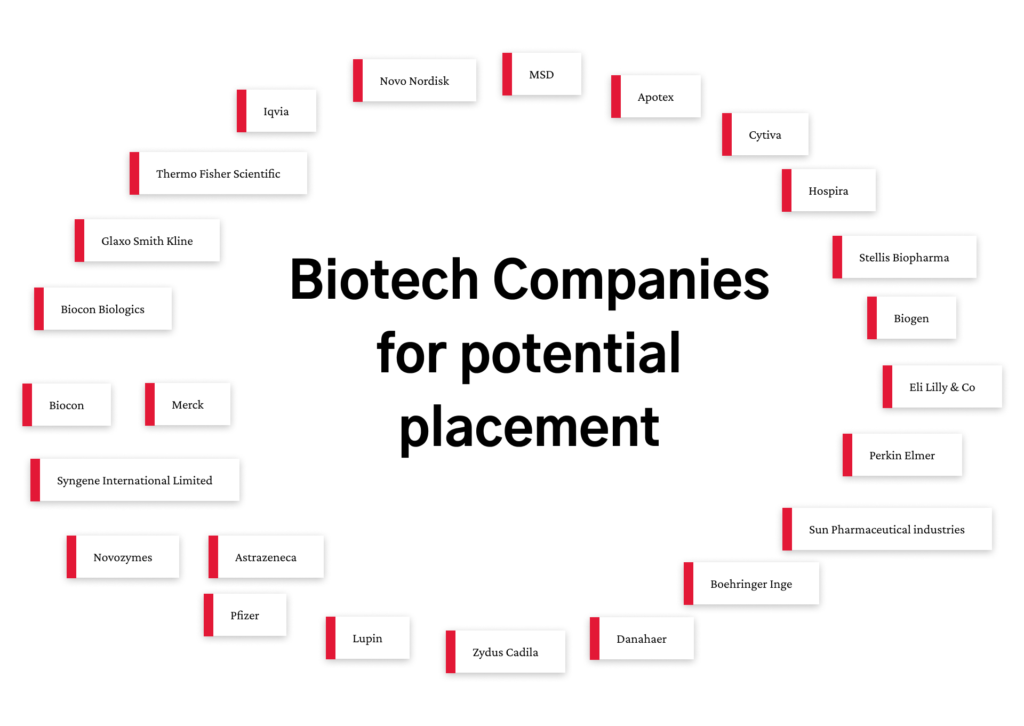
  • Genomics: Omics technologies and novel applications of gene and genome sequencing across diverse biotechnology domains.
  • Strand Life Sciences
  • Rasa Life Science Informatics
  • MarksMan Healthcare Communications
  • Xcode Life Sciences
  • Natural Text
  • Helix Biosciences
  • Clevergene
  • Nucleome Informatics
  • AgriGenome Labs
  • BD Biosciences
  • Biogenick
  • Genotypic Technology
CourseL-T-PCredits
Basic Mathematics I / Introduction to Biology*3-0-03
Introduction to Computing2-1-24
Chemistry of Biomolecules3-0-24
Physics for BT & CB3-1-25
Earth and Environmental Sciences2-0-02
English0-3-03
Media Project0-0-21.5
French – I0-2-00.5
Introduction to Entrepreneurship0-0-31
CourseL-T-PCredits
Molecular Genetics3-0-24
Biophysics2-0-23
Programming Workshop (C++)0-0-21
Programming Workshop (Linux)0-0-21
Linear Algebra & Complex Analysis3-1-04
Discrete Mathematics2-0-02
Data Structures3-0-24
Entrepreneurship Practice1-0-01
Professional Ethics0-1-01
SDGs and Our Career1-0-01
French – II0-2-00.5
CourseL-T-PCredits
Fundamentals of Data Science1-0-22
Computational Biology3-0-24
Data Engineering & Visualization Workshop (ETL & Tableau)0-1-22
Programming Workshop (Python & BioPython)0-0-21
Probability & Statistics3-1-04
Design & Analysis of Algorithms3-0-24
Lean Start-up (Fractal)1-0-01
Principles of Economics (Fractal)3-0-01.5
Sustainability & AI1-0-01
French – III0-2-00.5
CourseL-T-PCredits
Omic Technologies3-0-24
Structural Bioinformatics & Drug Discovery3-0-24
Biological Database Management3-0-24
ML Workshop0-0-21
Machine Learning3-0-03
Design Thinking1-0-22
Financial Accounting3-0-01.5
Water and Us1-0-01
French – IV0-2-00.5
CourseL-T-PCredits
Microbes and Immune Systems3-0-24
NLP Workshop0-0-21
Computational Genomics & Systems Biology3-0-24
Programming Workshop (R)0-0-21
Object Oriented Programming2-0-23
Web Tech Workshop0-0-21
NLP3-0-03
Elective I3-0-03
Elective II3-0-03
HSS Elective – I2-0-02
CourseL-T-PCredits
Research Methods & IPR2-0-02
Algorithms in Bioinformatics2-0-23
Programming Workshop (Java & BioJava)0-0-21
Generative AI in Life Sciences3-0-24
Web Tech Workshop0-0-21
Deep Neural Networks3-0-24
Elective III3-0-03
Elective IV3-0-03
Introduction to Professional Development2-0-02
HSS Elective – II2-0-02
CourseL-T-PCredits
Employability Skills1-0-11.5
Elective V3-0-03
Elective VI3-0-03
Elective VII3-0-03
HSS Elective – III2-0-02
CourseL-T-PCredits
Research Project (Industrial Internship / R&D Institute)0-0-3015

FAQs

Yes. The programme is designed for students with a strong analytical mindset. Biology concepts are introduced progressively and taught alongside computational methods, allowing students to build biological understanding without requiring prior deep expertise in life sciences.

The programme is academically rigorous, as it combines computing, statistics and biology. However, the curriculum is structured to balance theory with application, ensuring students are supported as they move across disciplines rather than being overwhelmed by them.

Graduates are well-prepared for a range of roles. In addition to life-science and biotech positions, students develop strong programming, data analysis and modelling skills that are applicable to software, analytics and data-science roles, depending on electives and projects chosen.

Yes. The interdisciplinary training in computation, statistics and biology aligns well with global postgraduate programmes in computational biology, bioinformatics, data science, biomedical engineering and related research-oriented fields.

This programme is ideal for students who are curious about how technology can solve biological and healthcare problems, enjoy working with data, and are comfortable learning across disciplines rather than focusing on a single traditional engineering stream.

Start your journey with us

Home / Centre for Life Sciences

B.Tech in Civil Engineering

A 4-year undergraduate programme equipping engineers to design, build and sustain the infrastructure of tomorrow.

B.Tech in civil engineering overview

We prepare students to shape the future of infrastructure and urban systems through a strong foundation in structures, geotechnics, transportation, water resources, and environmental engineering, blending technical depth with practical project experience. Students experience:

Comprehensive grounding

in core civil engineering domains such as mechanics of soils and fluids, structural analysis, transportation engineering and surveying

Project-based learning

and departmental projects give students practical experience in construction technology and civic systems

Choice of electives

enabling focus on specialisations such as geotechnical, structural, environmental or water-resources engineering

Exposure to contemporary

infrastructure challenges and technologies, inspiring graduates to design resilient, sustainable and efficient built environments

Programme details

Objectives

  • Equip students with a strong scientific foundation and creative engineering mindset to address complex problems with a global perspective.
  • Develop critical analytical skills required to plan, design, build, maintain and rehabilitate infrastructure for a sustainable future.
  • Promote interdisciplinary understanding and the effective use of appropriate technologies to address real-world implementation challenges.
  • Foster clear communication and ethical leadership while working collaboratively in diverse teams.
  • Encourage adaptability to evolving global needs through continuous learning and lifelong professional development.

Academic structure

Our academic structure is designed to establish robust foundations, followed by increasing specialization in later years.

  • Credit structure: Basic Sciences (47 credits), Basic Engineering (28 credits), Humanities, Social & Creative Sciences (15 credits), Enterprise Sciences (10 credits)
  • Total credits & degree requirement: The programme requires not less than 165 credits to be awarded a B.Tech degree.
  • Duration: 4 years / 8 semesters.

MoUs

FAQs

The curriculum emphasises current topics such as sustainable construction, environmental systems, transportation and water-resources, ensuring students are ready for real-world infrastructure challenges.

Yes, students undertake multiple departmental projects, leveraging labs, field work and construction technology modules to apply engineering in practice.

Electives in structural, geotechnical, environmental and transport engineering allow students to tailor their learning and prepare for roles in design firms, consultancy, public works or research.

By integrating courses on smart infrastructure, sustainable materials, environmental systems and project management, the programme equips graduates to lead in tomorrow’s built environment.

Graduates are well-positioned for roles in infrastructure development, consultancy, construction management, urban planning, environmental and water-resource engineering, as well as further study.

Start your journey with us

Home / Centre for Life Sciences

B.Tech in Biotechnology

A 4-year undergraduate programme combining biology, engineering and innovation to create professionals in life-sciences technologies.

B.Tech in biotechnology overview

We immerse students in genomics, gene editing, synthetic biology, precision medicine, and biomanufacturing, empowering them to drive breakthroughs in healthcare, agriculture, materials, and food technology. The B.Tech Biotechnology programme combines biological sciences with engineering principles to prepare students for innovation in healthcare, agriculture, and industrial biotechnology. Students also have the option to continue into an integrated five-year M.Tech Biotechnology programme after completing the four-year B.Tech.

Deep exposure

to genomics, gene editing (CRISPR), synthetic biology and precision medicine, giving students advanced biological-engineering expertise.

A structured curriculum

where by Semester IV you’re already tackling OMIC technologies, upstream processing and AI/data science for bio-technologists.

Practical training

in bio-manufacturing, cell culture, micro-fluidics and biomaterials students work with systems that bridge biology and engineering.

Career-forward focus

with scope for specialisation in environment, food, pharmaceuticals, industrial biotech and research.

Programme specialisations

Pharmaceutical biotechnology

Focuses on the development of biologic drugs such as antibodies, vaccines and nucleic-acid therapies using molecular biology, protein engineering and bioprocessing technologies.

Green chemicals and bio-products

Explores sustainable alternatives to petrochemical products through biotechnology, including enzymes, biofuels and bio-based industrial chemicals.

Digital agriculture

Applies data analytics, sensors and advanced technologies to optimise crop production, resource use and decision-making in modern agriculture.

Precision medicine

Examines how genomics and biological data can be used to design personalised medical treatments and improve patient outcomes.

Gut microbiome

Studies microbial communities in the human body and their role in health, disease diagnostics and emerging therapeutic applications.

Food processing and nutrition

Focuses on technologies that improve food safety, nutritional value and shelf life while supporting sustainable food production.

Biopharmaceutical technology

Covers the development and manufacturing of biologic medicines, integrating molecular biology, drug formulation and bioprocess engineering.

Biomanufacturing and green products

Uses engineered biological systems and fermentation technologies to produce biomaterials, chemicals and therapeutic products sustainably.

Diagnostics and biomarkers

Explores molecular diagnostics and biomarker discovery for early disease detection and improved clinical decision-making.

Programme details

Core technical competencies to be developed through the programme

Genomics
Omics technologies and genome sequencing applications across biotechnology and biomedical research.

Gene editing
Gene cloning, CRISPR-based genome editing, gene therapy, gene silencing, and development of transgenic plants and animals.

Precision medicine
Genomics-driven discovery of drug targets, cell therapies and advanced drug delivery technologies.

Microfluidics
Lab-on-a-chip systems for rapid diagnostics, biopharma screening, disease modelling and point-of-care testing.

Biomanufacturing
Cell culture and fermentation technologies for recombinant production of therapeutics, biomaterials and specialty chemicals.mahindra

Synthetic biology
Engineering biological systems and gene networks to develop cell factories, microbiome-based solutions and cellular agriculture.

Tissue engineering
Regenerative medicine approaches including tissue grafts, organ repair technologies and cultured biomaterials.

AI and big biological data
Application of artificial intelligence in drug discovery, biomarker identification, medical imaging and digital agriculture analytics.

GMP and regulatory affairs
Principles of product quality, safety standards and regulatory frameworks in biotechnology and biopharmaceutical development.

Bioprinting
Bioprinting technologies using bio-inks and biomaterials for medical applications such as tissue constructs and personalised grafts.

  • Technical solution manager
  • Research associate
  • Medical scientist
  • Biomedical engineer
  • Microbiologist
  • R&D and process development scientist
  • Biomanufacturing specialist
  • Bioproduction operator
  • Project assistant
  • Project management engineer
  • Trainee research associate
  • Agricultural consultant
  • Opportunities for higher education abroad

Academic structure

Our academic structure is designed to establish robust foundations, followed by increasing specialization in later years.

  • Credit structure: Basic Sciences (47 credits), Basic Engineering (28 credits), Humanities, Social & Creative Sciences (15 credits), Enterprise Sciences (10 credits)
  • Total credits & degree requirement: The programme requires not less than 165 credits to be awarded a B.Tech degree.
  • Duration: 4 years / 8 semesters
  • Core vs Professional phases: The first two years constitute the “Core Program,” and the last two years the “Professional Program,” with electives introduced in the latter phase.
CourseL-T-PCredits
Basic Mathematics / Introduction to Biology*3-0-03
World of Biotechnology & Computational Biology1-0-01
Chemistry of Biomolecules3-0-24
Biological Systems: Microbes2-0-02
Physics for Biotechnology2-0-23
Earth and Environmental Sciences2-0-02
English0-3-03
Media Project0-0-21.5
Introduction to Entrepreneurship0-0-31
French I0-2-00.5
CourseL-T-PCredits
Molecular Genetics3-0-24
Descriptive Statistics2-0-02
Biological Systems: Plants2-0-02
Biological Systems: Animals2-0-02
Biophysics2-0-23
Chemistry – II2-0-23
Introduction to Computing2-1-24
Entrepreneurship Practice0-0-21
Professional Ethics0-1-01
SDGs and Our Career1-0-01
French II0-2-00.5
CourseL-T-PCredits
Enzymes & Metabolism3-0-24
Microbial Technology2-0-23
Python & Biopython1-0-22
Immune Systems & Immunotechnology3-0-24
Gene Technologies2-0-44
Introduction to Nanotechnology & Nanoscience3-0-03
Lean Start-up0-0-31
Principles of Economics3-0-01.5
Sustainability and AI1-0-01
French III0-2-00.5
CourseL-T-PCredits
Omic Technologies3-0-24
Cell Culture Technologies2-0-23
Bioprocess – Upstream Processing3-0-24
AI & Data Science for Biotechnologists3-0-24
Biostatistics2-1-24
Design Thinking1-0-22
Financial Accounting3-0-01.5
Water and Us1-0-01
French IV0-2-00.5
CourseL-T-PCredits
Food Processing & Nutrition3-0-24
Bioinformatics & Computational Biology3-0-24
Agricultural Biotechnology3-0-24
Bioprocess – Downstream Processing3-0-24
Elective I3-0-03
Elective II3-0-03
Humanities / Management Elective I2-0-02
CourseL-T-PCredits
Green Biotechnology & Pollution Abatement3-0-03
Bioproducts: QC & Regulatory Affairs2-0-02
Synthetic Biology & Applications3-0-24
Research Methods & IPR2-0-02
Elective III3-0-03
Elective IV3-0-03
Introduction to Professional Development2-0-02
Humanities / Management Elective II2-0-02
CourseL-T-PCredits
Employability Skills1-0-11.5
Elective V3-0-03
Elective VI3-0-03
Elective VII3-0-03
Humanities / Management Elective III2-0-02
CourseL-T-PCredits
Research Project (Industrial Internship / R&D Institute)0-0-3015

FAQs

The curriculum integrates molecular biology, genetics and bioprocessing with engineering and computational tools, equipping students for innovation in applied biosciences.
Students receive hands-on training in biomanufacturing, microfluidics, gene editing and biomaterials, building the technical expertise necessary for biotechnology industries.
Graduates contribute to healthcare, pharmaceuticals, agriculture, food technology and environmental sustainability through advanced biotechnological methods.

Project-based learning, exposure to OMIC technologies, and AI applications in biotechnology foster critical thinking and problem-solving.

The inclusion of synthetic biology, precision medicine and data-driven approaches ensures graduates are prepared for next-generation life-science careers.

Start your journey with us

Home / Centre for Life Sciences

B.Tech in Aerospace Engineering

A 4-year undergraduate programme enabling engineers to design, develop and optimise aircraft, spacecraft and aerospace systems for the future.

B.Tech in aerospace engineering overview 

We prepare students to excel in aerodynamics, propulsion, and structures, leveraging expert faculty and a strong research ecosystem to launch careers in advanced aerospace engineering. Students experience:

Progression into aerospace-specific domains

such as aerodynamics, propulsion and structural engineering, contextualised within India’s aerospace ecosystem.

Hands-on engineering labs

design-drawing and project-based modules enabling students to apply theoretical aerospace principles.

Career-oriented training

aligned with the rapidly growing aerospace industry and research in India, giving students access to future mobility, defence and space initiatives.

Strong grounding

in mathematics, chemistry and engineering with a combination of courses like Calculus, Mechanics and Engineering Drawing.

Programme details

Academic structure

Our faculty combines academic depth with real-world expertise, guiding students through both fundamental theory and applied innovation

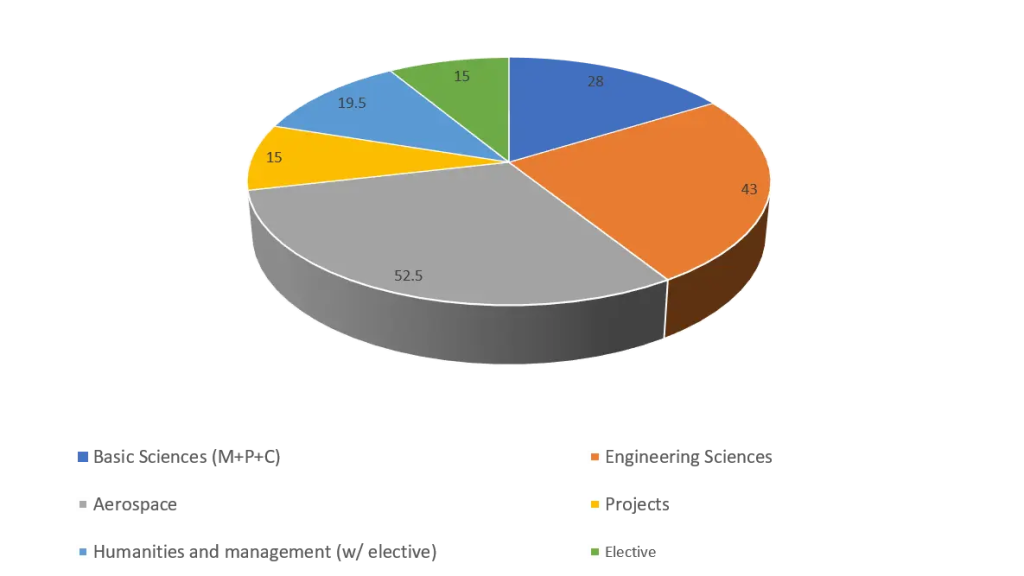
  • Credit structure: Basic Sciences (28 credits), Engineering Sciences (43 credits), Aerospace (52.5 credits), Projects (15 credits), Humanities & Management (19.5 credits), Electives (15 credits), Total 173 credits. 
  • Total credits & degree requirement: The programme requires not less than 165 credits to be awarded a B.Tech degree.
  • Duration: 4 years / 8 semesters
  • Core vs Professional phases: The first two years constitute the “Core Program,” and the last two years the “Professional Program,” with electives introduced in the latter phase.
CourseL-T-PCredits
Mathematics I (Calculus & ODEs)4-1-25
Chemistry I2-1-23
Introduction to Electrical/Electronics Engg w/ lab2-1-22
Engineering Drawing1.5
Mechanics2-1-23
Earth & Environmental Sciences2-0-02
Intro. to Entrepreneurship0-0-31
Media Project0-0-31.5
English3-0-03
French I0-2-00.5
CourseL-T-PCredits
Mathematics II (Linear Algebra & Complex)3-1-24
Physics I with Lab2-1-24
Chemistry II with Lab2-0-23
Thermodynamics2-1-23
CAE Design1-0-32.5
Intro to Computing2-2-24
Workshop Practice0-0-21
Entrepreneurship Practice0-0-21
Professional Ethics0-1-01
French II0-2-00.5
CourseL-T-PCredits
Mathematics III (Probability & Stats)3-1-24
Physics II with Lab3-1-25
Data Structures & Algorithms2-2-25
Introduction to Aerospace Engineering2-0-02
Fluid Mechanics3-1-24
Solid Mechanics2-1-23
Lean Start-up0-0-31
Principles of Economics3-0-01.5
French III0-2-00.5
CourseL-T-PCredits
Numerical Methods3-0-24
Aerospace Structures3-1-24
Aerodynamics-I (Low Speed)2-1-23
Finite Element Method2-0-23
Fluid & Solid Mechanics Lab2
Financial Accounting3-0-01.5
Design Thinking1-0-22
French IV0-2-00.5
CourseL-T-PCredits
Heat & Mass Transfer3-1-24
Flight Dynamics & Aircraft Performance3-0-24
Aerodynamics-II (Compressible Flow)3-1-24
CFD for Aerospace Engineers3-0-24
Propulsion-I (Rocket)3-0-03
Aerodynamics Lab1.5
Elective / HSS~2
French V (Optional)~0.5
CourseL-T-PCredits
3rd Year Project3
Orbital Mechanics & Space Dynamics3-0-03
Propulsion-II (Aircraft)3-0-03
Aerospace Control & Guidance3-0-03
Vibrations3-0-03
Propulsion Lab1
Aeromodelling Workshop~2
Elective I3
French VI0
CourseL-T-PCredits
Aerospace Materials & Processes3-0-03
Aircraft Design2-0-23
Space Vehicle Design2-0-23
Control Systems Lab1
Elective II & III~6
Year-4/1 Project1-4-33
French VII0
CourseL-T-PCredits
Elective IV3
Elective V3
Final Project II9
French VIII0

Expected programme output

  • To be able to understand the basic engineering concepts with theoretical foundation in mathematical/physical modelling and software engineering.
  • To be able to understand and apply various concepts of mechanical design, electronics design and control.
  • To have the ability to apply engineering methods and tools to specify and develop mechanical components and systems in the context of mechatronics.
  • To have the ability to apply the engineering methods and tools and master the related skills in the process of developing mechatronic systems and products.
  • To have the ability to apply engineering methods and tools to, specify and develop analog and digital electronic circuits, specify and develop embedded hardware and software in a mechatronic context.

FAQs

By covering aerodynamics, propulsion, and structures alongside engineering design projects, the curriculum mirrors the technical demands of the aerospace sector.

Laboratory sessions, computer-aided design and mechanics workshops give students early exposure to aerospace applications and simulations.

An emphasis on experiential learning, project work and strong foundational sciences ensures graduates possess both breadth and depth of knowledge.

Students are prepared for roles in aircraft design, defence technology, propulsion systems, unmanned aerial vehicles and research institutions.

The project-based framework encourages students to design creative engineering solutions while developing collaboration and leadership skills essential to the industry.

Start your journey with us

Make an enquiry Chat with a student