










ERC 2026
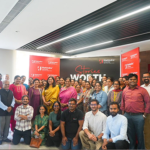
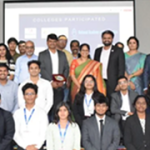
The First National Conference and Workshop on Empowerment and Resistance in Contemporary Indian Women’s Literary and Cultural Discourses will be held at Mahindra University, Hyderabad, from March 5-7, 2026. This interdisciplinary event brings together scholars, researchers, and practitioners to critically explore evolving representations of empowerment and resistance in contemporary Indian women’s literature and cultural production.
The workshop on the first day will focus on the conference theme from a research-practitioner perspective. Eminent researchers and performers will engage with the literary and cultural dimensions of empowerment and resistance, followed by interactive Q&A sessions—offering valuable insights for early-career and established researchers alike.
The conference on the following two days will feature five keynote addresses by distinguished academicians, alongside selected paper presentations on related topics. The sessions will provide opportunities for peer feedback, discussion, and networking, fostering meaningful academic exchange.
Patrons
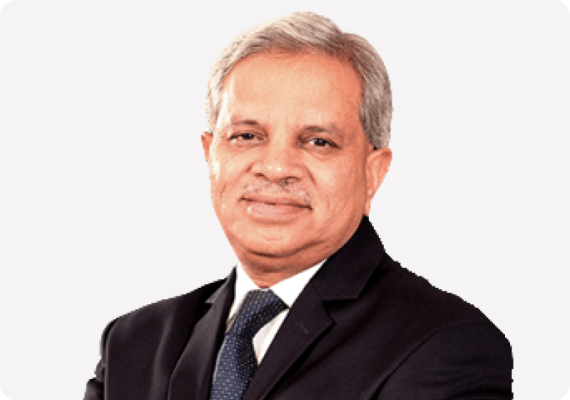
Yajulu Medury
Vice-Chancellor, Mahindra University
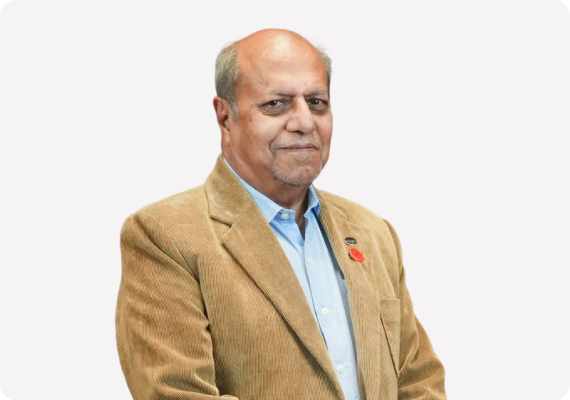
Prof. Bishnu Pal
Professor & Dean Ecole Centrale School of Engineering & HOD, Physics
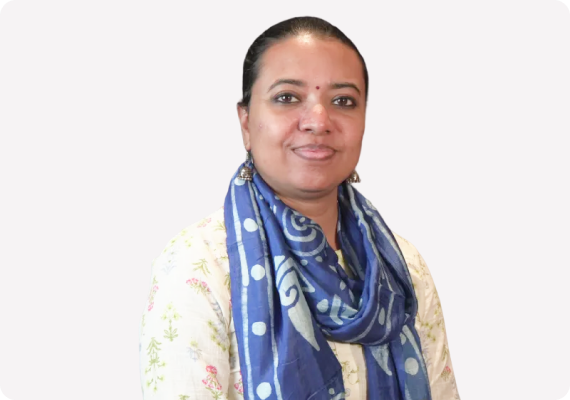
Dr. Paromita Bose
Associate Professor & HOD, Humanities and Social Sciences
Convenors
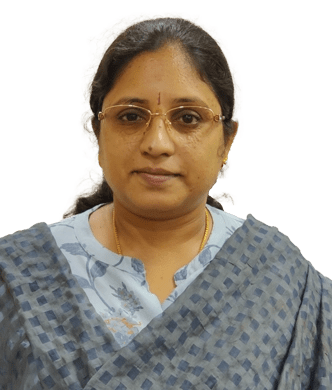
Dr. Chilakamarri Savitha
Assistant Professor, Dept. of Humanities and Social Sciences, Mahindra University
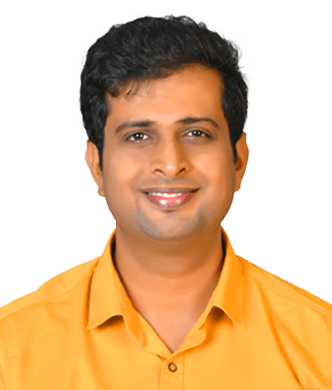
Dr. Soham Chakraborty
Assistant Professor, Dept. of Humanities and Social Sciences, Mahindra University
Chairs for Paper Presentations
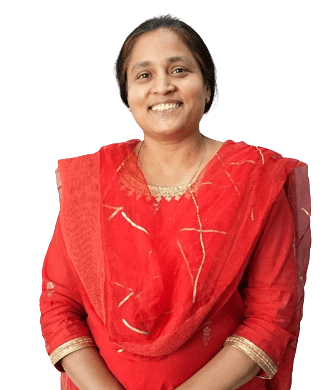
Prof Salome Benhur
Professor, Dept of Humanities and Social Sciences, Mahindra University

Prof. Nisha Mathew
Professor, School of Law, Mahindra University

Dr. Paromita Bose
Associate Professor and Head of Dept., Dept of Humanities and Social Sciences, Mahindra University

Dr. Sreeja Ghanta
Associate Professor, School of Law, Mahindra University
Review Committee for Final Papers
Committee
International Steering Committee
- Yajulu Medury, Vice-Chancellor, Mahindra University, India
- Abdelkader Elkamel, Professor, The École Centrale de Lille
- Dr. Shankar Venugopal, Vice President, Mahindra Research Valley, Chennai
- Arya Kumar Bhattacharya, Dean Research, Mahindra University
- Prof. Bishnu Pal
General Co-Chairs
- Prof. Sukumar Mishra, Professor, Associate Dean R&D, Indian Institute of Technology Delhi, New Delhi
Technical Program Committee Chairs
- Prof. Ramakrishnan Maheshwari, Southern University of Denmark
- Prof. Bhuvaneswari Gurumoorthy
- Prof. Ram Mohan Vemuri
Advisory Committee Members
- Prof. Jayantlal Bhattacharya, Mahindra University, Hyderabad
- Prof. Kalluri Ramalinga, Mahindra University, Hyderabad
- Prof. Sunil Bhoosan, Mahindra University, Hyderabad
Organizing Committee Members
- Dr. Bhargava Rajaram, Mahindra University, Hyderabad
- Dr. Gopinath GR, Mahindra University, Hyderabad
Publications Committee Chairs
- Dr. Subbarao Boddu, Mahindra University, Hyderabad
- Dr. Pooran Singh, Mahindra University, Hyderabad
Finance and Sponsorship Committee Chair
- Dr. Aditya Abburi, Mahindra University, Hyderabad
Publicity Committee Chairs
- Yaminidhar Reddy Bhavanam, Mahindra University
Tutorials Committee Chairs
- Dr. Sayantan Hazra, Mahindra University
Special Sessions Chair
- Dr. Ramakant, Mahindra University
Social Media Chair
- Dr. Akshara and Dr. Ankita, Mahindra University, Hyderabad
Conflict of Interest Chair
- Dr. Aditya Abburi, Mahindra University
Technical Committee Members
- Prof. B Subudhi, Dean R&D, IIT Goa
- Pabitra Mitra, IIT KGP
- Tandra Pal, NIT Durgapur
- J. Balasubramaniam, IIT Hyderabad
- Tingwen Huang, Texas A&M University at Qatar
- Jian Wang, China University of Petroleum
- Yew Soon Ong, Nanyang Technological University, Singapore
- Kaustuv Nag, IIIT Guwahati
- Sambit Bakshi, NIT Rourkela
- Nishchal K. Verma, IIT Kanpur
- Mukesh Prasad, University of Technology, Sydney
- Manoranjan Mohanty, University of Technology, Sydney
- OmPrakash Kaiwartya, Nottingham Trent University, UK
- Khaldoon Dhou, Texas A&M University – Central Texas, USA
- Aruna Tiwari, IIT Indore
- Jagdish Bansal, South Asian University, New Delhi
- Barsha Mitra, BITS Pilani, Hyderabad Campus
- K.V. Sambasivarao, NRI Institute of Technology, Andhra Pradesh
- Deepak K T, Indian Institute of Information Technology Dharwad
- Dipanjan Roy, Insitute for Development and Research in Banking Technology, Hyderabad
- Ashish Jain, Manipal University Jaipur
- Rudresh Dwivedi, Netaji Subhas University of Technology, Delhi
- Shikha Mehta, Jaypee Institute of Information Technology
- Krishna Asawa, Jaypee Institute of Information Technology
- Himanshu Mittal, Jaypee Institute of Information Technology
- Payal Khurana Batra, Jaypee Institute of Information Technology
- Navneet Pratap Singh, Bennett University
- Dilip Singh Sisodiya, NIT Raipur
- Himani Bansal, Jaypee Institute of Information Technology
- Nikhil Tripathi, Indian Institute of Information Technology Sricity
- Arun Chauhan, Graphics Era University
- Udit Satija, Indian Institute of Technology Patna
- Aruna Malapati, BITS Pilani, Hyderabad Campus
- Amit Saxena, Guru Ghasidas University
- Lokesh Singh, Manipal University Jaipur
- Prakash Chandra Sharma, Manipal University Jaipur
- V. Ravi, Institute for Development and Research in Banking Technology, Hyderabad
- Animesh Chaturvedi, Indian Institute of Information Technology Dharwad
- Mala Saraswat, ABES Engineering College
- Srishti Sharma, The Northcap University
- Vaishali Soni, SGTB Khalsa College, University of Delhi
- Deepak Sharma, Bennett University
- Sulabh Tyagi, Jaypee Institute of Information Technology
- Sanatan Sukhija, Mahindra University
- Om Prakash Patel, Mahindra University
- Yayati Gupta, Mahindra University
- Sunny Rai, Mahindra University
- Venkata Dilip Kumar, Mahindra University
- Dipti Mishra, Mahindra University
- Venkata Rajesh Kumar Tavva, Mahindra University
- Bharghava Rajaram, Mahindra University
- Sreedhar Madichetty, Mahindra University
- Jayasri D, Mahindra University
- Rama Murthy Garimella, Mahindra University
- Sowmini Devi, Mahindra University
- Bhanukiran Perabathini, Mahindra University
- Ankita Jain, Mahindra University
- Geeta Rani, Manipal University Jaipur
- Manpreet Kaur, Manav Rachna University
- Pinaki Chakraborty, Netaji Subhas University of Technology
- Ruchi Mittal, Ganga Institute of Technology & Management
- Manju, Jaypee Institute of Information Technology
- Rohit Beniwal, Delhi Technological University
- Vidhi Khanduja, The NorthCap University
- Ramalinga Swamy, NIT Warangal
- Devendra K Tayal, IGDTUW
- Amita Jain, Netaji Subhas University of Technology
- Esha Baidya Kayal, IIT Delhi
- Sushma Hans, Amity University, Dubai
- Shikha Gupta, Maharaja Agrasen Institute of Technology
- Ruchi Sharma, The Neotia University
- Rahul Chandra, Delhi Technological University
- Minni Jain, Delhi Technological University
- Prof. Ramakrishnan Maheshwari, Southern University of Denmark
Contact Details
Conference Chair
Prof. Sreedhar Madichetty,
Department of Electronics and Computer Engineering, Ecole Centrale School of Engineering
Email: sreedhar.madichetty@mahindrauniversity.edu.in
Phone: +91-9703845823
Student Volunteer
Mr. Suprabhath Koduru
Department of Electronics and Computer Engineering
Email: sriranga20peee002@mahindrauniversity.edu.in
Phone: +91-8801868683
Call for Papers
| Paper Submission Deadline | 07th July 2023 |
| Decision Notification | 07th August 2023 |
| Final Paper Submission | 25th August 2023 |
| Early Bird Registration | 30th August 2023 |
Paper submission link Click here
Paper Submission Templates Click here
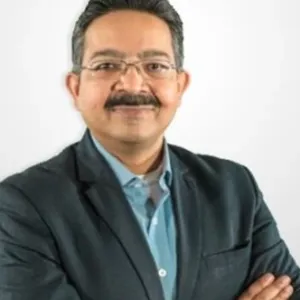
Dr SHANKAR VENUGOPAL
Vice President, Mahindra & Mahindra
Mahindra Research Valley, Chennai.
Dr Shankar leads technology innovation for the Automotive & Farm services business (AFS). He heads the intellectual property (Patents) and knowledge management functions. He is also the Dean of the Mahindra Technical Academy.
Shankar is passionate about developing sustainable urban mobility solutions and his current interests span across electric vehicles, connected vehicles, autonomous vehicles and precision farming.
Prior to joining Mahindra & Mahindra, Shankar has held technology innovation leadership roles at GE, Dow, Honeywell and Cummins. He holds ten international patents and numerous new product innovation awards. He was awarded GE”s Edison Inventor Medal early in his career. He has developed a proprietary innovation methodology – Innovation FLOW – and trained 1000 + inventors and innovators.
Shankar obtained a Ph.D in Materials Science and a gold medal for the best doctoral thesis from the Indian Institute of Science, Bangalore. He completed his executive management program from the Indian Institute of Management, Bangalore.
Shankar is an avid reader and is interested in physics, philosophy and psychology. He teaches technology innovation management at premier engineering & management institutes in India & abroad.
Shankar was recognized as one of the 50 Innovative leaders at the World Innovation Congress 2020. He is also a TEDx speaker.
Dr Shankar leads the Confederation of Indian Industries (CII)’s Technology, Innovation, Intellectual Property and Thought Leadership initiatives. He is a management committee member of the Society of Automotive Engineers (SAE) and he chairs the committee for Branding and Communication (B&C).
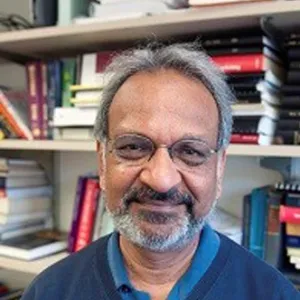
Ned Mohan
Regents Professor, Oscar A. Schott Professor, Department of Electrical and Computer Engineering Mission
Primary Research Focus (Sustainability):
Mission
Primary Research Focus (Sustainability):
Interfacing renewable energy sources with the utility grid to increase their penetration; increasing energy- efficiency usage; making Power Systems more robust and reliable; energy storage.
Primary Education Focus:
Sustaining the national infrastructure in the area of electric power and energy by revitalizing the curriculum and disseminating it widely.
Primary Outreach Focus:
Conveying the need to combat
- Climate Change, and
- Ideological Extremism
Contact
612-625-3362
mohan@umn.edu
Kenneth H. Keller Hall
Room 5-111 200 Union Street Se Minneapolis, MN 55455
Dr. Rajendra Naik
GE Healthcare
Rajendra Naik obtained the BTech degree in electrical and electronics engineering from the IIT, Chennai in 1991, and the MS and PhD degrees in EE from the University of Minnesota, Minneapolis, USA in 1993 and 1996 respectively, with specialization in Power Electronics.
He started his professional career with Smith Equipment, Watertown, South Dakota in 1996, where he was responsible for developing power supplies for plasma based metal cutting equipment. From 1998 to April 2005, he was with Advanced Technology, Allen Bradley-Rockwell Automation, Milwaukee, Wisconsin, where he was involved in the development of various topologies for motor drives. He was also a part time instructor for power systems and power electronics at Marquette University and the University of Wisconsin, Milwaukee for several years. He obtained the MBA degree from the University of Wisconsin in 2004.
He joined GE Global Research, Bangalore in April 2005 and held several technical and managerial roles over the next 13 years, with research focus on power electronic topologies, renewable energy/distributed generation and energy storage. Since 2019, he has been with the Maternal and Infant Care business of GE HealthCare. In his current role as Principal Engineer – Hardware, he is responsible for guiding new product development, supporting installed base challenges and mentoring. He has authored several IEEE conference and journal papers and has 18 issued US patents.
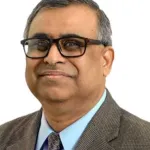
Professor Subhashish Bhattacharya
Duke Energy Distinguished Professor, Electrical and Computer Engineering, North Carolina State University
Subhashish Bhattacharya is currently Duke Energy Distinguished Professor in the Department of ECE at NC State University. He received B.E. from IIT-Roorkee, India, M.E. from IISc, India, and Ph.D. from University of Wisconsin-Madison, all in electrical engineering. He was with FACTS and Power Quality Division at Westinghouse R&D and Siemens Power Transmission & Distribution, from 1998 to 2005. He joined NCSU in August 2005, where he is a founding faculty member of NSF FREEDM Center, ATEC and DoE Institute PowerAmerica. A part of his PhD research on active power filters was commercialized by York Corporation. His research interests are Solid-State Transformers with SiC devices, Integration of renewable energy resources, Microgrids, high-frequency magnetics, active filters, and the application of new power semiconductor devices such as SiC and GaN for power converters. His research is funded by several industries, NSF, DoE/ARPA-E, Navy, NASA. He has over 650 publications, 10 patents, H-index of 66, and 18,500+ citations.
https://ece.ncsu.edu/people/sbhatta4
https://orcid.org/0000-0001-9311-5744
Google Scholar:

Mahindra University
Survey No: 62/1A, Bahadurpally Jeedimetla,
Hyderabad – 500043, Telangana, INDIA






Registration Details:
| Sl.No | Type of Registration (Attendee ⇒ No paper in Conference) | Registration Fee | Early Bird Registration Fee (30th August 2023) | Foreign Delegates Registration Fee |
|---|---|---|---|---|
| 1 | IEEE Member | ₹10,000 | ₹8,000 | $120 |
| 2 | Non-IEEE Member | ₹12,000 | ₹10,000 | $150 |
| 3 | Student IEEE Member | ₹7,000 | ₹5,000 | $75 |
| 4 | Student Non-IEEE Member | ₹9,000 | ₹7,000 | $100 |
| 5 | Attendee with tutorials. | ₹5,000 | ₹3,000 | $50 |
| 6 | IES member | ₹9,000 | ₹7,000 | $100 |
Register Here:
Go to : https://eazypay.icicibank.com
Search for Mahindra University and fill in the details
Event Name: ICPEEV 2023 and pay the applicable amount
Then fill out the following form to complete the registration
https://forms.office.com/r/hLM3F5EwA2
How to Reach Mahindra University
Location of Mahindra University: https://goo.gl/maps/5dcyCPJ2JNT2
Airport to Mahindra University: https://goo.gl/maps/9Ur8LsBNzcP2
Secunderabad to Mahindra University: https://goo.gl/maps/HwRgbVt4M9A2
From Rajiv Gandhi International Airport, Hyderabad
- Hire Meru/Sky Cabs and travel to Mahindra University via the Outer Ring Road.
- The distance is around 75km and the cost will be around INR 1700.
- The cab drivers will recognize Mahindra University location as Tech Mahindra Technology Park in Bahadurpally (near Gandimaisamma)
From Secunderabad/Kachiguda/Nampally Railway Stations
- Hire Ola/Uber Cabs from any of these railway stations to Mahindra University
From Jubilee Bus Stop
- From Secunderabad (JBS) to Mahindra University: Take Bus no 227, 272, or 230 and exit at Bahadurpally cross roads.
- Take an auto the Tech Mahindra Technology Park.
From Nampally/MGBS Stop
- Take Bus no 9K and exit at Bahadurpally cross roads.
- Take an auto the Tech Mahindra Technology Park.
From Kachiguda Stop
- Take Bus No. 49K to Secunderabad (JBS).
- Take Bus no. 227, 272, or 230 and exit at Bahadurpally cross roads.
- Take an auto the Tech Mahindra Technology Park.
FAQ for Authors
1. How to do registration
Ans: You can do registration by using Gpay link/ Direct Money from our website
2. How will get the receipt?
Ans: Receipt of Payumoney is valid for us, you will get original conference receipt at venue.
3. I completed registration, what is the next step?
Ans: After registration you have to complete the process of submission of camera ready paper and copyright form online.
4. When will get the link of camera ready paper and copyright submission link
Ans: Please refer important dates
5. What is meaning of Full Paper registration?
Ans: Full paper registration is mandatory for presenting the paper.
6. What is co author?
Ans: Once full author registration completed then only co author registration is applicable , it is for the any author who wish to present paper or even attend the conference
7. How many certificates will be issue in maximum?
Ans: Three, You will have to pay extra for extra certificate.
8. When will get the invitation letter for Visa
Ans: We will issue the Visa letter after completing the registration.
9. Can you provide Accommodation?
Ans: We have a separate dedicated team for accommodation; Guest House/ Hostel accommodation will be provided for interested authors on extra payment basis.
10. When will get the certificate?
Ans: During your presentation session you will get it.
11. How many pages are allowed?
Ans: Maximum number of pages allowed is 6.
12. What is the Registration fee?
Ans: Registration fee for attendees is 50 % of full registration.
Contact us
For any further details please email us at: erchss2026@mahindrauniversity.edu.in
Access from Major Transport Hubs:
- Mahindra University is approximately 30–35 kilometers away from Rajiv Gandhi International Airport (RGIA) in Hyderabad, depending on the specific route you take. The drive usually takes around 40-60 minutes, depending on traffic conditions.
- It is about 20–25 kilometers away from Secunderabad Railway Station. The travel time can vary, but it generally takes around 30–45 minutes by car, depending on traffic conditions.
- It is around 25–30 kilometers away from the main bus stations in Hyderabad, such as the MGBS (Mahatma Gandhi Bus Station) or Jubilee Bus Station.
